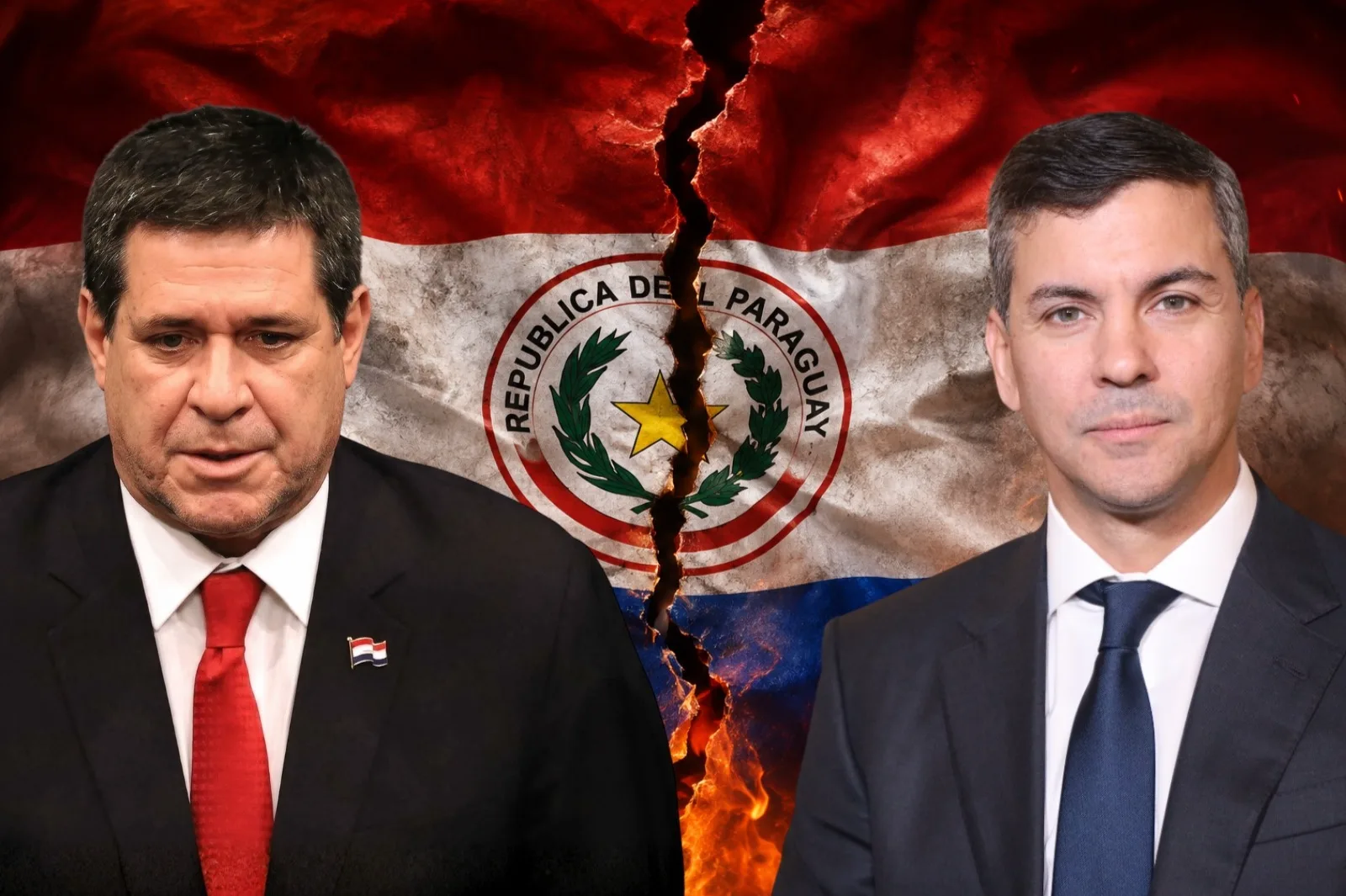

The political crisis in Paraguay took a decisive turn this Thursday after Horacio Cartes, former president of the Republic and head of the Colorado Party, withdrew his support for Santiago Peña and announced that he would accompany the impeachment process against him. The statement represents a break within the ruling party, as Cartes was the main promoter of Peña's presidential candidacy in 2023 and is considered his primary political reference.
The announcement came amid the scandal surrounding the intervention and subsequent resolution process of Ueno Bank, a financial institution that left millions of Paraguayans without access to their accounts. The situation prompted demands from savers, mobilizations, and questions about the links between the bank, businessmen, and government officials.
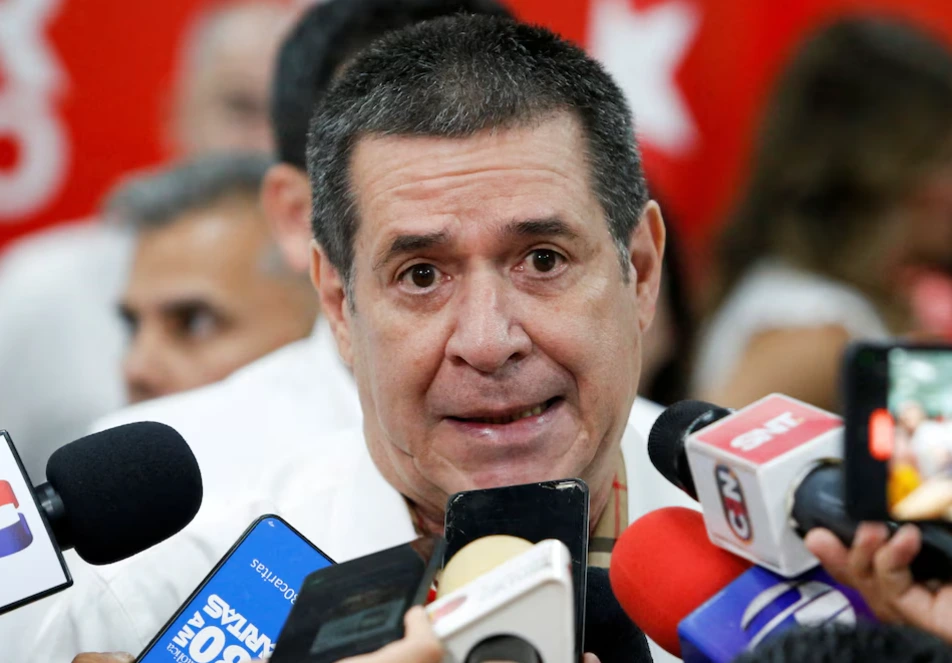
"As president of the National Republican Association, we will not stand by the plundering of public, private, and retirees' funds. We must think of the people and the values we uphold from the Colorado Party," Cartes expressed in a statement released on his social media.
In the same message, he explicitly confirmed his support for the process against the president: "We support the impeachment of the president of the Republic, Santiago Peña, in order to restore the institutional framework of the Republic."
The decision carries significant weight because Cartes leads the structure of the Colorado Party, which maintains a strong parliamentary representation. His change of position leaves Peña without the political backing of his main supporter within the ruling party.
Congress debates impeachment of Santiago Peña over Ueno Bank case
The Chamber of Deputies convened an extraordinary session to address the request for impeachment against the president. The initiative was presented by 35 legislators and raises a series of questions related to the financial crisis of Ueno Bank.
Among the arguments included in the accusatory document are alleged conflicts of interest due to Peña's business involvement with the group linked to the entity, questions regarding the appointment of Central Bank authorities, and operations related to funds from the Social Security Institute (IPS).
The Central Bank of Paraguay decided to initiate the resolution procedure for Ueno Bank after detecting that its solvency ratio had fallen below the minimum required. The entity had approximately 2.9 million clients in a country of 6.1 million inhabitants.
The crisis also led to judicial investigations. The Prosecutor's Office charged 27 people linked to the bank and other companies in the group, and requested preventive detention for its main shareholder, Federico Miguel Vázquez Villasanti, as well as precautionary measures for other involved parties. These are ongoing investigations and accusations that will need to be evaluated by the judiciary.
The constitutional procedure establishes that the Chamber of Deputies must approve the accusation by a two-thirds majority of those present. If it secures that support, the case moves to the Senate, which must conduct the political trial and decide whether to proceed with the dismissal.