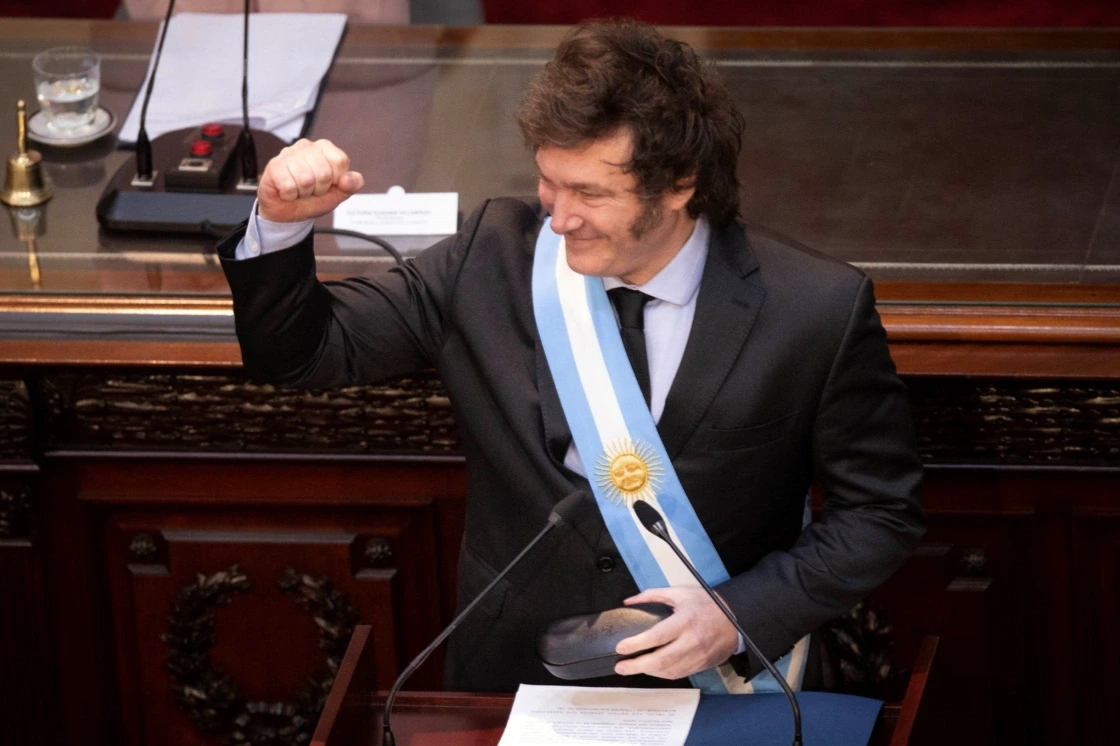

The electoral reform promoted by Javier Milei represents much more than an institutional redesign. It is a sign — still incipient, but unmistakable — that even within the state apparatus, principles compatible with an order of freedom are beginning to break through
.For decades, the Argentine political system operated under a logic profoundly contrary to private property: it forced millions of individuals to finance party structures that they did not choose and that, in many cases, actively worked against their interests. Open, simultaneous and mandatory primaries (PASO) are perhaps the most obvious example of this distortion.
They were not a mechanism of democratization, but a scheme of compulsive subsidization of politics.And that distortion is not a technical detail or a marginal anomaly. It is a direct violation of the fundamental principle on which any free society is based: unrestricted respect for private property. When the State forces an individual to pay for the internal competition of political organizations, what it is doing is not strengthening democracy, but institutionalizing
plunder.The elimination of PASOs, in this context, constitutes a clear step forward. Not because it solves all the problems of the political system, but because it introduces a correct principle: politics must be financed with voluntary resources. The fact that parties must sustain their internal processes with their own contributions is, in reality, the least that can be expected in any social order based on freedom
.However, the deeper value of this reform does not lie only in fiscal savings. Its real importance lies in what it reveals: that the Argentine political system was structured to live off taxpayers. And that, with this reform, that logic ceases to be implicit and becomes evident.
The redesign of party funding goes in the same direction. The implicit admission that much of campaign money circulates outside formal channels is not an anomaly, but the logical consequence of an overregulated system. When the State tries to control and limit each transaction, what it generates is informality, opacity and corruption