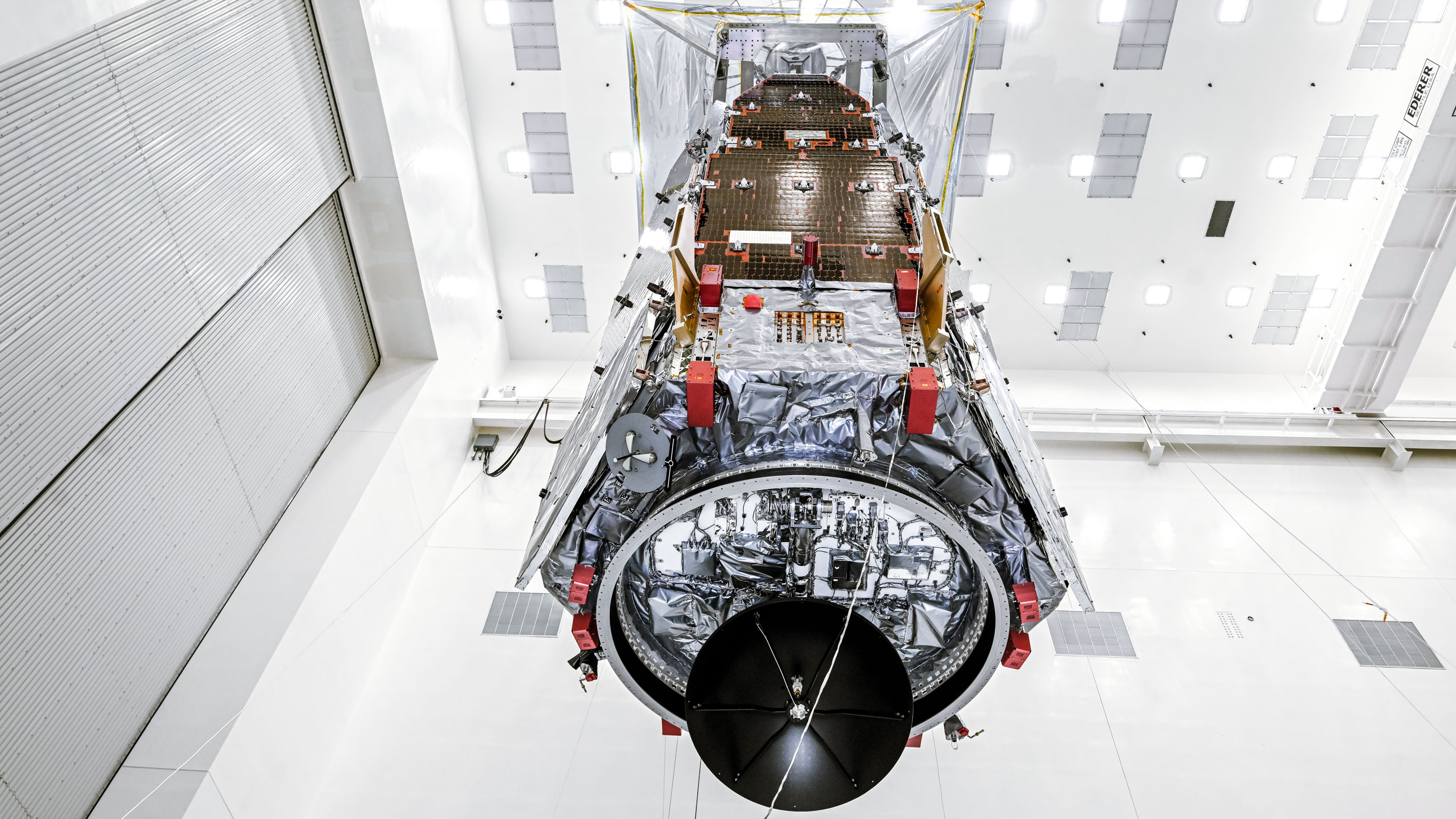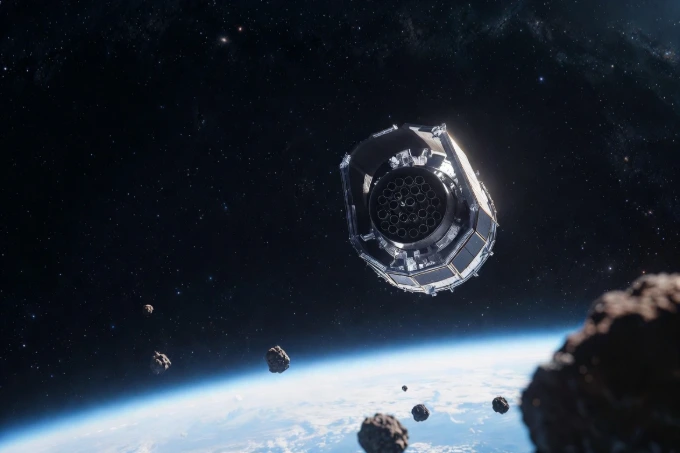

NASA plans to launch the Nancy Grace Roman Space Telescope at the end of August from the Kennedy Space Center in Florida Its main objective is to deepen our understanding of the universe, from the dark matter that holds galaxies together to the dark energy that accelerates the expansion of the cosmos. However, this instrument can also play a key role in protecting Earth from potentially hazardous asteroids.
A team of planetary scientists and astronomers will present in September how the Roman is exceptionally positioned to scan these bodies, gather data on their trajectories, sizes, and compositions. Named in honor of the agency's first chief astronomer, the telescope features a wide-field infrared camera with 300 megapixels. This allows it to cover a portion of the sky about 100 times larger than that of Hubble.
Thanks to its wide field of view, the Roman will discover thousands of new planets, tens of thousands of exploding stars, and catalog over a billion galaxies in great detail. By observing through our solar system, it is in a unique position to detect asteroids. It was not designed for planetary defense, but its capabilities make it a valuable tool for that task.
Last summer, the mission faced threats of budget cuts. Bryan Holler, a researcher at the Space Telescope Science Institute, explained that a colleague suggested showcasing the Roman's potential in planetary defense to increase its visibility among lawmakers and taxpayers. The proposal, which will be presented at the Europlanet Science Congress, indicates that the telescope can detect objects up to 60 feet long, a size comparable to the one that exploded over Chelyabinsk in 2013.