The federal judge Daniel Rafecas indicted seven Iranians and one Lebanese for their responsibility in the attack against the AMIA, committed on July 18, 1994, and moved forward with a resolution that allows the case, for the first time in history, to proceed towards a trial in absentia of the accused who remain fugitives.
The judicial decision, outlined in a ruling of more than 600 pages, also includes a preventive seizure of 500 million dollars for each defendant. The terrorist attack against the Jewish mutual society resulted in the deaths of 85 people and left 151 injured.
According to the reconstruction included by Rafecas, those involved acquired a Renault Trafic on Sunday, July 10, 1994, and loaded it with 300 kilos of amonal and TNT.
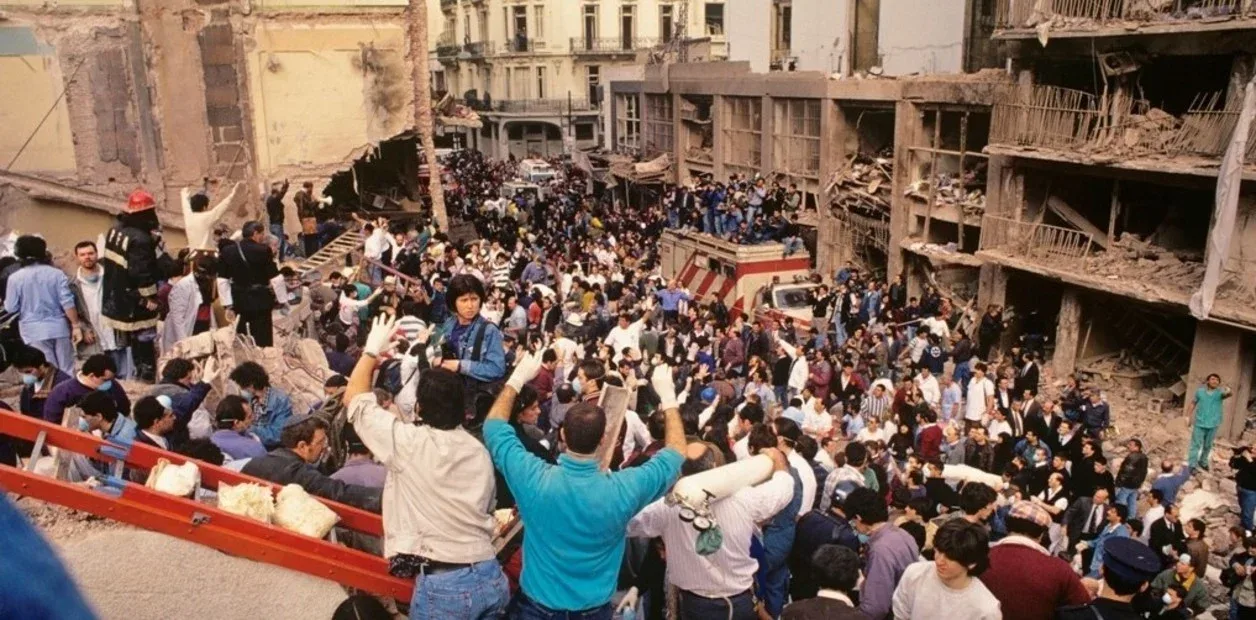
The attack on the AMIA
The vehicle remained parked four blocks from the AMIA until the morning of Monday, July 18, when it was used to carry out the attack at a time of high attendance.
The judicial investigation maintains that the decision to carry out the attack was made in August 1993 by the highest levels of the Iranian regime and that the execution was entrusted to the terrorist group Hezbollah.
To carry out the operation, the organization relied on local support and a regional structure based in the Triple Frontier, consisting of Ciudad del Este, Foz de Iguazú, and Puerto Iguazú.
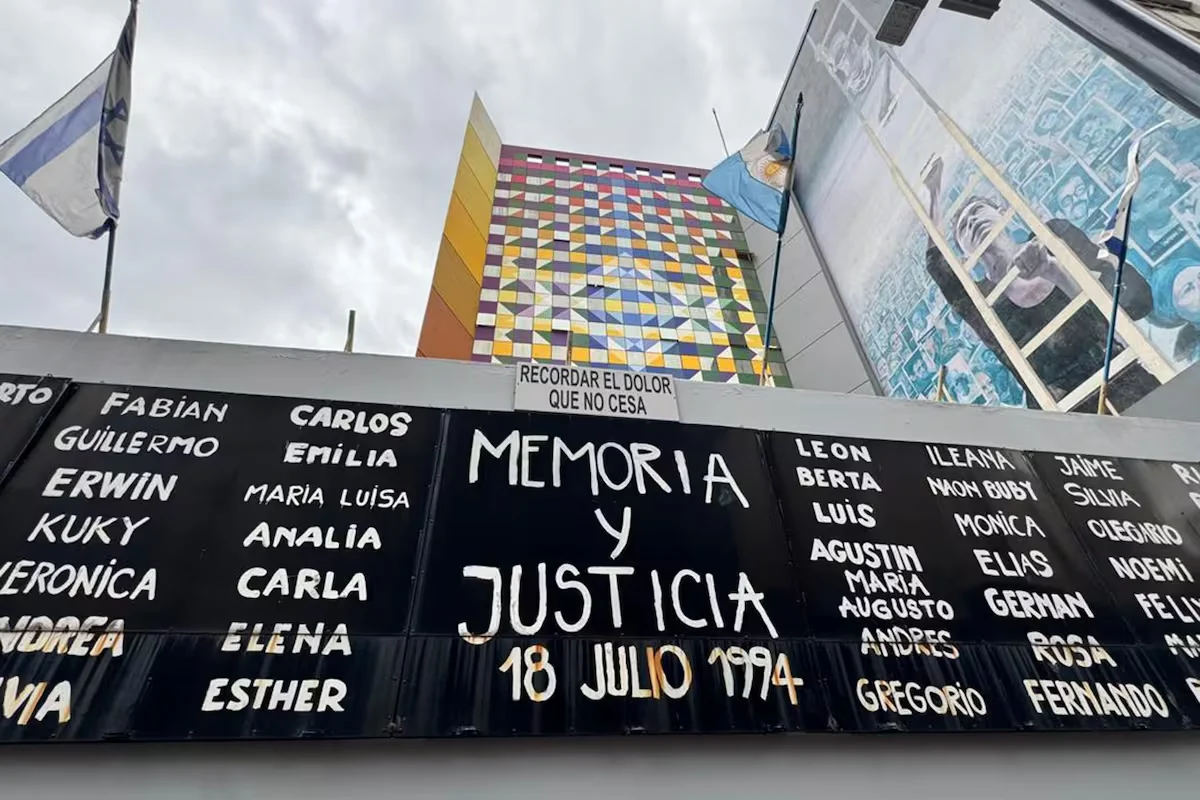
Victims of the attack
The Indicted
Among those indicted as necessary accomplices are the former Iranian ambassador Hadi Soleimanpour, the former cultural advisor Mohsen Rabbani, and the intelligence agent Ahmad Asghari. Also indicted was Salman Raouf Salman, a Lebanese Hezbollah agent identified as the coordinator of the final stage of the attack against the AMIA.
The procedure includes the application of the Law 27.784 on trial in absentia, aimed at allowing the advancement of the process against individuals who remain fugitives. In this context, the accused will have legal representation through the official defender Hernán Silva.
The bill for Trial in Absentia had been sent by the Government of Javier Milei to Congress, formally presented by the ministries of Security and Justice, and became law on February 20, 2025.
Rafecas classified the attack as a crime against humanity and attributed to the accused charges of homicides and repeated injuries, aggravated by racial or religious hatred, in addition to the use of a suitable means to provoke common danger and damages for discriminatory reasons.
President Javier Milei
Within the resolution, the former intelligence minister Alí Fallahijan, the former foreign minister Alí Velayati, the former commander of the Revolutionary Guard Mohsen Rezai, and the commander of the Al Quds force Ahmad Vahidi were also identified as central figures responsible for the criminal plan.
In contrast, the judge ruled the lack of merit for Abdallah Salman and Hussein Mouzannar. The procedural situation of the supreme leader Alí Jamenei, Imad Mughniyeh, and Alí Hussein Abdallah was not addressed as they were recently killed.
The investigation also established a connection between the attack on the AMIA and the attack on a commercial airplane that occurred in Panama the following day, carried out by a suicide passenger and resulting in 20 deaths. Four days later, both events were jointly claimed by Hezbollah under the name "Ansar Allah".
Finally, based on an opinion presented by prosecutor Sebastián Basso, head of the UFI AMIA, Rafecas decided to involve the Supreme Court due to the possible connection between this investigation and the case regarding the attack on the Israeli Embassy, which occurred in 1992.