Under the leadership of Socialist president Pedro Sánchez, Spain became the only country in Europe where median pensioner incomes exceed those of the working population, highlighting a serious sustainability issue in the public pension system.
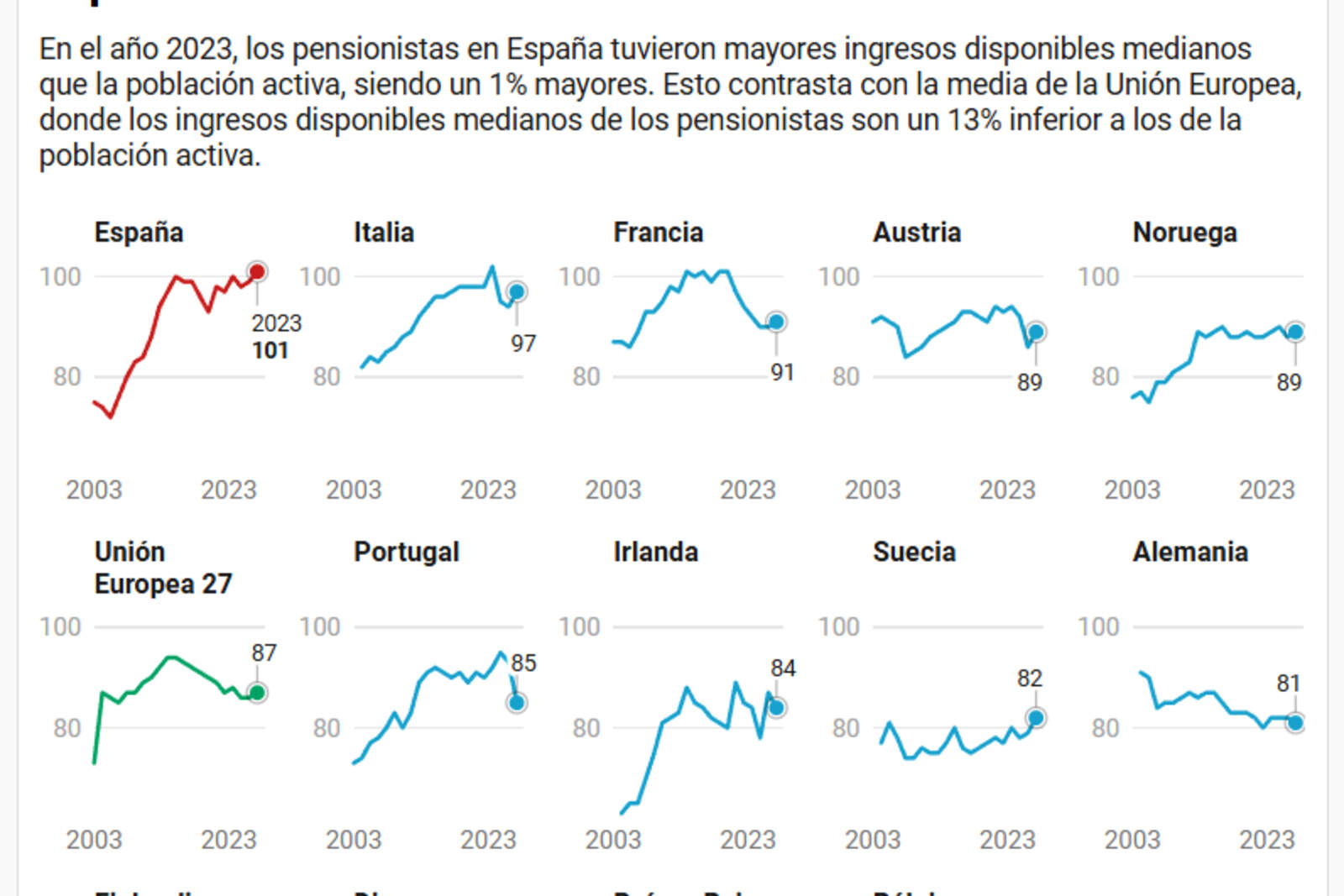
According to Eurostat data up to 2023, Spanish pensioners haveincomes 1% higher than workers, while in the rest of the European Union, pensioners receive, on average, 13% less than the working population.
This phenomenon is not explained by the private wealth of the beneficiaries. Although some argue that Spanish pensioners possess greater real estate assets or financial income, the data show that 72% of their income comes from public transfers, compared to 57% of the OECD average.
Datos de Eurostat.
Capital income, such as real estate or investments, represents only between 8% and 9% of their total income, below the OECD average, which reaches 10%.
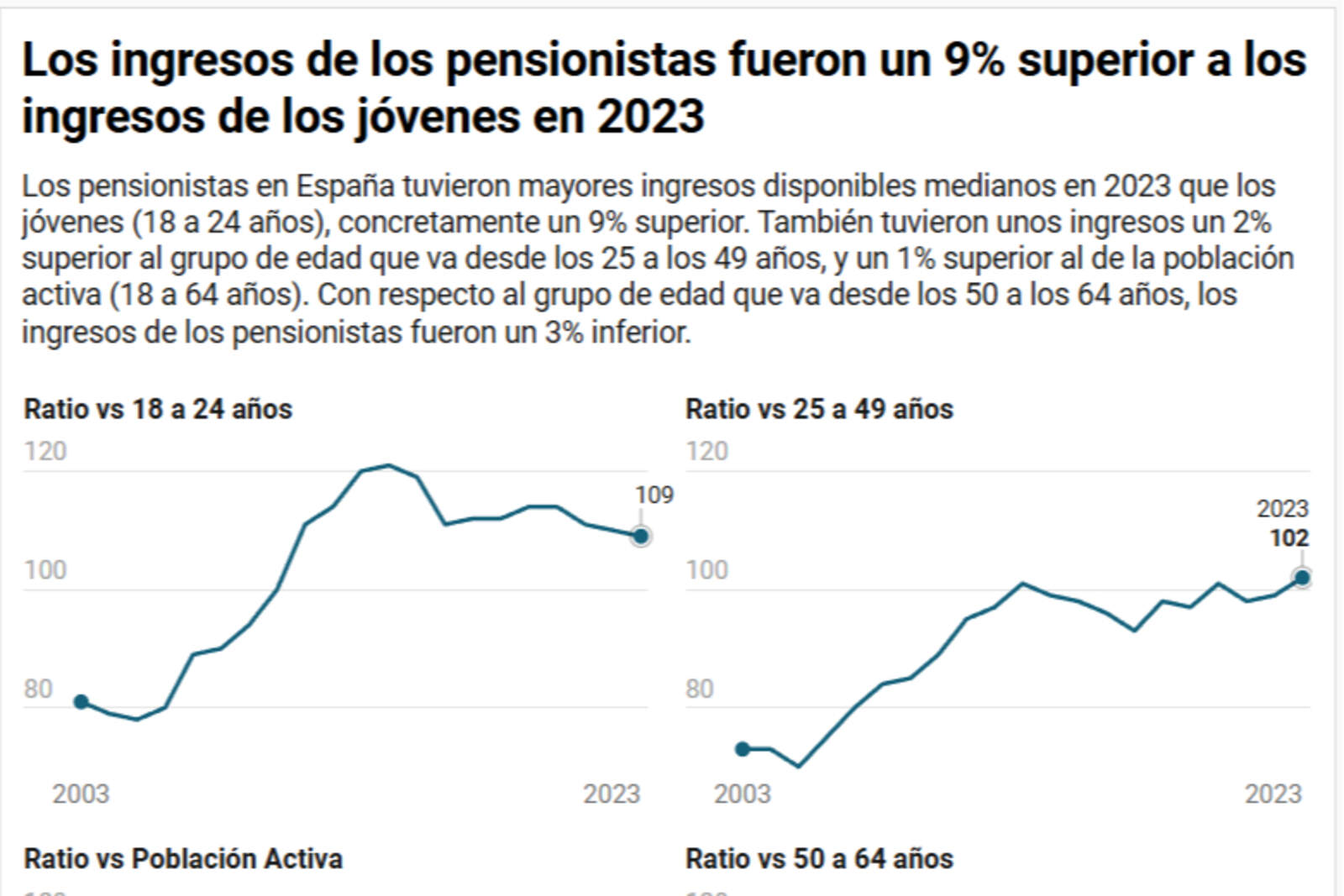
The contrast between the two categories remains even when comparing different age groups within the working population. Pensioners earn 9% more than young people aged 18 to 24 and 2% more than adults aged 25 to 49. However, pensioners' incomes are 3% lower than those of workers aged 50 to 64, that is, those who are close to retirement.
This imbalance is reflected in Spain's historical evolution. Since 2003, the ratio between pensioners' and workers' incomes has grown steadily in favor of the former, while in countries such as Germany or the Netherlands this ratio has remained stable or even decreased.
Datos de Eurostat.
The Bank of Spain defines the working population as all people aged 16 or older who are working or actively seeking employment, excluding students or homemakers who do not receive income. The incomes analyzed are net, after taxes and transfers, and refer to medians, an indicator that avoids distortions caused by extreme values.
Experts and media emphasize that this situation is not sustainable in the long term and represents a challenge for the public pension system, which depends on contributions from the working population. As pensioners receive higher incomes than those who support the system, pressure on public accounts increases and the debate over the intergenerational viability of pensions in Spain intensifies.