Iran is going through one of the most extensive and aggressive internet shutdowns ever documented. According to data from NetBlocks, national connectivity has been reduced for more than 60 hours to about 1% of its normal levels, leaving more than 90 million people practically cut off from communication.
The measure, described by experts as a "national switch," seeks to stifle dissent at a moment of intense internal tension, but it carries a high economic cost: it is estimated that the Iranian economy loses around 1.56 million dollars per hour without internet.
In the midst of this scenario, satellite technology has taken on a central role. Numerous activists have issued a public appeal to technological and political leaders in the United States, including Elon Musk, Sundar Pichai, President Donald Trump and Secretary of State Marco Rubio, to facilitate the activation of services such as Starlink Direct-to-Cell and Satellite SOS.
Varios activistas han solicitado a Elon Musk y otras figuras influyentes la activación de servicios digitales que puedan romper la censura del régimen de Jamenei
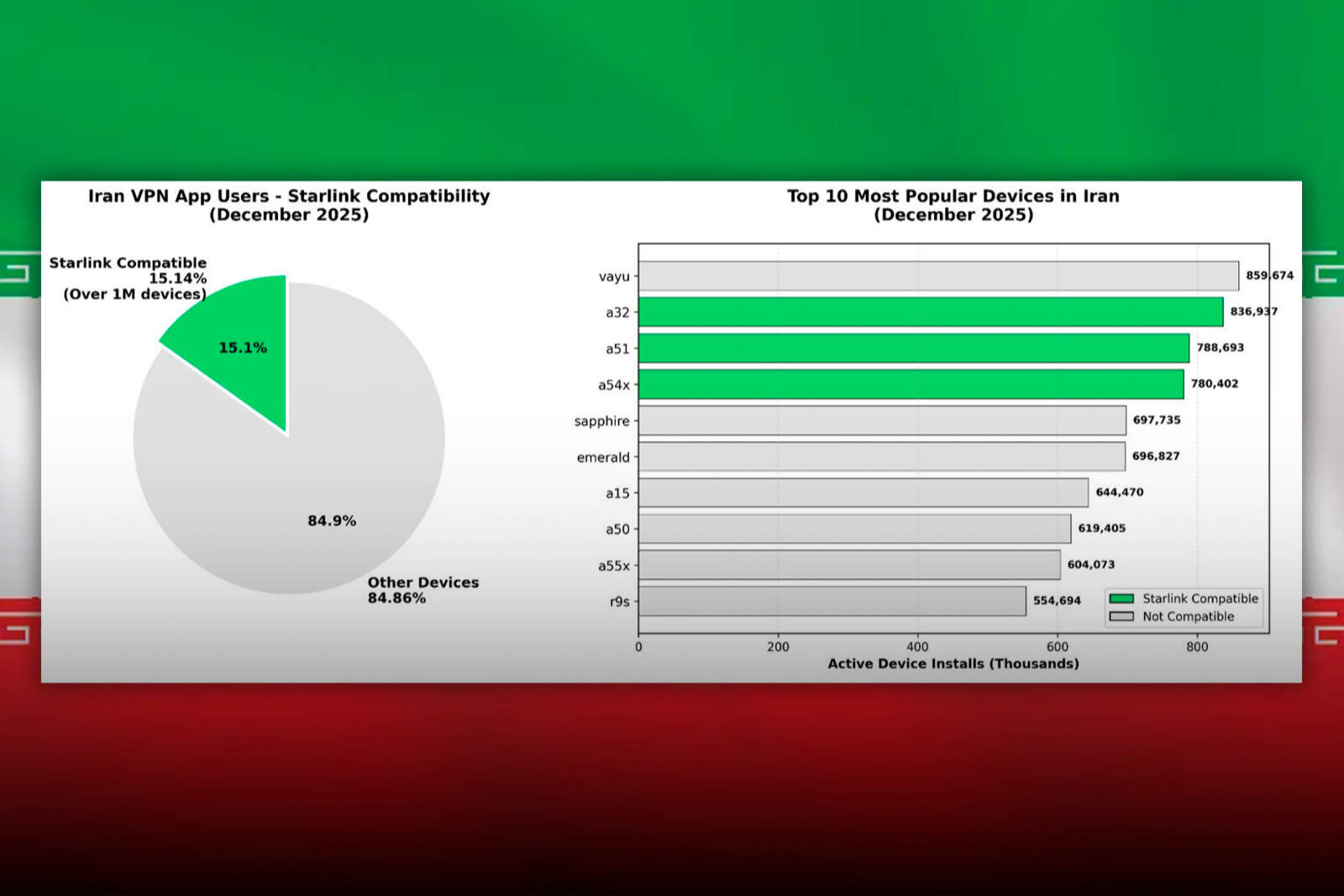
Recent data support this possibility. An analysis carried out in December 2025 based on aggregated information from ArgoVPN, an application with more than one million downloads in Iran, indicates that approximately 15% of its users already have phones that are compatible with Starlink's Direct-to-Cell technology.
Among the most common models are Samsung Galaxy A32, A51, and A54, mid-range devices that are widely used in the country. These LTE phones, released in recent years, do not require additional specialized hardware to connect to satellites that operate as cellular towers in orbit.
Meanwhile, an underground technology group has worked over the past two years with local activists to use Starlink's satellite network in order to transmit images of protests abroad and reintroduce independent information in Iran. According to sources close to the project, the initiative has maintained a connection success rate of 90.71%, even under conditions of intensified repression and surveillance.
Desde hace años grupos contrarios al régimen iraní trabajan con Starlink para difundir imágenes al exterior
Nevertheless, the response of the Iranian state has escalated. For the first time, the use of military jammers specifically intended to block Starlink signals has been reported. It has been reported that, although tens of thousands of Starlink terminals are currently operating in the country without authorization, the interference went from affecting about 30% of satellite traffic to more than 80% in a few hours.
This is compounded by the deliberate disruption of GPS signals, a practice that intensified after the 12-day conflict with Israel, which has caused localized outages and irregular connectivity in different regions.
Numerous newspapers have pointed out that the presence of Starlink receivers in Iran is now greater than in previous shutdowns, even though their use remains illegal.
Experts on the subject such as Amir Rashidi, from Miaan Group, and Simon Migliano, author of a comprehensive report on internet shutdowns, agree that such a coordinated attack against satellite connectivity has never been observed before. Migliano states that the current shutdown reflects the regime's willingness to incur enormous economic costs in order to halt social mobilization.
La dictadura de Jamenei desplegó bloqueadores de señal para interferir con los progresos de Starlink