In this case, silicon atoms trapped copper and calcium within a complex crystalline network of 12 and 14 sides.
Why the discovery surprised scientists
According to Italian mineralogist Luca Bindi, the lead author of the study, this type of structure had never been detected as a result of a nuclear explosion.
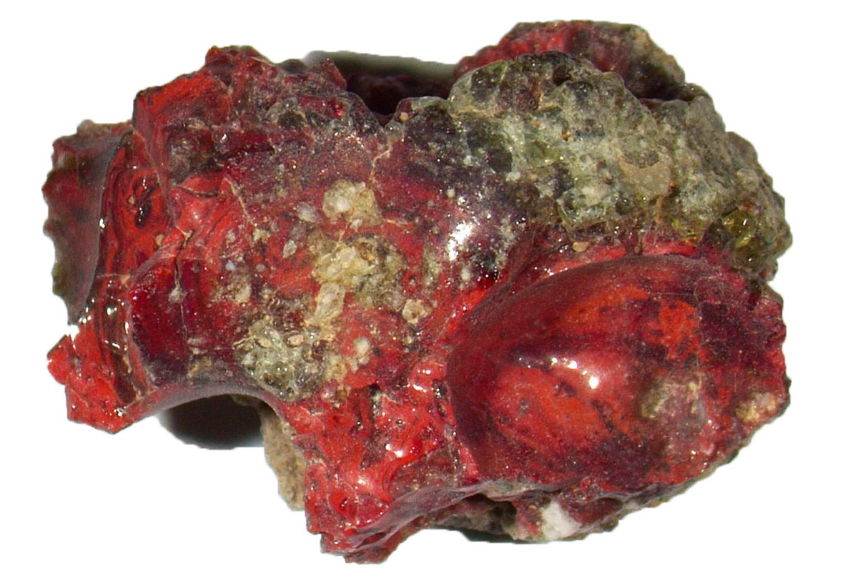
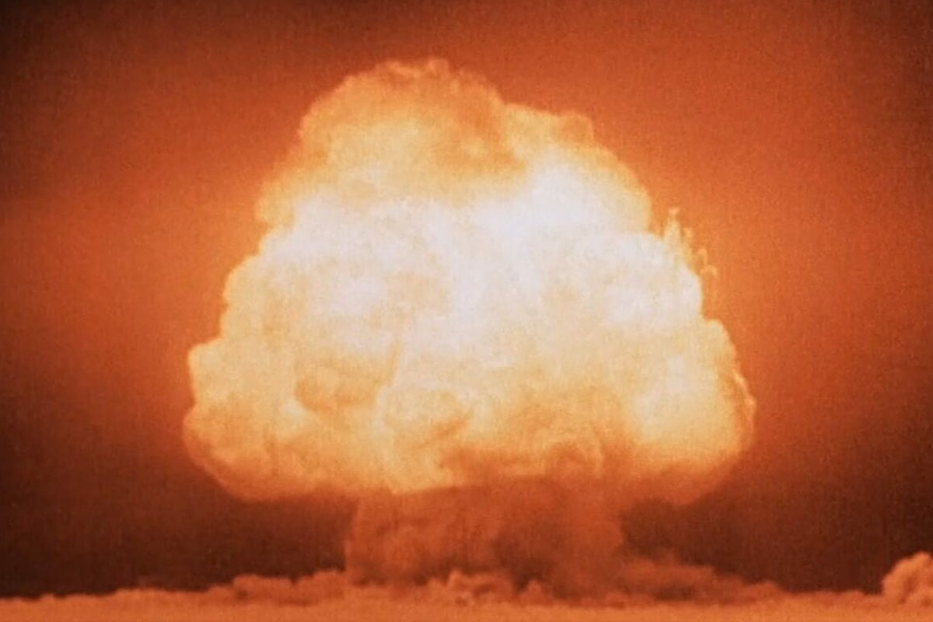
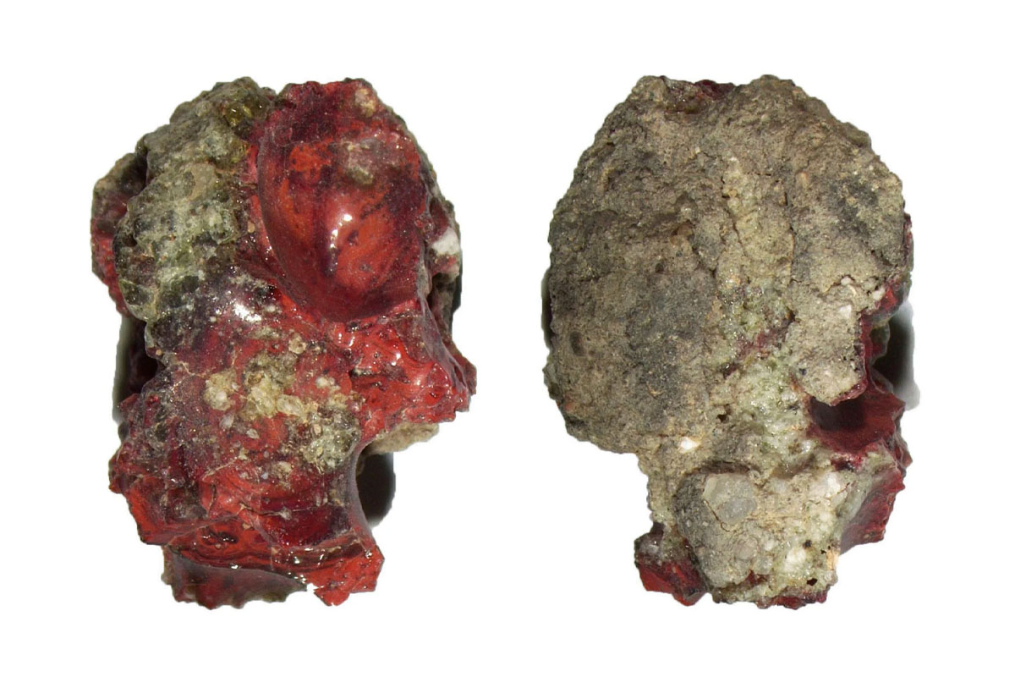
A group of scientists found a crystal never before seen in nature within remnants of red trinitite, the materialformed after the first nuclear explosion conducted in 1945 during the Trinity test in the United States.
The discovery was published in the scientific journal PNAS and brought attention back to one of the most shocking episodes of the 20th century: the detonation of the first atomic bomb in the New Mexico desert.
The material formed after the first nuclear explosion
What is trinitite and how was it formed
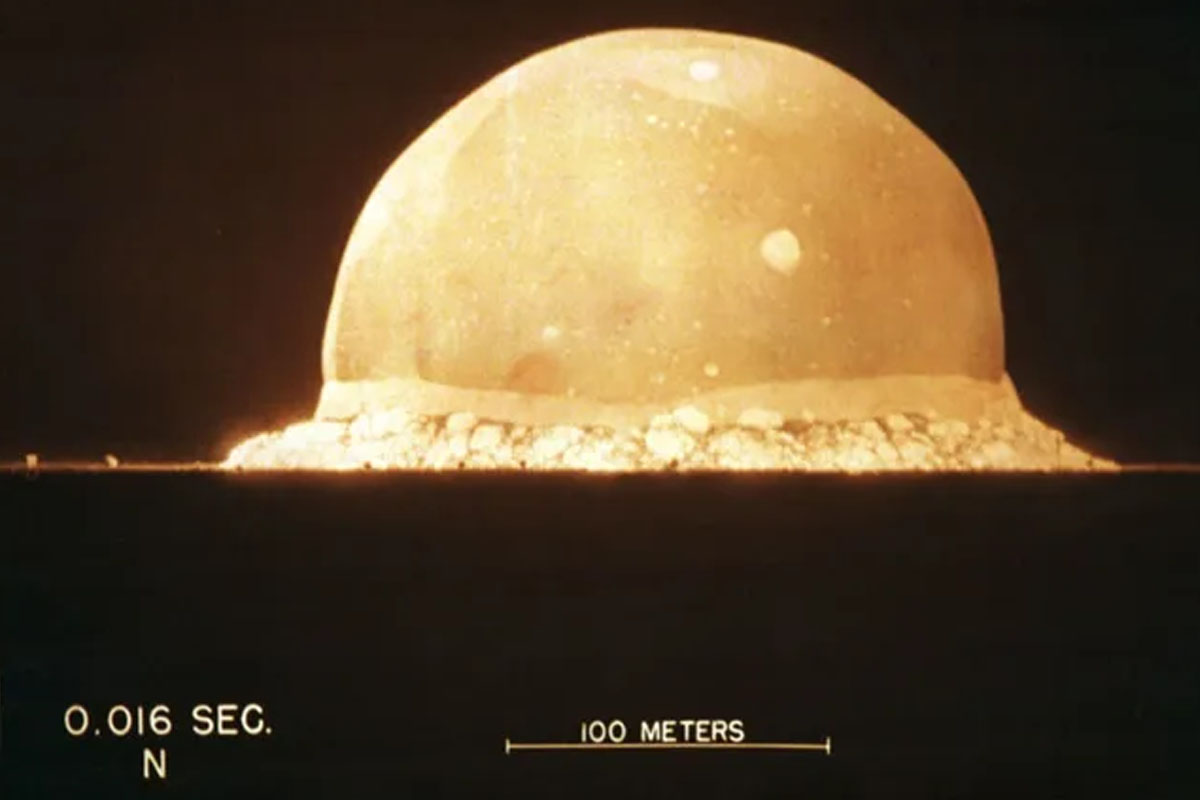
Trinitite is a radioactive glass that was generated after the nuclear explosion on July 16, 1945, when the extreme heat melted the desert sand around the test site.
The detonation released energy equivalent to about 25,000 tons of TNT and reached temperatures exceeding 1,500 degrees Celsius.
As a result, the sand and nearby metal structures were completely melted and fused into a glassy material of green and red color.
What is trinitite and how was it formed?
The crystal found does not exist anywhere else
The researchers analyzed a variant known as “oxblood trinitite”, a reddish version generated by metallic remnants from the test tower and equipment destroyed during the explosion.
Within those samples, they found a crystal of the clathrate type, an extremely rare structure where certain atoms form a kind of “cage” that encloses other elements.
The finding is significant because it demonstrates how extreme events can force matter to adopt configurations that are normally impossible to reproduce in nature.
Why the discovery surprised scientists
During the Trinity test, in addition to the extreme heat, the pressure reached approximately 8 gigapascals, levels comparable to those found in deep areas of the Earth's crust.
The link to the strange quasicrystals discovered earlier
The research arose after strange silicon-rich quasicrystals were detected in trinitite years ago, another very unusual structure.
The pressure reached approximately 8 gigapascals.
Scientists suspected that this new clathrate could have been a precursor phase of those materials, although mathematical analyses ultimately ruled out that direct relationship.
Nonetheless, the study helps to better understand how minerals organize under extreme conditions that are difficult to replicate easily in the laboratory.
What scientists can learn from these extreme materials
Experts argue that extreme phenomena such as nuclear explosions, meteorite impacts, or electrical discharges can generate completely new minerals and structures.