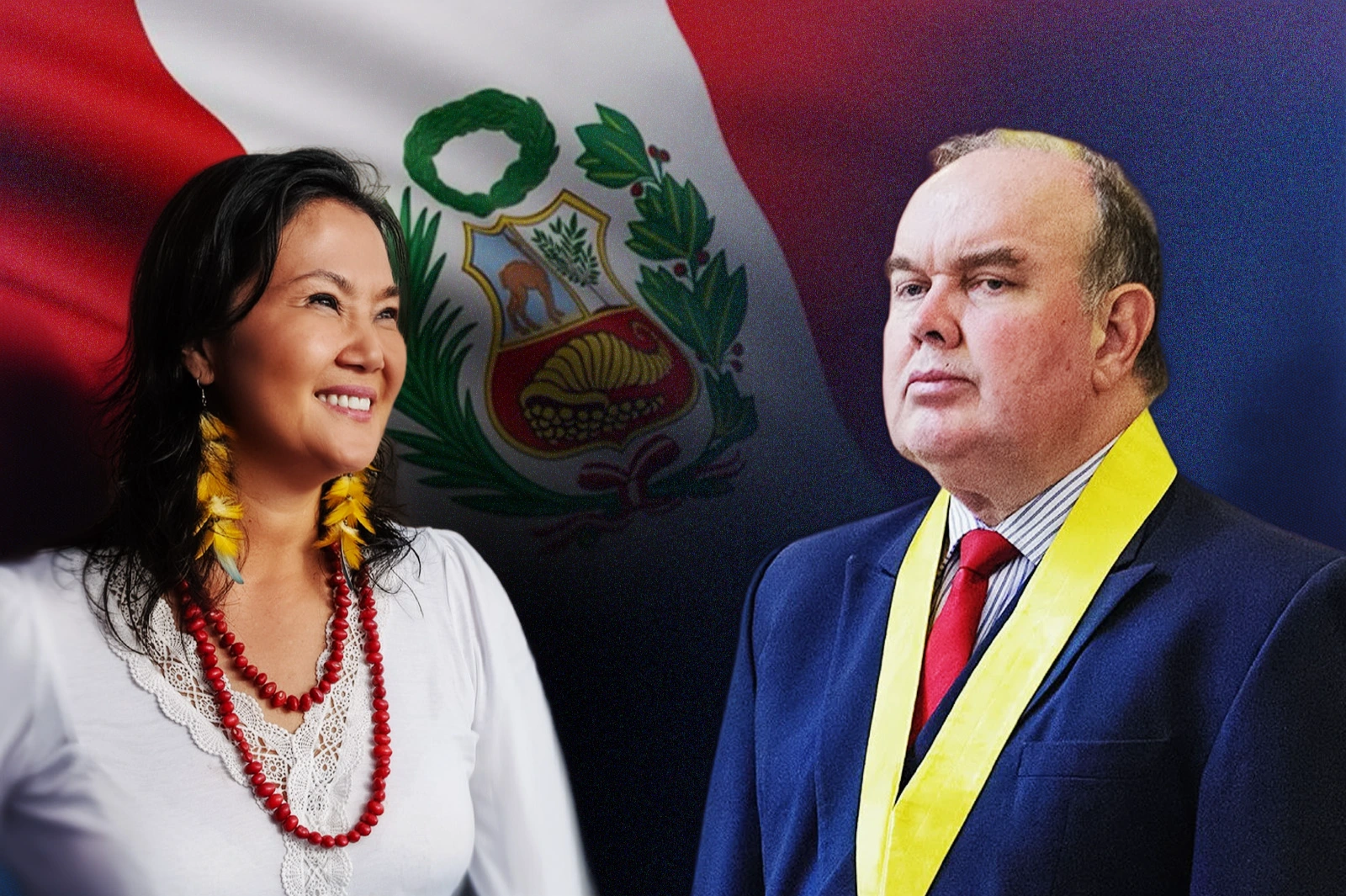

A few weeks before Peru's general elections on April 12, the most recent polls show that right-wing candidates Keiko Fujimori and Rafael López Aliaga are leading the way in voting, marking a trend that reflects the progress of this space in a fragmented electoral scenario.
Both leaders appear in a virtual technical tie, with levels of support that barely exceed 10%, in a contest that brings together more than thirty candidates and in which no candidate manages to consolidate a clear majority. This dispersion not only highlights the structural weakness of the Peruvian political system, but also the wear and tear of a leadership that, in recent years, has been beset by recurring institutional crises.
In this context, the relative advantage of Fujimori, daughter of the late former Peruvian president, and López Aliaga, former mayor of Lima, suggests a social demand oriented to the right that comes with stronger proposals in terms of security, economic stability and governance. This is no small fact: Peru has had multiple presidents in less than a decade, several of them dismissed or investigated for corruption, which has eroded public trust