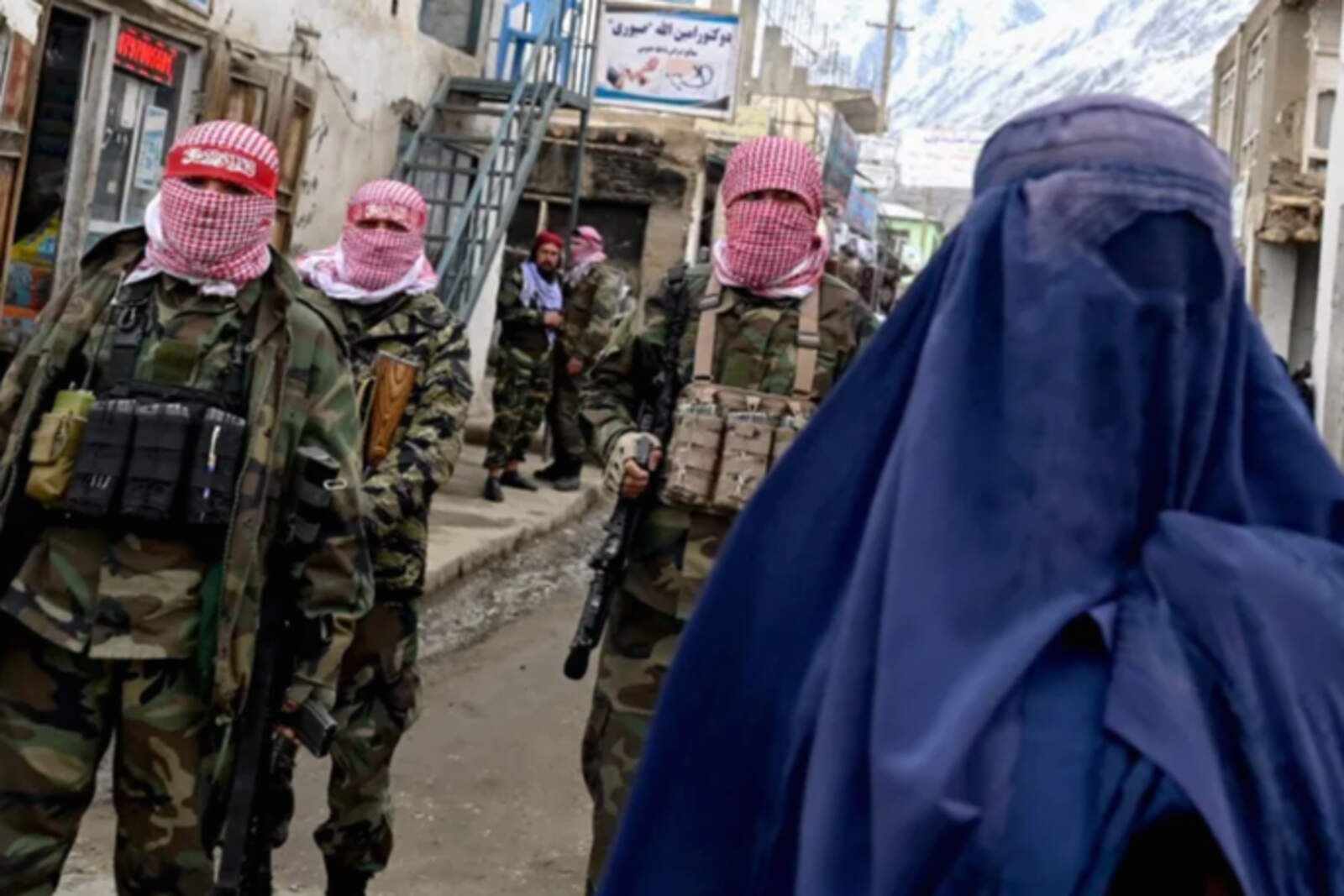
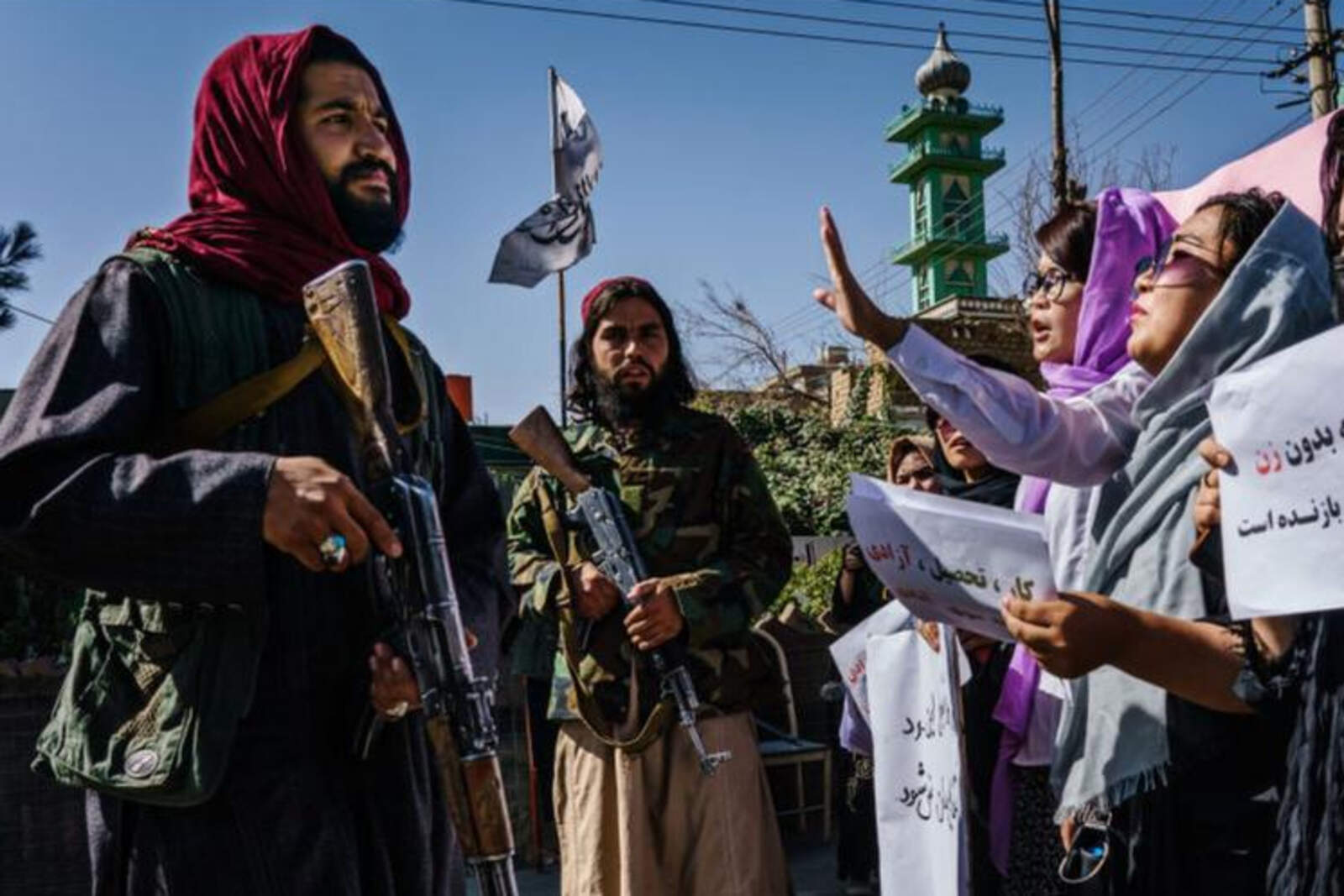
Among its articles, the text legitimizes domestic violence and enables 'master' and 'slave' relationships
Compartir:
The so-called Islamic Emirate of Afghanistan, led by the Taliban, published a new Criminal Code, signed by the supreme leader, Mullah Hibbatullah Akhundzada, in which physical violence against women and children is permitted, among other serious matters.
The document, officially promulgated on January 4, 2026, consists of 119 articles organized into three chapters and ten sections, and it has already been distributed to provincial courts for implementation.
The new regulatory body introduces provisions that regulate both the imposition of punishments and the powers to carry them out. Among its articles, the text legitimizes domestic violence, establishes categories that permit master-slave relationships, classifies opponents of the Islamic regime as heretics, and authorizes certain authorities and private individuals to apply sanctions.
Terroristas talibanes.
The Taliban Criminal Code
One of the serious points is the differentiation between the "hadd" and "ta'zir" punishments. According to the text, "the hadd punishment can be carried out by the imam" and the "ta'zir punishment can be carried out by the 'husband' and the 'master'". Hadd, a term that literally means "limits", refers to penalties prescribed in sharia law that can't be modified, while ta'zir are discretionary sanctions delegated by the imam to judges or other persons.
Article 32 establishes that "only if the husband beats the woman with a stick and this act causes her serious injuries, such as a wound or contusion, and the woman can prove it before a judge, the husband will be sentenced to 15 days in prison". Likewise, Article 48 provides that "a father can physically punish his child up to 10 years old when the child acts against his own interests, such as abandoning prayer or other acts".
In matters of public order and religion, the Code contemplates severe penalties. Article 14 stipulates that, in order to serve the "public interest", the killing of criminals, including those who "defend false beliefs contrary to Islam" or "those who invite others to such beliefs", described as maabtadin and corrupters, "is considered permissible with the permission of the 'Imam'".
El régimen talibán.
Meanwhile, clause two of Article 17 classifies mockery or ridicule of Islamic norms as a crime and sets a penalty of two years in prison, without establishing specific criteria to define such conduct. Article 26 establishes that followers of the Hanafi school of thought can't abandon their belief and, if it is proven before a judge, they will be sentenced to two years in prison.
In addition, nowhere in the Code are the right to defense, the right to remain silent, or the right to compensation recognized, nor are other minimum requirements of a fair trial guaranteed. In addition, it formalizes provisions that, according to their content, legalize discrimination against religious minorities and permit restrictions on freedom of expression and thought, as well as detentions and punishments.
The Code is framed in a context in which the Taliban regime had already adopted measures that affect women and children, including the prohibition on attending schools above the sixth grade and university education for women, in addition to restrictions on their presence in public spaces. The new procedural framework also prohibits women from remaining outside their homes or going to relatives' houses in cases of domestic violence.