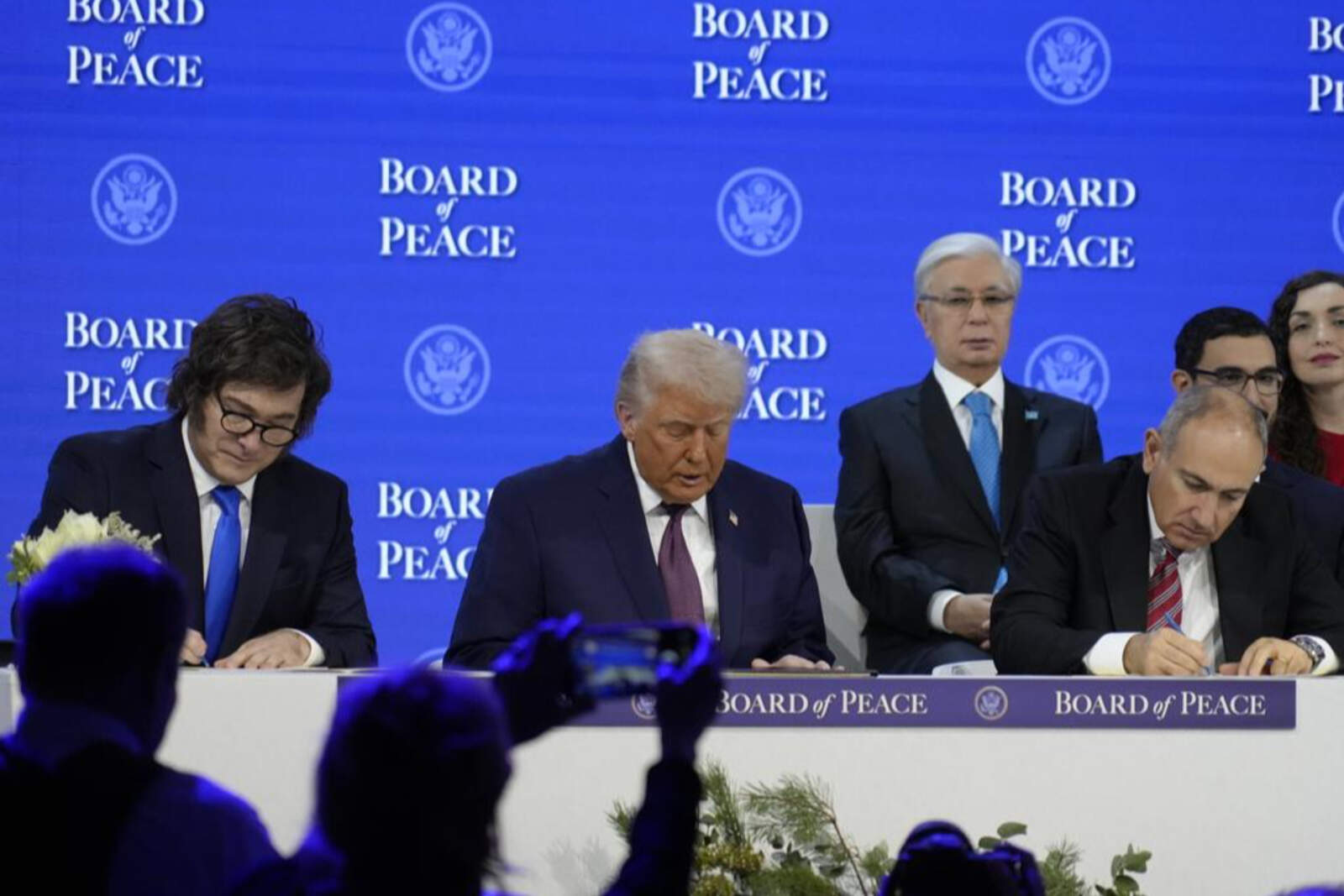
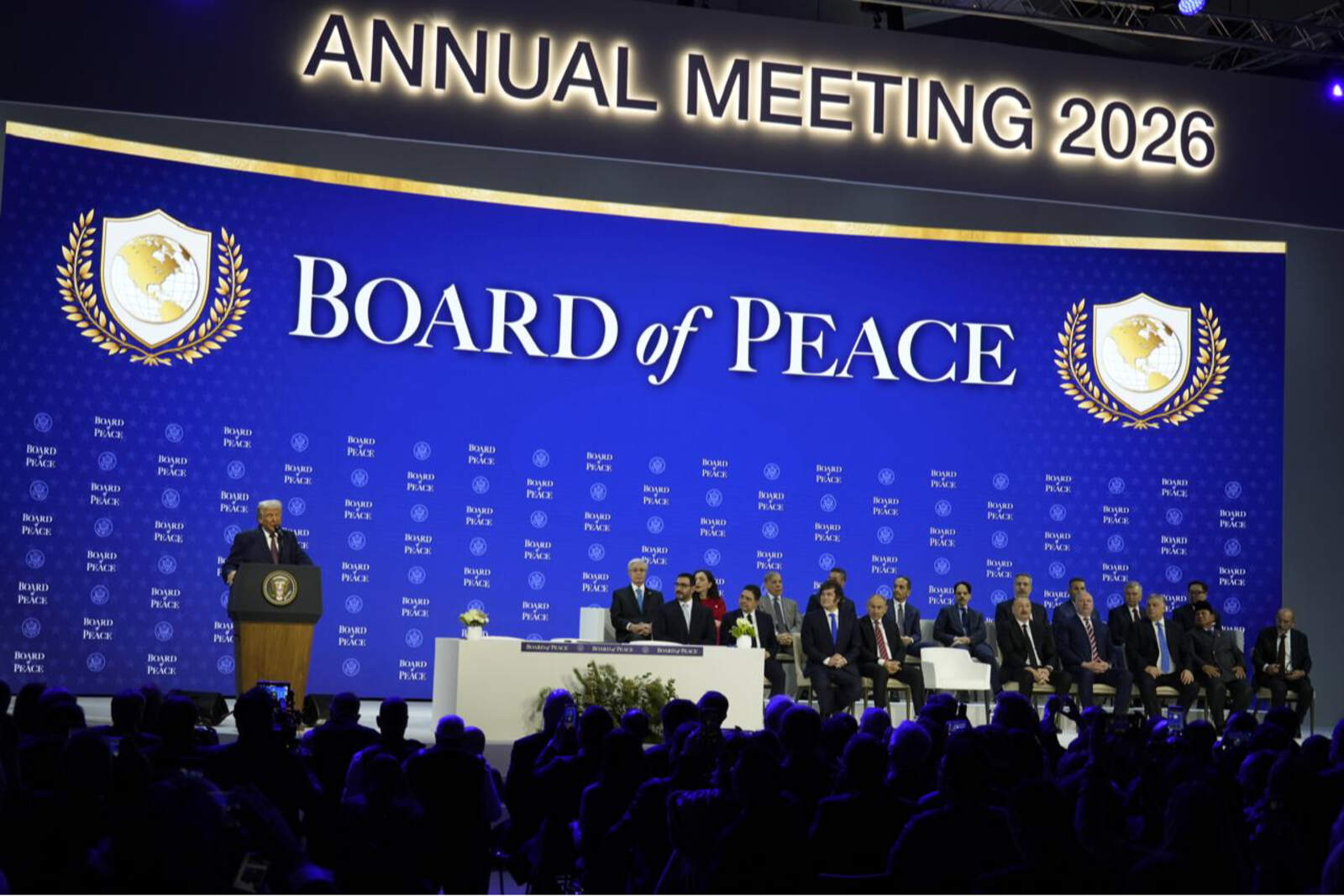
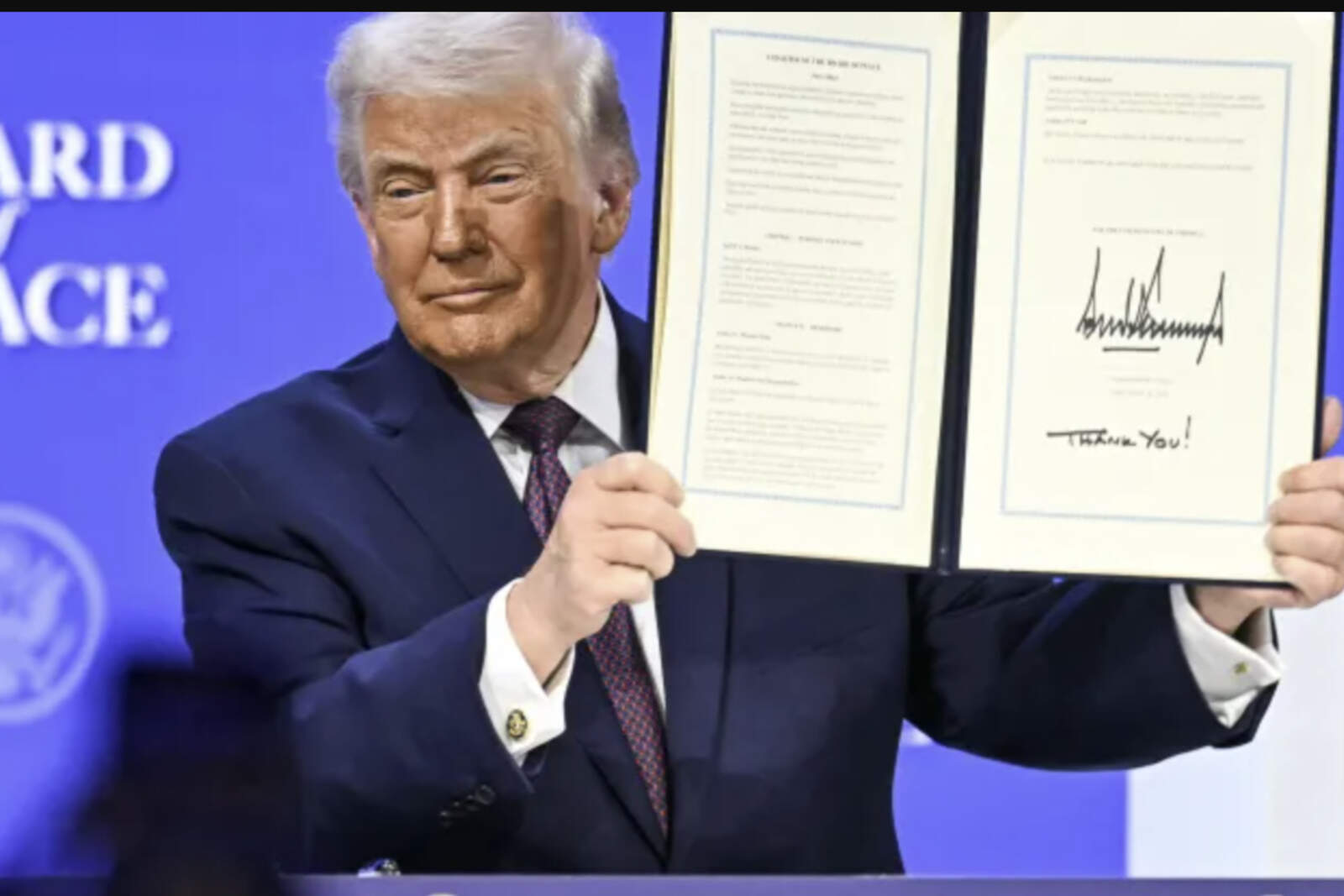
The President of the United States, Donald Trump, signed the founding charter of the Board of Peace this Thursday in Davos. This constitutes a new international body intended to promote conflict resolution and global stability.
The ceremony took place within the framework of the World Economic Forum andmarked the formal launch of one of the central initiatives of Trump's international agenda.
"Today is a very exciting day that took a long time to build", stated the U.S. President during his inaugural speech. "We are going to have peace in the world", he declared before the leaders and delegations in attendance.
Se realizó el lanzamiento del Board of Peace liderado por Donald Trump
A project that was born in Gaza and expanded its reach
The Board of Peace had its origin in the 20-point ceasefire plan promoted by Trump for the Gaza Strip. A project that was backed by the UN Security Council.
However, as the months went by, the initiative significantly expanded its reach. Then, it came to be conceived as a permanent international body, with the capacity to intervene in multiple conflicts at the global level.
According to officials from the U.S. administration, around 35 countries have already agreed to join as founding members, while more than 60 nations received formal invitations to join the new framework.
Alrededor de 35 países ya aceptaron integrarse, y Argentina es uno de ellos.
Trump went so far as to describe the Board of Peace as "the most prestigious council ever formed". He suggested that, in the future, it could even assume functions that are currently carried out by the United Nations.
Political leadership and structure under construction
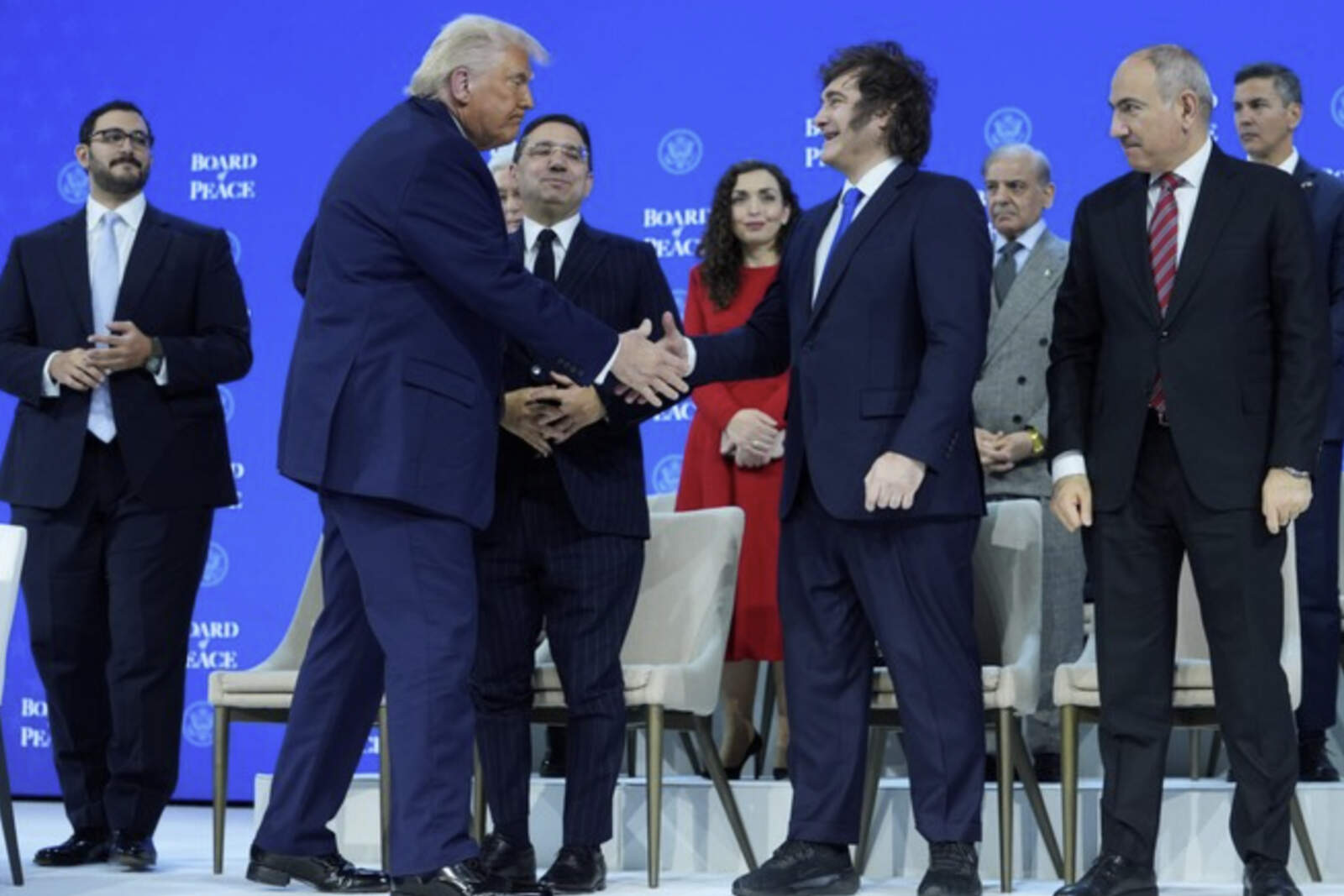
During the event, Trump was accompanied by heads of state and government from the founding member countries. Among them were the Argentine President Javier Milei and the Prime Minister of Hungary, Viktor Orbán.
Javier Milei junto a Trump firmando el acta fundacional
In his remarks, the U.S. President defended his administration's foreign policy and asserted that he had helped "solve eight wars". He also highlighted progress toward ending the conflict between Russia and Ukraine.
The U.S. Secretary of State, Marco Rubio, defined the Board of Peace as "a group of leaders oriented toward action". He emphasized that its immediate priority will be to ensure that the peace agreement in Gaza is lasting. Nevertheless, he acknowledged that the functioning of the body is still under development.
Support, rejections, and controversies
The launch of the Board of Peace caused support but also resistance. Countries such as France, Norway, and Sweden rejected the invitation. They also expressed alleged "concern" about possible overlap with the UN and the broad scope of the new body's mandate.
Other nations, such as China, Canada, and Ukraine, have not yet publicly defined their position. Meanwhile, Israel confirmed its participation. Meanwhile, the United Kingdom decided not to sign the treaty during the ceremony due to objections over the invitation to Russia.
The statute of the Board of Peace establishes that countries that seek permanent membership must make a contribution of 1 billion dollars. Meanwhile, nonpermanent members will have three-year terms. Trump was designated as the body's permanent president, even beyond his current term.
El Consejo de Paz se costituye como un nuevo actor en el tablero internacional
A new player on the international stage
The creation of the Board of Peace is taking place in a context of growing international tension and questions about the functioning of traditional multilateral bodies. Although Trump avoided referring directly to the UN, the founding text mentions "institutions that have repeatedly failed". This has revived the debate about the future of the current international order.
From the United Nations, however, officials played down the impact of the new body. The head of humanitarian aid of the body, Tom Fletcher, stated that the UN "is not going to disappear" and will continue to fulfill its role in managing global crises.