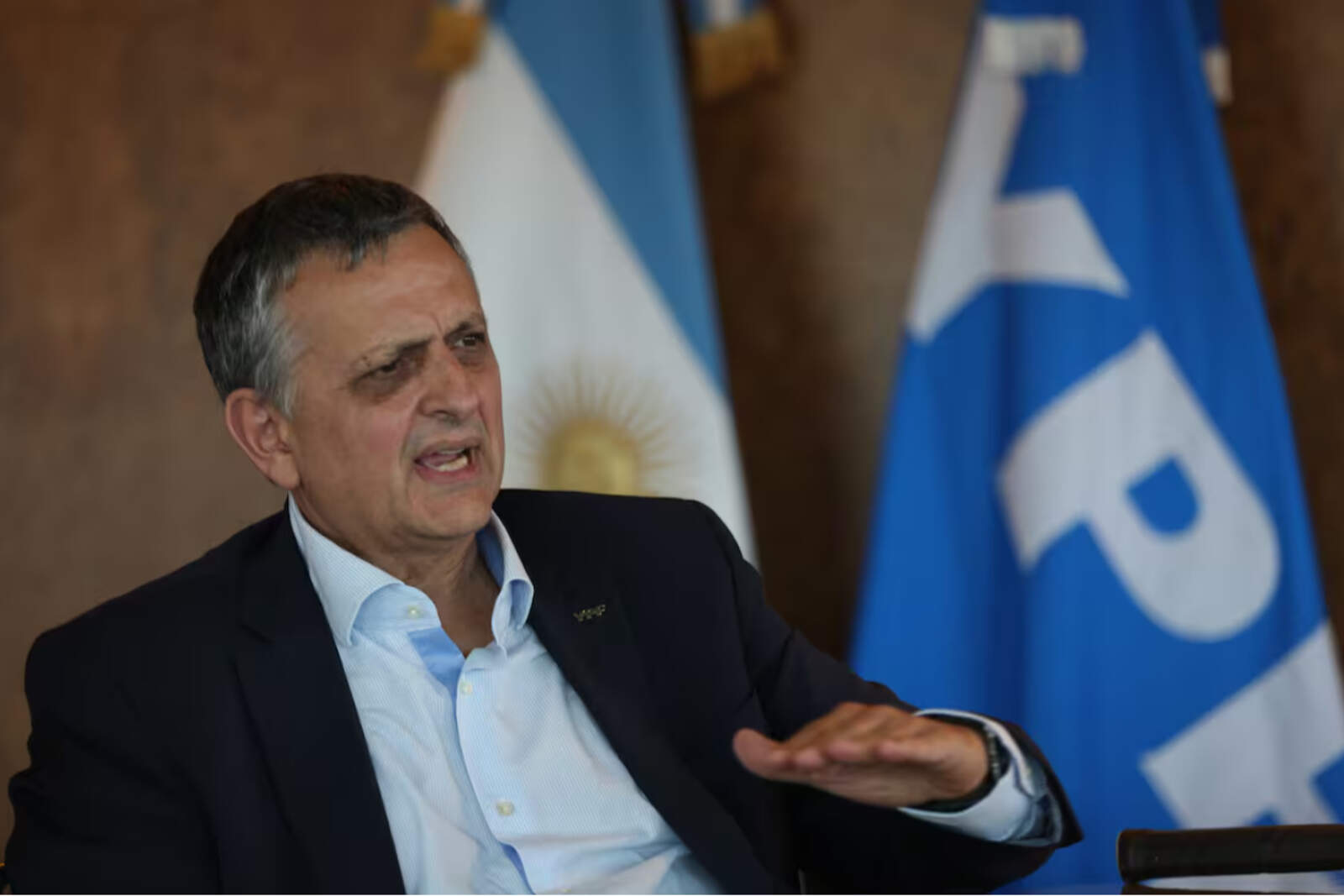
Horacio Marín anticipated a historic leap in energy and highlighted the reforms
Compartir:
YPF president Horacio Marín anticipated that Argentine energy exports will reach between USD 13.5 billion and USD 14 billion in 2026. The figure would exceed the USD 11 billion recorded in 2025 and would mark a new step in the sector's growth.
In statements to Infobae, Marín asserted that this increase is only a preview of what could happen between 2027 and 2031. According to his explanation, in that period Argentina would reach unprecedented levels of external sales of oil and liquefied natural gas (LNG).
Key infrastructure for the export leap
The executive indicated that the main current limit is evacuation capacity. In that regard, he highlighted the progress of the VMOS pipeline, which has already surpassed 50% completion and will be finished by the end of the year.
"Until 2027 there can't be a leap in exports because Argentina doesn't have evacuation capacity", he maintained. Once the works are completed, the scenario will change substantially.
Marín also emphasized the central role of the Argentina LNG project. The development is being carried out together with Italian company Eni and Arab company XRG. The financing scheme is in process and its completion is expected in the short term.
YPF: Marín celebró la reforma laboral y anticipó 14.000 millones de USD en exportaciones en 2026
Multibillion-dollar investments in Vaca Muerta
YPF's president detailed that the project will require investments of USD 30 billion over four years. Of that total, USD 20 billion will be allocated to infrastructure and more than USD 10 billion to well drilling. Most of it will be foreign direct investment. YPF will participate with 30%.
The plan includes the construction of the largest gas pipeline ever built in Argentina. In addition, in the first stage initial exports of 100,000 barrels of oil are projected.
The development of Vaca Muerta is the core of this strategy. According to Marín, the Argentina LNG project could generate 40,000 jobs, both direct and indirect.
Labor reform and competitiveness
When asked about labor reform, YPF's head stated that "a labor reform is always good". He considered that updating legislation provides greater predictability and competitiveness.
He explained that some changes are already being applied in the company, but he maintained that it is preferable that they be part of a general regulatory framework and not of specific sectoral agreements.
The combination of structural reforms, foreign investments, and expansion of energy infrastructure positions the sector as one of the engines of Argentine growth in the coming years. If the construction and financing deadlines are met, the country could consolidate itself as a relevant player in the global energy market.