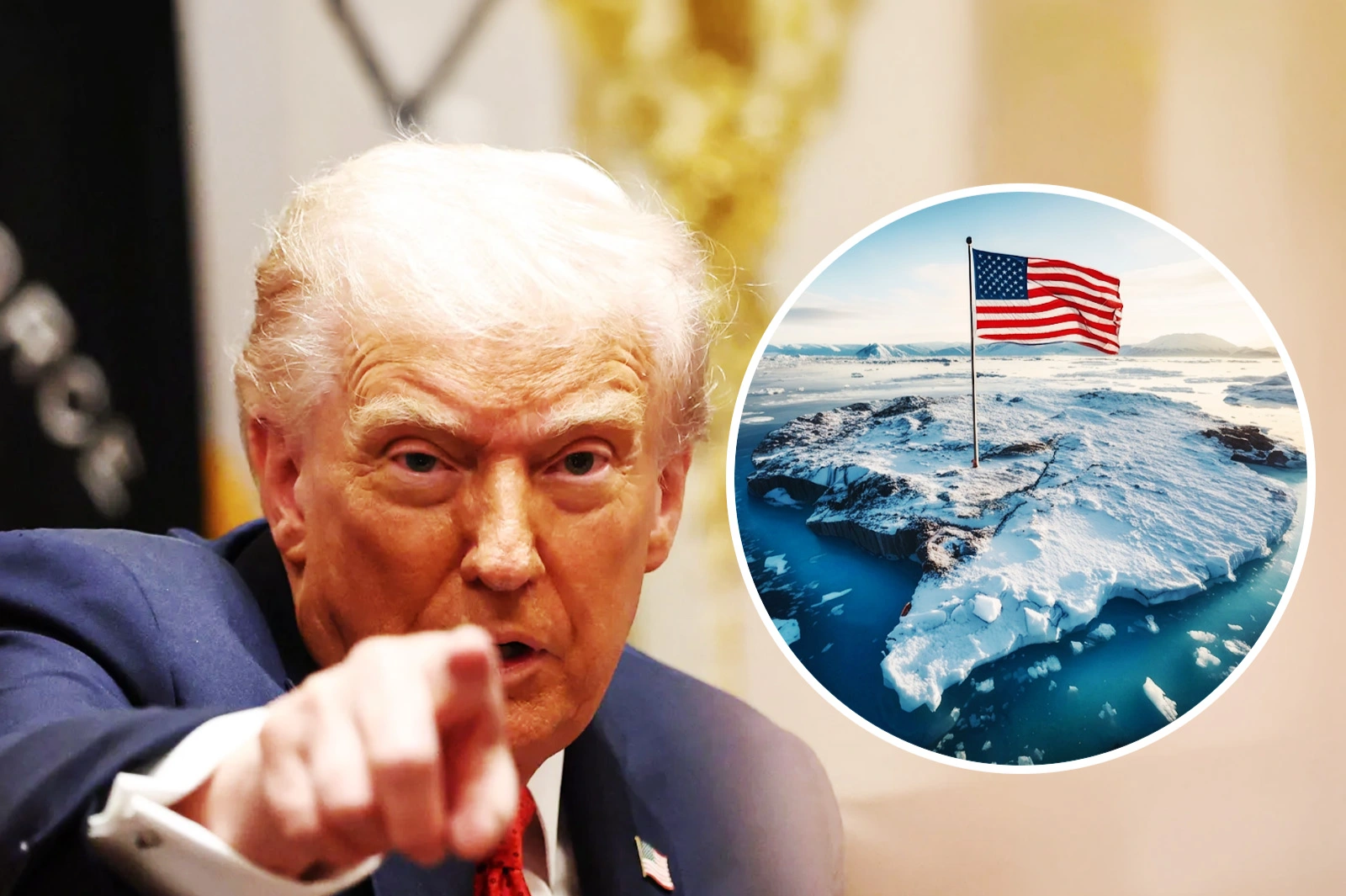
After a harsh series of criticisms of European countries, the US president assured that the island located in the North Atlantic is poorly managed.
Nuevo
Agregar La Derecha Diario en
Compartir:
The President of the United States, Donald Trump, once again launched harsh criticism against NATO and hinted that he will move forward with his historic proposal to acquire Greenland, in a clear sign that his administration is willing to redefine both traditional alliances and the country
's geopolitical strategy.
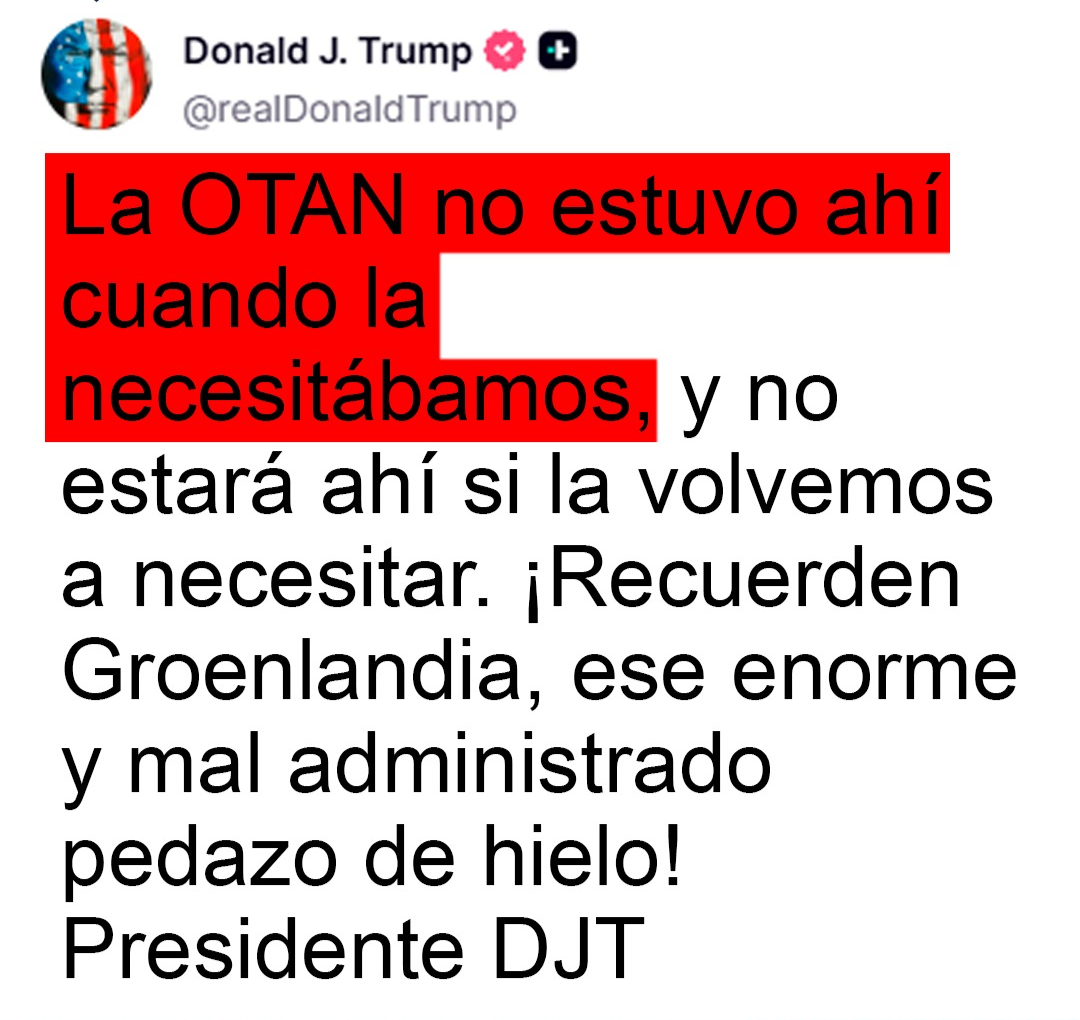
In a message published in Truth Social, Trump was blunt: “NATO wasn't there when we need it, and it won't be there if we need it again. Remember Greenland, that big, mismanaged mass of ice!”
president's words come at a time of tension with European allies, following the refusal of several countries to support the United States in its recent military intervention against Iran. The White House believes that this lack of support confirms a structural problem within NATO: an excessive dependence on Washington without an equivalent commitment on the part of other members.
In this context, the Greenland proposal acquires a strategic logic. Not only does the island have a key location in the Arctic, a region that is increasingly relevant in terms of security and natural resources, but it also represents an opportunity to strengthen the US presence in an increasingly competitive global scenario. From this perspective, Trump's approach responds to specific national security interests and geopolitical projection
. Donald Trump reaffirmed his intentions to achieve the administration of Greenland after an episode of great tension with NATO
The president's insistence on this issue came after a meeting at the White House with the Secretary General of NATO, Mark Rutte, who avoided confronting the president publicly and acknowledged that there is a level of “disappointment” in Washington regarding the behavior of the allies. The meeting took place without joint statements, reflecting the sensitivity of the moment
.
At the same time, the U.S. administration is evaluating measures to reconfigure its military presence in Europe, including the possibility of withdrawing troops from countries considered to be uncooperative and transferring them to those that have demonstrated support. This strategy reinforces the message that American protection will not be automatic, but will depend on the degree of commitment of each partner
.
In this context, Trump's criticisms of NATO are supported by his underlying position: the need for a more balanced relationship based on reciprocity. For the president, it is not sustainable that the United States continues to assume the greater weight of collective defense while other members adopt distant positions
at key moments. President Donald Trump's post through the social network Truth Social
The reference to Greenland, far from being an isolated comment, is part of this broader vision. By pointing out the “mismanagement” of the island, Trump aims to question the management of strategic territories by allies that are not fully exploiting their potential or contributing effectively to Western security
.
In this scenario, the president's warnings mark a turning point. Both his questioning of NATO and his interest in Greenland reflect a foreign policy aimed at maximizing the interests of the United States, even if that involves reviewing historic alliances or promoting decisions that break with the