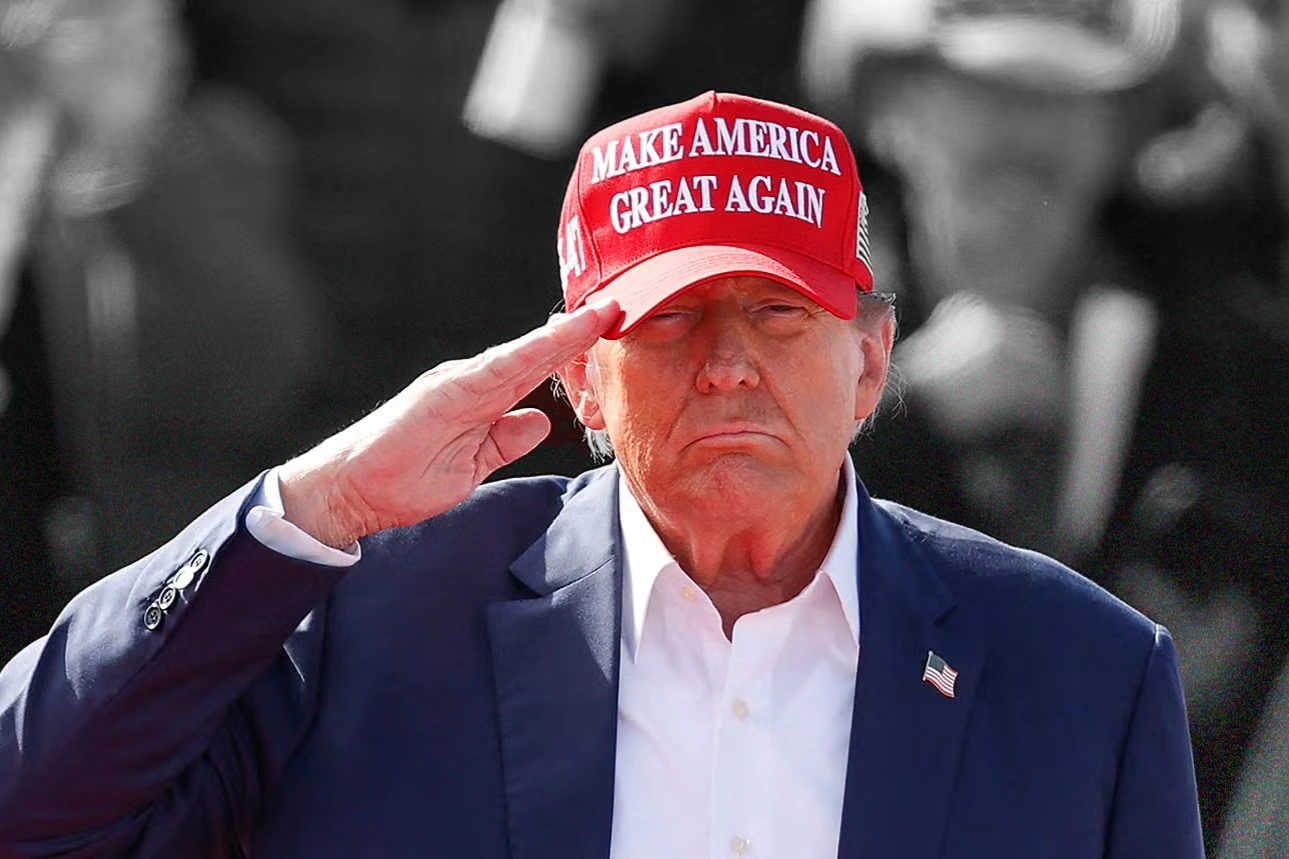
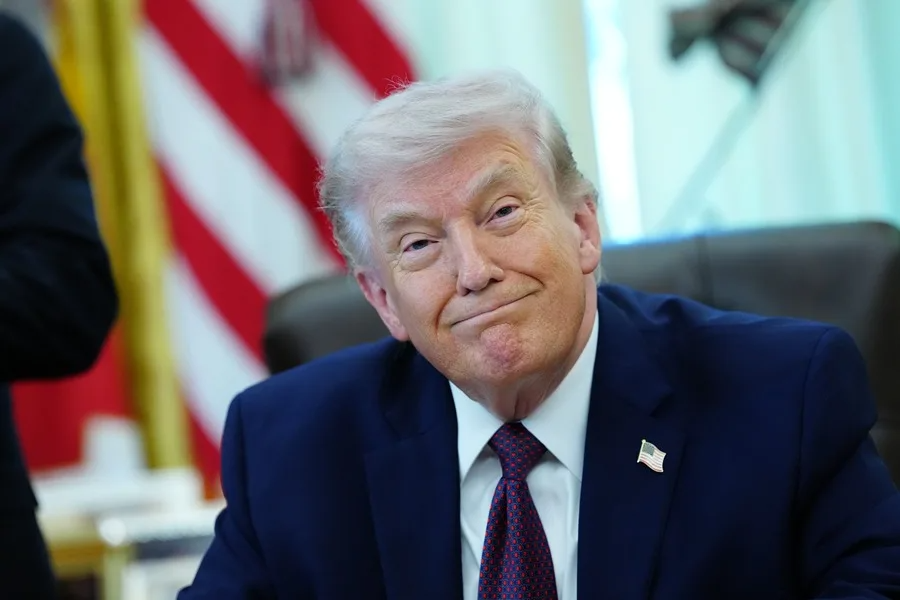
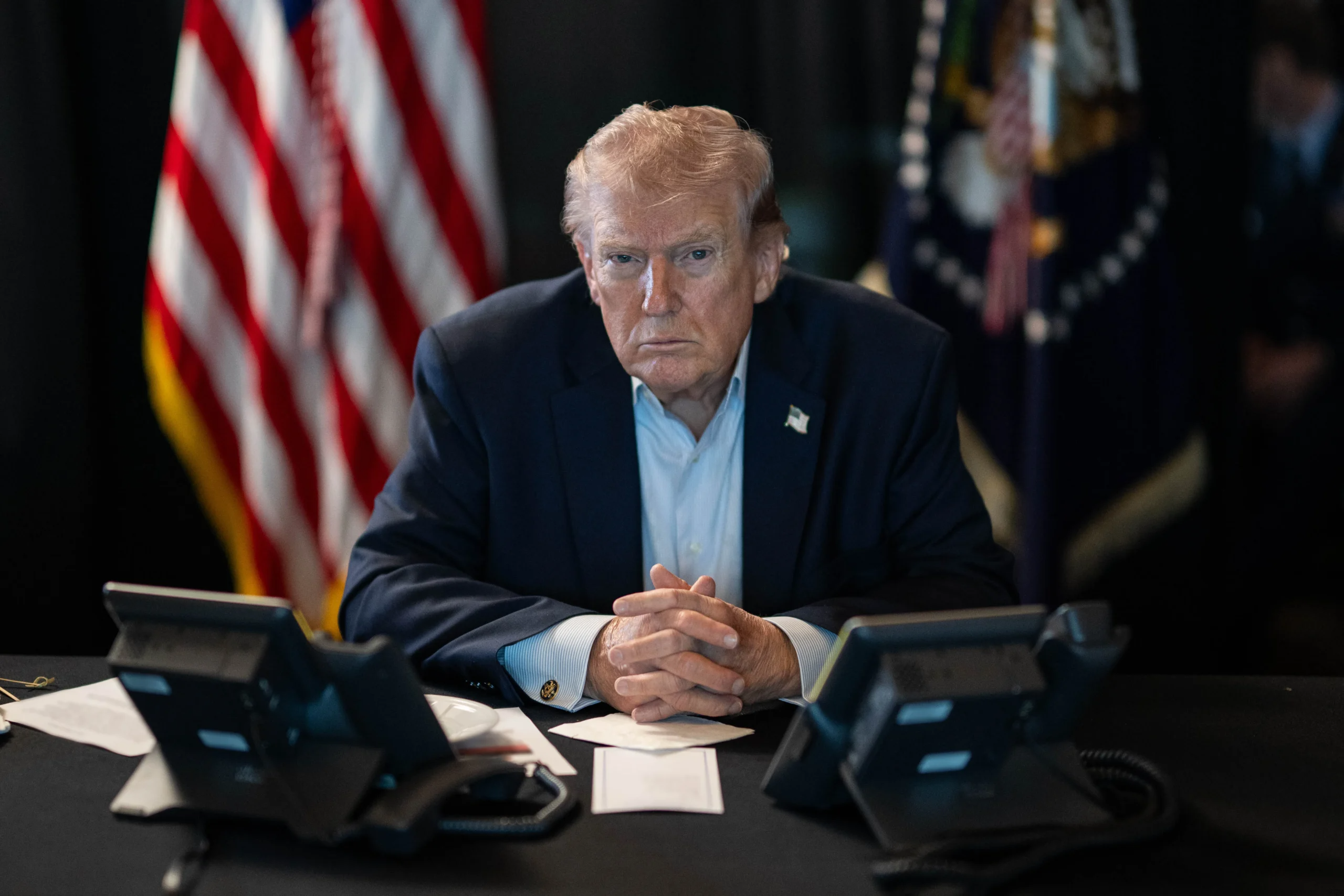
At a press conference, the president spoke about the military operation in Iran and the rescue of the American pilot.
Nuevo
Agregar La Derecha Diario en
Compartir:
The President of the United States, Donald Trump, has warned the terrorist regime in Iran about intensifying attacks on the country's key infrastructure if an agreement is not reached before the set deadline.
During a press conference, the president was categorical in describing the scope of actions that his government could carry out in the next few hours: “The entire country could be destroyed in one night and that night could be tomorrow night.”
Within this framework, it ratified the ultimatum addressed to Tehran regarding the reopening of the strategic Strait of Hormuz. “We have a plan that foresees that all bridges in Iran will be destroyed at midnight, tomorrow night, that all power plants will be out of
service.”
“And all that will be done in four hours, if we want,” he added, referring to the deadline of 20:00 (00:00 GMT on Wednesday).
President Donald Trump.
The rescue of the American pilot
In parallel, Trump provided details about the recent military operation aimed at rescuing two pilots of an American F-15 fighter shot down in Iranian territory.
As he explained, the operation involved more than 170 aircraft, including bombers, fighters, tankers andspecial forces.
The president indicated that 21 aircraft participated in the first mission and 155 in the second, which allowed the co-pilot to be evacuated. In addition, he noted that two transport planes were trapped in the sand and had to be destroyed to prevent their technology from falling into Iranian hands
.
For his part, the director of the CIA, John Ratcliffe, explained that the agency carried out a “campaign of deception” to confuse the Iranian authorities, who were looking for the pilots. As detailed, one of them remained hidden for almost 48 hours in a mountainous crevice,
managing to evade capture.
Trump reported that the injured co-pilot managed to travel in mountainous terrain while treating his injuries and used a communication device to transmit his location, allowing him to coordinate the rescue.
President Donald Trump.
The operation was carried out under enemy fire and without American casualties, which the president described as a demonstration of “skill and precision, lethality and
strength.”
Along the same lines, Defense Secretary Pete Hegseth anticipated that the volume of U.S. attacks could increase in the coming hours, exceeding the initial level of the operation.
Trump insisted that, if there is no agreement, the United States will move forward with the destruction of essential infrastructure: “They won't have bridges, they won't have power plants, they won't have anything.” He also warned that there are “other worse things” that he didn't detail publicly
.
Despite the harshness of his threats, the president maintained that he believes that Iran is negotiating “in good faith”. However, he also referred to the country's internal situation, stating that the population “should” rise up against the regime and that the consequences would be “great
”.
Finally, he defended his position in the face of criticism of the conflict, describing those who oppose the war as “senseless”. “War is for one thing only. Iran cannot have a nuclear weapon,” he concluded.