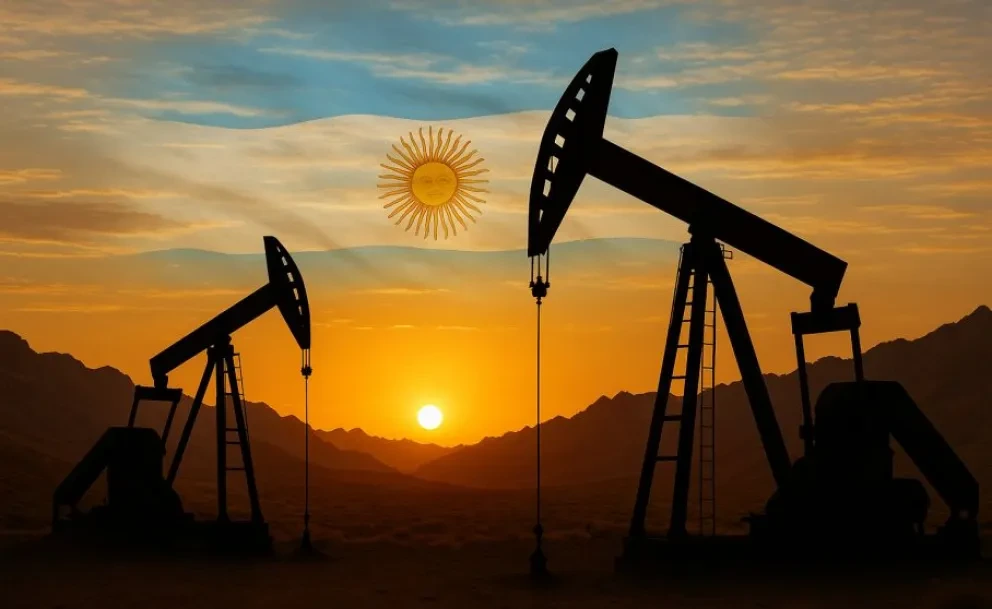
Argentina achieved a new record of energy surplus in the first eight months of 2026, with a positive balance of USD 7.834 million, according to data from the Argentine Commercial Exchange (ICA) released by the National Institute of Statistics and Censuses (Indec).
The result already exceeds the USD 7.815 million accumulated during all of 2025, which until now represented the historical maximum for the country's energy trade balance. The difference is USD 19 million, although there are still four months left to complete the year.
The performance is mainly supported by the growth of fuel and energy exports, in a context marked by the increase in hydrocarbon production from Vaca Muerta, driven by the reforms of the Government of Javier Milei, and by the evolution of international oil prices and their derivatives.
President Javier Milei
Between January and August, external sales from the sector reached USD 10.667 million, representing an increase of 48.9% compared to the same period in 2025. Conversely, imports of fuels and lubricants totaled USD 2.833 million during the first eight months of the year.
Increase in international oil prices
The growth in exports occurred while the international oil price recorded a sharp rise in recent weeks. Brent increased by 27% in three weeks and was around USD 100 per barrel. This scenario was complemented by the increase in local production.
According to the latest data published by the Government, oil production reached a new record of 916,200 barrels per day in July, a volume that represented a 17.2% year-on-year increase.
President Javier Milei in Vaca Muerta
The numbers for August reinforced this trend. During that month, fuel and energy exports reached USD 1.494 million, with a growth of 41.2% compared to August 2025. In absolute terms, the increase was USD 436 million.
The increase was explained by both prices and quantities: prices rose by 27%, while exported quantities grew by 12.2%. Among the products that contributed the most to the result were crude oil, fuels, and other fuels, in that order according to Indec.
Energy imports also increased during August. They reached USD 493 million, 70.6% more than in the same month of the previous year. The increase was mainly driven by higher purchases of liquefied natural gas, electricity, and natural gas in gaseous state.
Despite this increase in imports, the energy exchange left a surplus of USD 771 million in August, compared to USD 661 million recorded during the same month in 2025.
Vaca Muerta
More historical records
The sector's performance occurs in a year when Argentine exports could also reach a historical maximum. According to estimates from Abeceb, the country could exceed USD 100 billion in total exports during 2026, surpassing the record of USD 88.446 billion set in 2022.
For the energy sector, projections also anticipate a result higher than what has been achieved so far. The Rosario Stock Exchange (BCR) estimated in July that fuel and energy exports could reach around USD 11.300 billion by the end of 2026, with an average Brent price close to USD 82.
With this trajectory, the annual energy balance could exceed USD 12 billion, more than double the result of 2024 and 53% above the record set in 2025. Similarly, the Chamber of Hydrocarbon Exploration and Production (CEPH) is working with a scenario of sectoral exports of USD 11.300 billion for this year