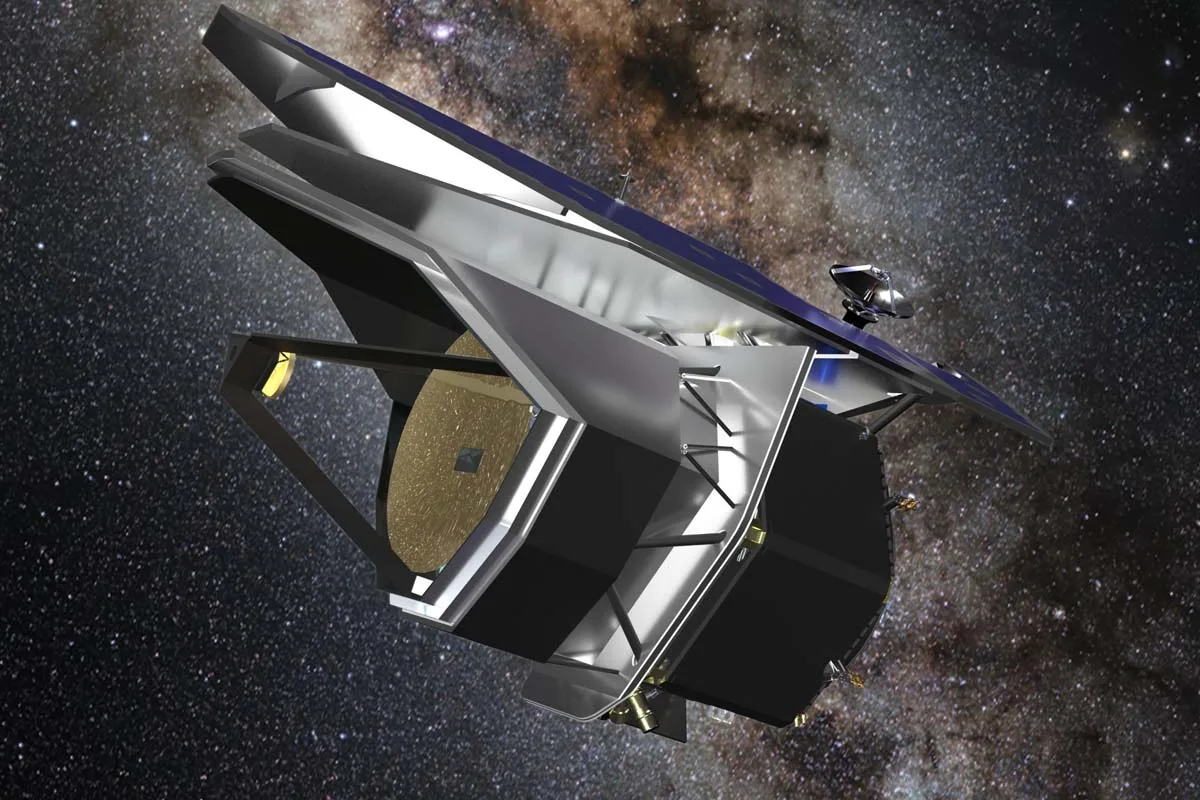
The NASA is advancing with the development of PRIMA, a new space telescope designed to observe the universe in far-infrared wavelengths, beyond the capabilities of the James Webb Space Telescope. The mission aims to provide information about the origin of planets, the evolution of galaxies, and the growth of black holes.
The project has moved to phase B, dedicated to preliminary design and technological development. If it meets the planned schedule, PRIMA could be launched starting in 2033 and conduct a five-year mission.
NASA advances with the development of PRIMA
PRIMA: what the new NASA space telescope will be like
PRIMA, short for Probe far-Infrared Mission for Astrophysics, will feature a telescope with a 1.8-meter diameter. Its goal will be to study the cosmos in the far-infrared, a region of the spectrum that the James Webb cannot explore with the same sensitivity.
The James Webb, launched in 2021, was designed to detect light from the near and mid-infrared. In contrast, PRIMA will focus on longer wavelengths, necessary for investigating certain astronomical processes.
PRIMA: how the new NASA space telescope will be
The NASA will need to evaluate the progress of the project before formally authorizing its path to launch.
What PRIMA will seek to discover about the origin of planets
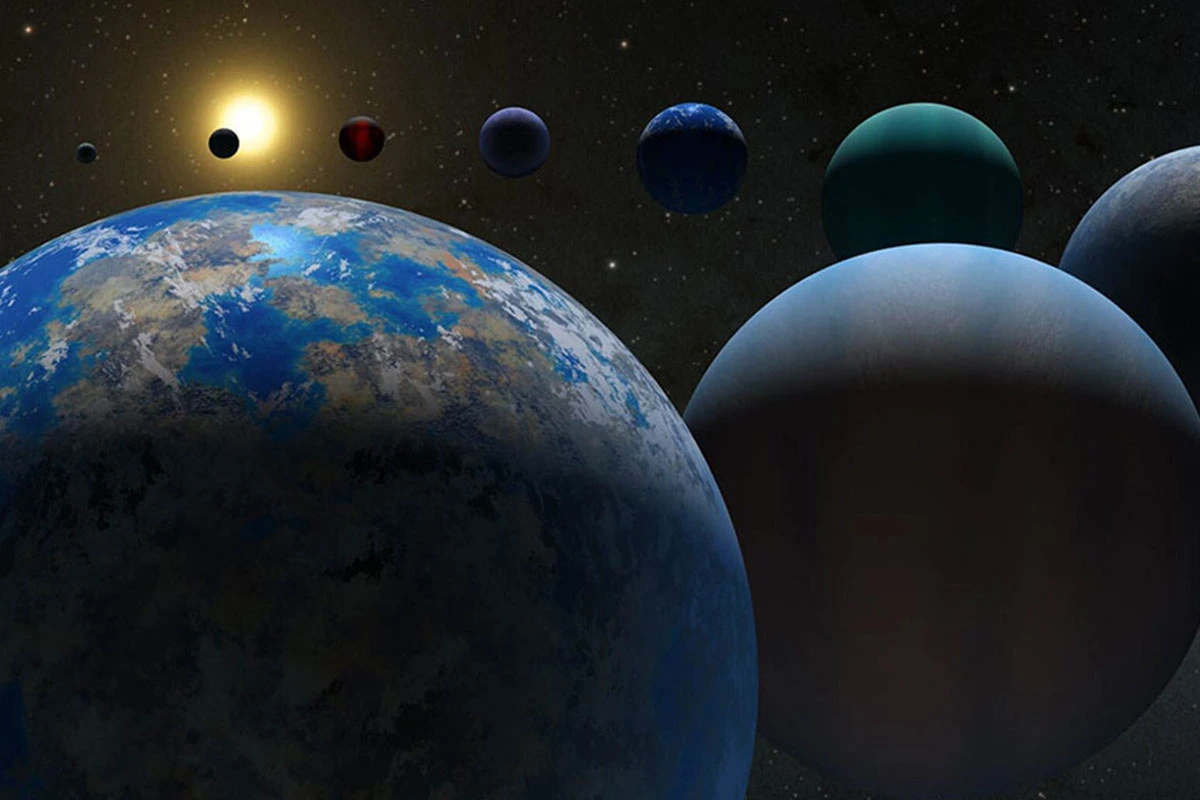
One of the central objectives of the mission will be to study how planets form, including those that orbit other stars, known as exoplanets.
Meredith MacGregor, an associate professor of Physics and Astronomy at Johns Hopkins University, explained to Live Science that PRIMA will allow for measuring the role of water in planetary formation and determining the amount of gas, carbon, and oxygen present in the disks where planets are born.
What will PRIMA seek to discover about the origin of planets
The specialist noted that the James Webb cannot answer those questions because the necessary spectral lines are found in the far-infrared, outside the telescope's sensitivity range.
How PRIMA will study the evolution of galaxies and black holes
The mission will also investigate the growth of galaxies and the evolution of black holes. One of its focuses will be to analyze the flows of molecular gas moving at high speeds and their influence on star formation.
How PRIMA will study the evolution of galaxies and black holes
Lee Armus, a scientist at the California Institute of Technology (Caltech) and responsible for PRIMA's scientific operations, emphasized the interest in understanding how these flows influence star formation and the growth of supermassive black holes located at the centers of galaxies.
Alberto Bolatto, an observational astronomer at the University of Maryland and co-investigator of the mission, also expressed his expectations for the research possibilities that the instrument will offer.
How much PRIMA will cost and what place it will occupy in NASA's missions
The project will have a cost cap of $1.2 billion, excluding the launch and other expenses outside the mission's budget. For reference, the development of the James Webb cost $10 billion at the time of its launch in 2021, not accounting for inflation or launch expenses.
How much will PRIMA cost and what role will it play in NASA missions
PRIMA will be the first mission of a new category of NASA called Probe Explorers. These projects are positioned between flagship missions, like the James Webb, and the agency's smaller-scale initiatives.
The new category is part of the Explorers Program, which began with the launch of Explorer 1 in 1958 and has already led to more than 100 scientific missions. Its research covers Earth, space weather, the solar system, and the universe.