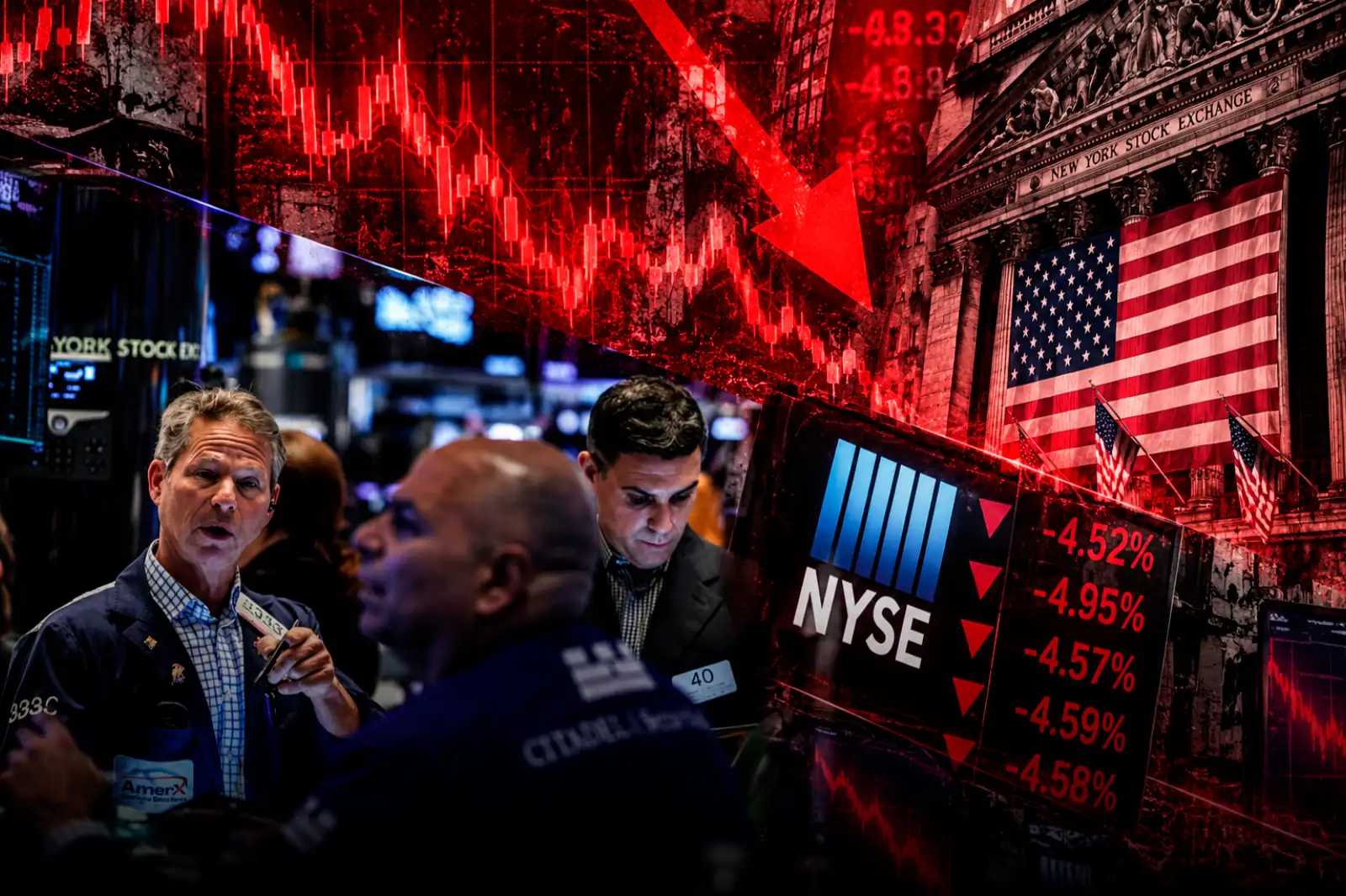

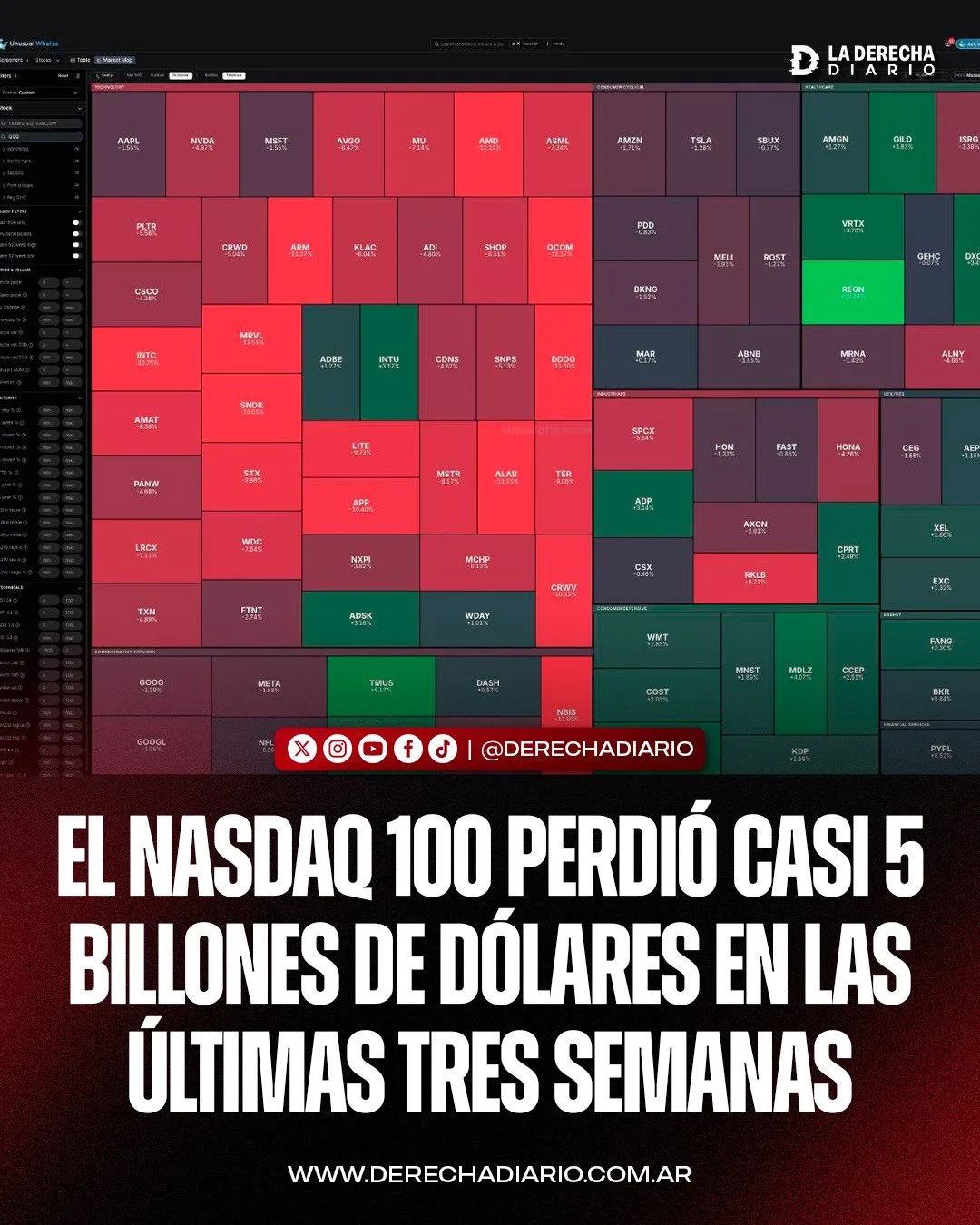
The international financial market is undergoing a historic upheaval driven by private capital distrust and macroeconomic volatility. In a tense atmosphere four days before the elections in the United States, the Nasdaq 100 —the emblematic U.S. technology index— has officially entered technical correction after suffering a massive asset bleed.
In the span of the last three weeks, this indicator lost nearly 5 trillion dollars in market capitalization, obliterating the gains accumulated over months. The disintegration of values did not stop in the technology sector; the wave of selling triggered a true stock market crash that evaporated USD 1.8 trillion in one single day across the entire New York market. During that day of stock market panic, the boards showed widespread declines in the main indices:
The Nasdaq closed with a loss of 3.02%, settling at 25,398.37 points.
The S&P 500 fell 1.81%, retreating to 7,580.65 points.
The Dow Jones dropped 0.94%, finishing at 51,852.68 points.
The Russell 2000, an indicator that includes small and medium enterprises in the United States, declined 2.04%, landing at 2,808.85 points.
Meanwhile, the 10-year U.S. Treasury bond raised its yield to 4.941%, significantly increasing the cost of credit and pressuring global financing costs.
The trigger for this collapse lies in the sudden change in rigor with which investors evaluate artificial intelligence. After years of speculative euphoria, the market has stopped validating projects devoid of a solid cash flow, scrutinizing whether the astronomical outlays can generate the expected returns at the required speed.

To sustain the race for digital infrastructure, corporate giants have resorted to aggressive corporate debt through massive bond issuance. Estimates from investment banks indicate that global capital expenditure in this technology will approach USD 1 trillion by next year. Looking further ahead, J.P. Morgan projects accumulated investments of USD 5.5 trillion by the year 2030. However, in a high-interest rate environment, taking on liabilities to finance deferred-return projects dangerously increases the risk of insolvency and erodes valuations in the free market.
The stock market nervousness was compounded by the severe shockwaves caused by the vulnerability of digital custody platforms. A massive cyberattack perpetrated against the Binance platform resulted in the theft of over USD 6 billion in cryptocurrencies (reaching USD 6.3 billion according to sector assessments), constituting one of the largest financial crimes in history.
Investigations led by blockchain intelligence firms such as Elliptic and Chainalysis point towards cybercriminal organizations backed by North Korea, such as the Lazarus group or the hackers of TraderTraitor (responsible for the theft of USD 1.5 billion from Bybit in February 2025).