Quirós: Today, for the first time, we can say that a true right is beginning to consolidate in Hispanic America, with a modern, clear, and unapologetic vision. In that context, President-elect Laura Fernández represents exceptional leadership: a woman with a deep and strategic vision of the country and of the world.
Her government will bring to Costa Rica an economic and social growth that we have not seen in decades. Laura Fernández has absolute clarity that wealth is not distributed, it is caused, and that it is only possible with a strong, dynamic productive sector backed by an efficient state that stops getting in the way and starts facilitating development.
Ares: From your role as a consultant, what lessons from Laura Fernández's campaign could be useful for liberal and right-wing leaders who seek to compete for power and win elections in Latin America?
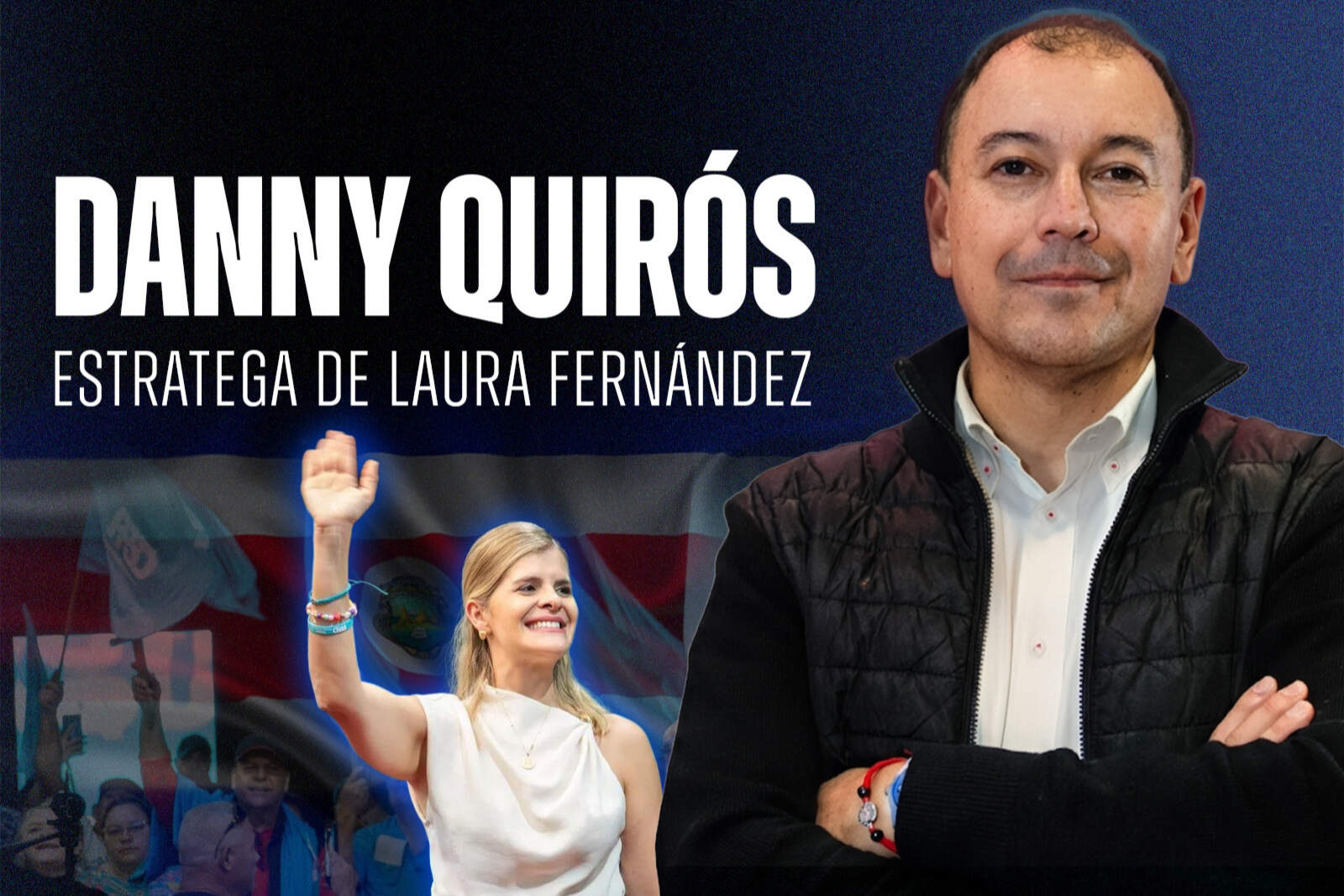
Danny Quirós is not a familiar name for the general public, but in the world of regional political consulting he is an increasingly heard figure. With a libertarian background and more than two decades of intellectual militancy against statism, he was the chief strategist behind the victory of Laura Fernández in Costa Rica. From that role, he designed a frontal campaign, without concessions and with a clear message: the country had to choose between the continuity of the privileges of traditional politics or deepening a path of change initiated by President Rodrigo Chaves, focused on people, state efficiency, and economic freedom.
In this interview, Quirós analyzes the key elements that made it possible to connect with a society tired of interventionism, reflects on the consolidation of a new Latin American right, and draws parallels with phenomena such as Javier Milei in Argentina. He also offers forceful definitions about the end of lukewarm campaigns, the need to tell uncomfortable truths, and the new geopolitical scenario in the region, marked—as he argues—by the return of ideas of order, merit, and sovereignty, with the United States regaining a central role in the face of the advance of authoritarian models.
The full interview with Danny Quirós
Ares: You have just directed Laura Fernández's campaign in Costa Rica. What would you say were the central pillars of the message, and why do you think they resonated with a society tired of statism and traditional politics?
Quirós: The main pillar was to speak truthfully to Costa Ricans about the reality of the country. We stated with total clarity that today Costa Rica has two paths: that of the same people as always, marked by backroom deals, privileges, and corruption; or that of the continuity of the change that President Rodrigo Chaves initiated.
Danny Quirós, estratega de Laura Fernández: 'Milei hoy es una referencia y un motivador para cambios profundos'
That is a different path, focused on people, on public policies for everyone and not for a few, where the country's interest is above the interests of power groups.
Ares: In many countries in the region we see a weariness with the interventionist and statist model typical of Latin America. Did you perceive in Costa Rica a climate similar to the one that enabled the rise of figures such as Javier Milei in Argentina?
Quirós: First of all, today President Javier Milei is a reference point and a motivator to drive deep changes, showing that it is indeed possible to break with models that have failed. Personally, I have had a libertarian background since 2002 and I am fully convinced that statist policies are not the way to generate development, freedom, or real opportunities.
Costa Rica needed a change of political model, and that change will be achieved with Laura Fernández's presidency, with a modern vision centered on freedom, state efficiency, and on putting people ahead of privileges.
Danny Quirós, estratega de Laura Fernández: 'Milei hoy es una referencia y un motivador para cambios profundos'
Ares: Laura Fernández put forward a discourse of fiscal order, state efficiency, and growth via the private sector. Do you think there is today a "new Latin American right" with common ground that goes beyond borders?
Quirós: More than a lesson, what we have seen is a confirmation: running campaigns based on the ideas of freedom is not only correct, it is necessary. Campaigns done "as before" no longer work; politics has changed and citizens have as well.
For us consultants, the challenge is much deeper: to present the population with a different way of doing politics. It is not just about being on Facebook or TikTok, but about building content with substance, with form, and above all, with truths. Because today people do not follow platforms; people follow authentic ideas and credible leadership.
Ares: Javier Milei managed to break the Argentine political system with a frontal message against the caste. Do you think that disruptive style can be replicated in countries such as Costa Rica, or does each society require its own "tailor-made suit"?
Quirós: Together with a highly disciplined team we achieved exactly that: we won with a frontal, disruptive, and uncompromising message. Today people no longer want politicians with lukewarm campaigns, who try to please God and the devil at the same time.
Danny Quirós, estratega de Laura Fernández: 'Milei hoy es una referencia y un motivador para cambios profundos'
The time has come to say things as they are and to confront, without fear and without beating around the bush, the same people as always. Brave politics resonates because it speaks truthfully, not because it seeks approval.
Ares: To conclude, do you think Latin America is entering an ideological reconfiguration, where ideas of economic freedom, merit, and individual responsibility are once again gaining weight, in a context of growing participation by the United States in the region in the face of the advance of authoritarian and statist models?
Quirós: Common sense is returning, thank God. In that context, the firmness and clarity expressed by President Donald Trump have been decisive and help to set a clear course in the defense of principles such as freedom, order, and sovereignty.
To this is added a key player: Secretary Marco Rubio. His leadership and his Hispanic identity have become a relevant beacon for the continent, providing a firm vision that is nevertheless close to the reality of Hispanic America, at a time when the region needs clarity, character, and decisions without ambiguities.