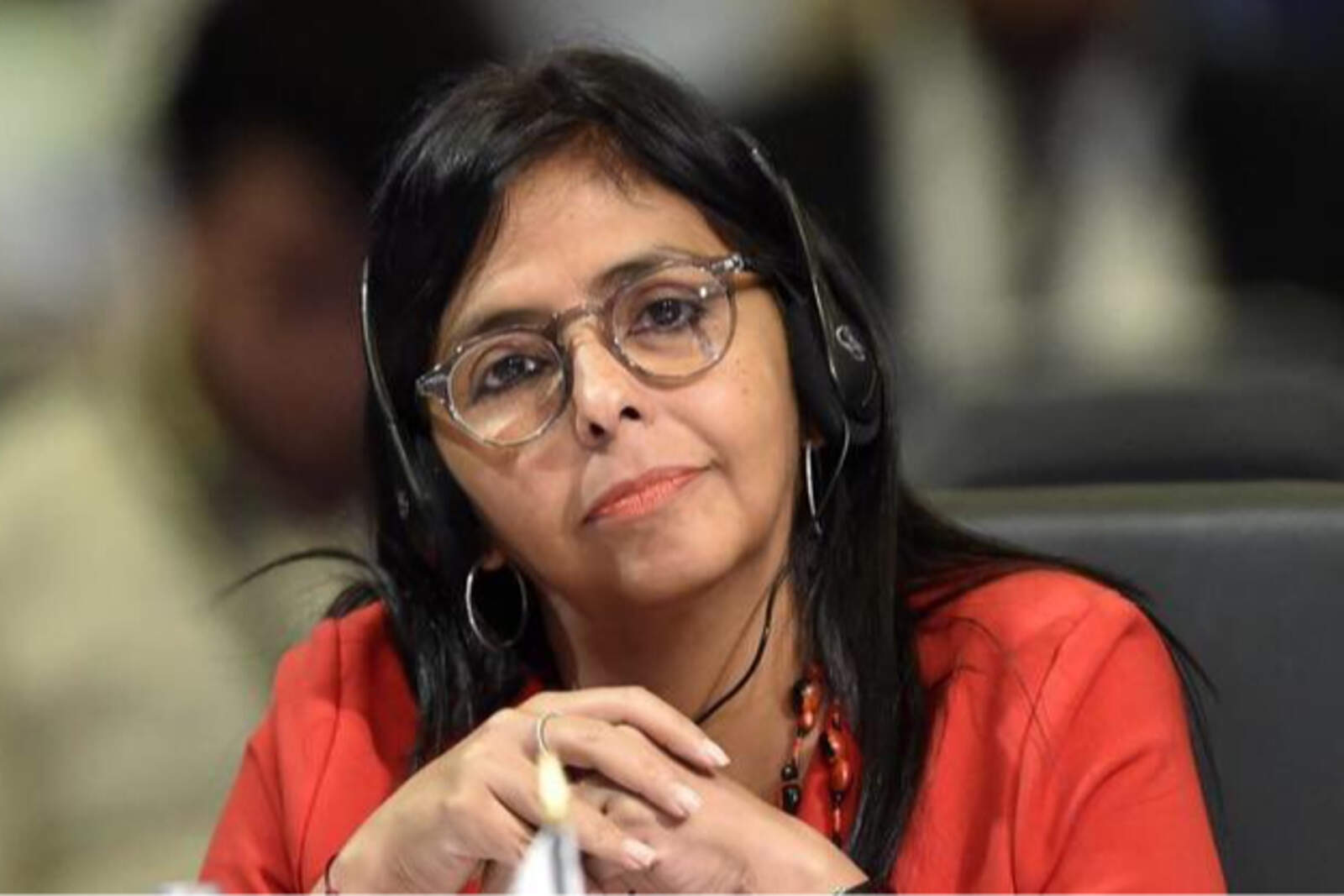

Within the framework of a transition forced by the collapse of Chavista power, the head of the transitional regime, Delcy Rodríguez, decreed a deep reorganization of the State that entails the elimination of seven key bodies of the political, social, and security framework built over more than twenty years by Chavismo. The decision comes as the new leadership of power in Caracas collaborates with the United States after the capture of the narco-dictator Nicolás Maduro, in an attempt to reconfigure external relations and contain the internal collapse.
The measure was formalized through Decree No. 5,248, which orders the suppression and liquidation of entities attached to the Ministry of People's Power for the Office of the Presidency and Monitoring of Government Management, many of them accused for years of administrative opacity, embezzlement, and partisan-political use of public resources.
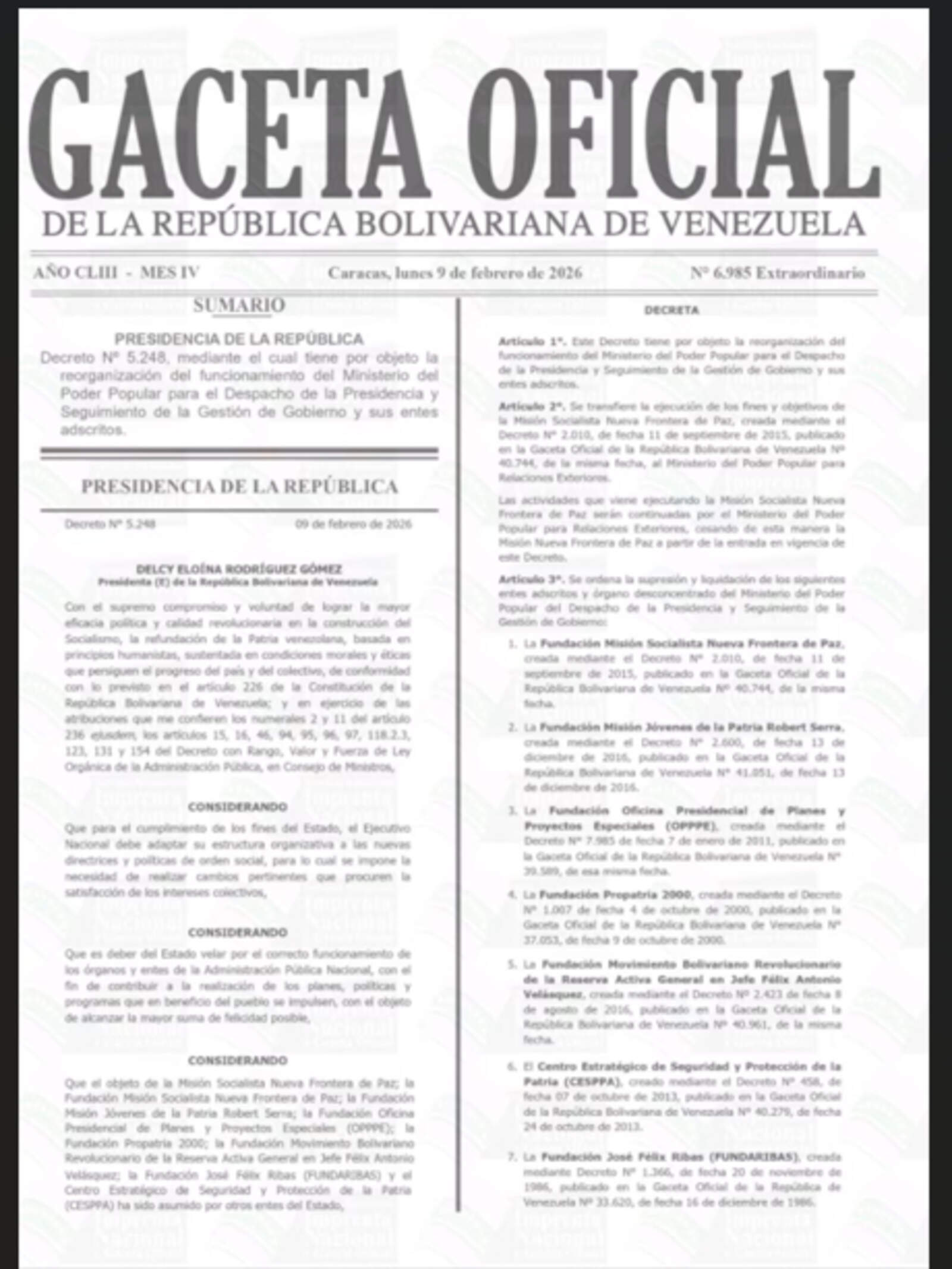
According to the official text, the decree provides for "the suppression and the immediate start of the liquidation process" of these bodies, as well as the formation of a board responsible for overseeing the administrative closure, the review of assets, and the corresponding institutional adjustment.
The dismantled bodies
Among the eliminated entities are central structures of the old Chavista scheme:
Strategic Center for the Security and Protection of the Homeland (Cesppa): created in 2013, it concentrated the coordination of information on security, defense, intelligence, internal order, and foreign relations. Its mission was "to unify the flow of information on the State's sensitive strategic aspects," a function that in practice turned it into a key tool of political and intelligence control for the regime.
Propatria 2000 Foundation: dedicated to infrastructure works and special projects, it is the body with the largest number of corruption complaints. Between 2013 and 2015, the "Vertical Gyms" plan was questioned for awarding multimillion-dollar contracts to inexperienced companies with irregular ties, some investigated for money laundering in Colombia and Panama. Investigations revealed overpricing, unfinished works, and suspicious transfers from Banco de Venezuela, with estimates that part of the funds were diverted through contractors close to the regime.
Youth of the Homeland Mission "Robert Serra" Foundation: it promoted training, production, and youth entrepreneurship programs. Its elimination leaves initiatives managed directly from the presidential office without institutional support.