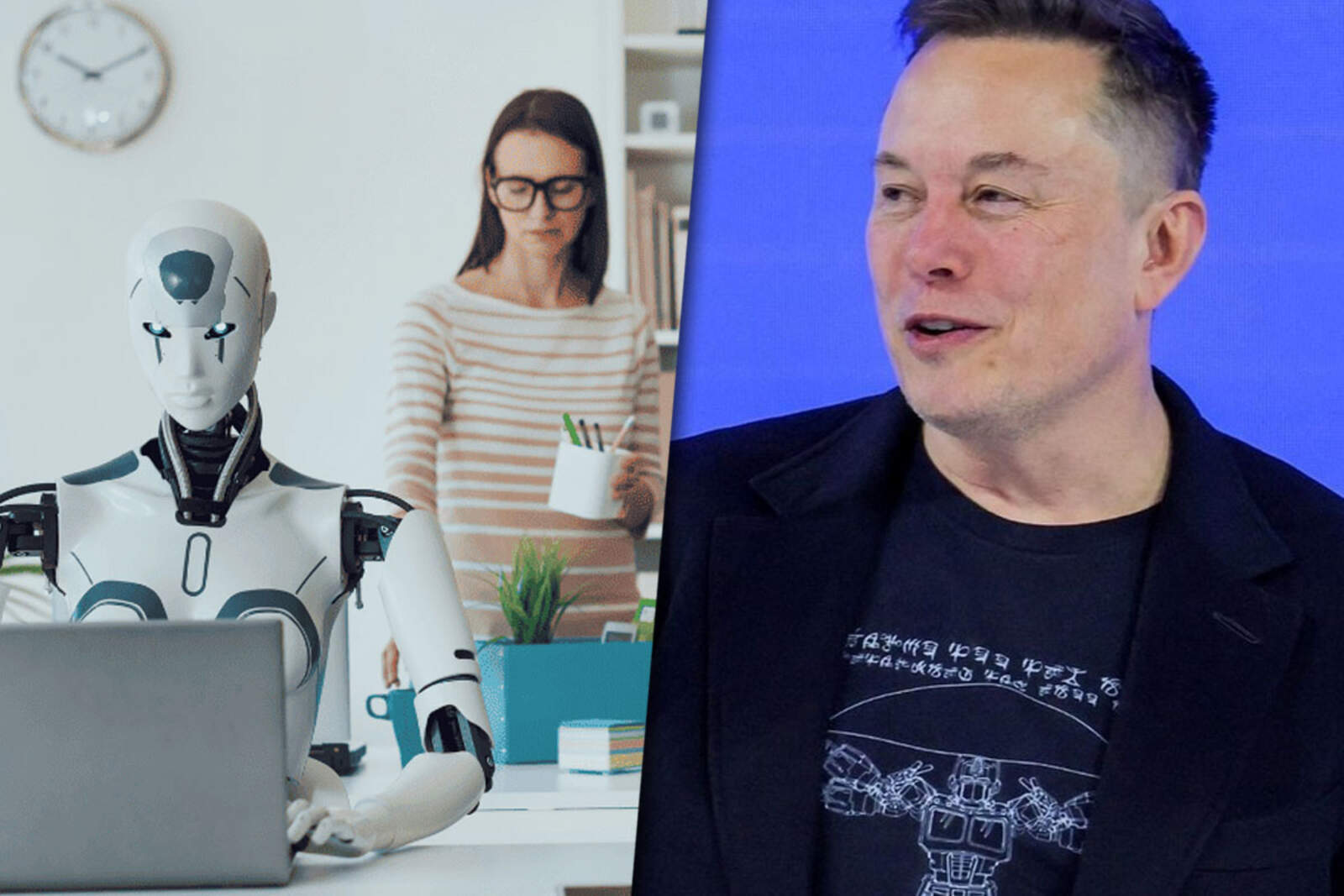
Elon Musk stated that AI will make work optional and anticipated which jobs would fall first
Compartir:
Artificial intelligence stopped being a futuristic promise and is already having a full impact on the job market. In that context, Elon Musk issued a warning that reignited the debate.
The owner of X stated that "work will become optional" in the coming years. His statements once again brought into focus which jobs are at risk.
Elon Musk.
"Work will be optional": Musk's prediction
According to Elon Musk, in 10 or 20 years AI and robotics could expand productivity so much that working would cease to be a necessity.
In his most disruptive vision, by 2027 or 2028 AI would surpass human intelligence in most fields. By 2030, that scenario would be indisputable.
The first jobs that will disappear, according to Musk
The entrepreneur keeps that the first jobs to fall will not be industrial. They will be office positions tied to digital work.
"Anything that involves being in front of a computer generating files or analyses is natural ground for AI," he stated.
The jobs most exposed to AI
Administrative tasks
Digital customer service
Data analysis and reporting
Basic programming
Legal research and legal documentation
Musk even stated that AI could surpass doctors and lawyers. He cited studies where models such as GPT-4 achieved high levels of diagnostic accuracy.
La “religión” creada mientras su dueño dormía
What about physical jobs?
Paradoxically, manual trades would be better protected in the short term. Welders, electricians, plumbers, or construction workers involve "moving atoms," something more complex to automate.
These jobs require constant adaptation to unpredictable environments. That is, for now, an advantage over algorithms.
The real impact on the job market
A report by Goldman Sachs warned that independent work is growing. Data from the Federal Reserve of the United States show that 20% of those who lost income accepted informal jobs.
La inteligencia artificial está diseñando experimentos de física que los humanos nunca hubieran imaginado
These positions can pay between 50% and 65% less per hour than a traditional job. The transition is already underway.
Other technology leaders, such as Jensen Huang, CEO of Nvidia, maintain that not all jobs will disappear. However, they will change deeply.