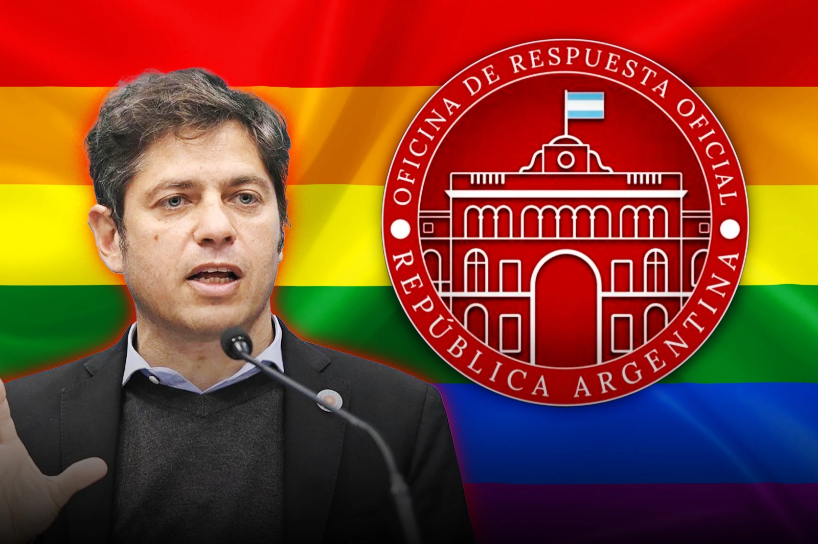

The National Government tore into Axel Kicillof after the Buenos Aires Health Ministry celebrated the 14th anniversary of the enactment of the Gender Identity Law. The official response came amid a severe crisis in the provincial healthcare system, marked by millions in debt, suspended services, and complaints from IOMA members.
From the Official Response Office, they questioned why the Province of Buenos Aires chose to focus on the gender agenda while the Medical Assistance Work Institute struggles with serious operational issues. They pointed out that IOMA has a debt exceeding $9.4 billion just with the Garrahan Hospital and another $6 billion with hospitals under the National Administration of Health Establishments and SAMIC.
The Government's argument exposed a central contradiction in the provincial administration: while thousands of members complain about delays in high-cost medications, suspended or rescheduled surgeries, and issues with disability and TEA services, Kicillof's administration chooses to celebrate a regulation that requires the State to fund hormonal treatments and interventions related to gender identity.
The contrast with the National Government's policy was another focal point of the message. The Casa Rosada emphasized that its stance is based on prioritizing scientific evidence and protecting minors. In this regard, it recalled that a decree modified Law 26.743 to prohibit irreversible interventions and hormonal treatments for minors under 18 years old.
The national Executive's decision marked a clear difference from the approach promoted by the Buenos Aires kirchnerism. For the Government, minors are not in a position to make irreversible medical decisions that could affect their adult lives, so the State must act with caution rather than ideological dogmatism.