

In a session marked by political tension, union protests and an attempt by kirchnerismo to bring down the debate, the Chamber of Deputies approved the labor reform promoted by the government of Javier Milei, consolidating one of the most ambitious structural transformations of the libertarian program. The initiative, which had already been approved in the Senate with 42 votes in favor and 30 against, returned to the center of the parliamentary stage on a day marked by the national strike called by the CGT and a mobilization of left-wing sectors in front of Congress that ended with incidents and arrests.
From the beginning of the debate, kirchnerismo tried to force the bill to return to committee in order to delay its approval. Faced with that maneuver, La Libertad Avanza promoted a strategy to speed up the decision:it pushed for cutting the list of speakers with the aim of moving toward the vote. However, in a gesture that sought to dispel questions and guarantee the transparency of the debate, the ruling party backtracked and allowed all registered deputies to speak.
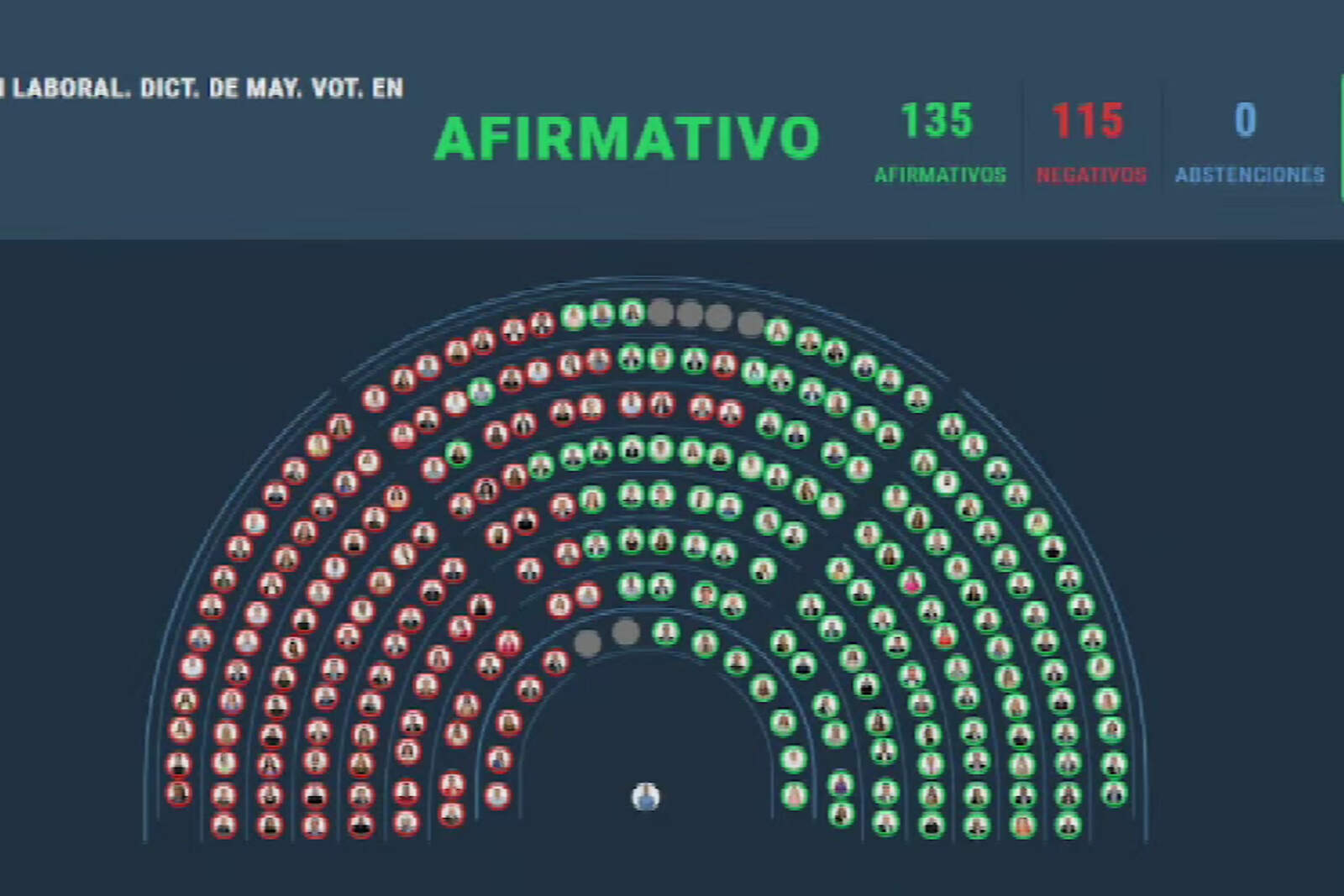
After the ruling party agreed to eliminate article 44 referring to medical leave, the Chamber of Deputies approved the labor reform in general with a total of 135 affirmative votes, while the opposition gathered 115 negative votes. The numerical difference reflected not only the Government's capacity for negotiation, but also the consolidation of a parliamentary majority willing to support the modernization of the labor regime.