A recent report revealed that the 10 municipalities in Greater Buenos Aires (GBA) with the highest Inspection, Safety, and Hygiene Tax (TSH) rates, the main tax paid by businesses, industries, and service providers, are governed by Kirchnerism.
In contrast, the district with the lowest rate in the Conurbano is Tres de Febrero, administered by Diego Valenzuela, mayor of La Libertad Avanza, who even implemented a tax reduction this year.
According to the study, 23 out of 24 GBA districts enacted increases in municipal taxes for 2025, ranging from 10% to 150%. These increases far exceed the accumulated inflation for the year, 24.8% according to INDEC, and the official estimate, which projects it will not exceed 30% in 2025. Meanwhile, the implementation of the Road Tax was extended, which is already collected in 17 municipalities in the Conurbano.
The tax burden on residents and companies was accompanied by the advance of Kirchnerist official majorities in the Deliberative Councils, which approved the increases despite opposition complaints. Critical councilors also reported that, beyond the rates published in the ordinances, there are additional charges that further increase the final amount that taxpayers must pay.
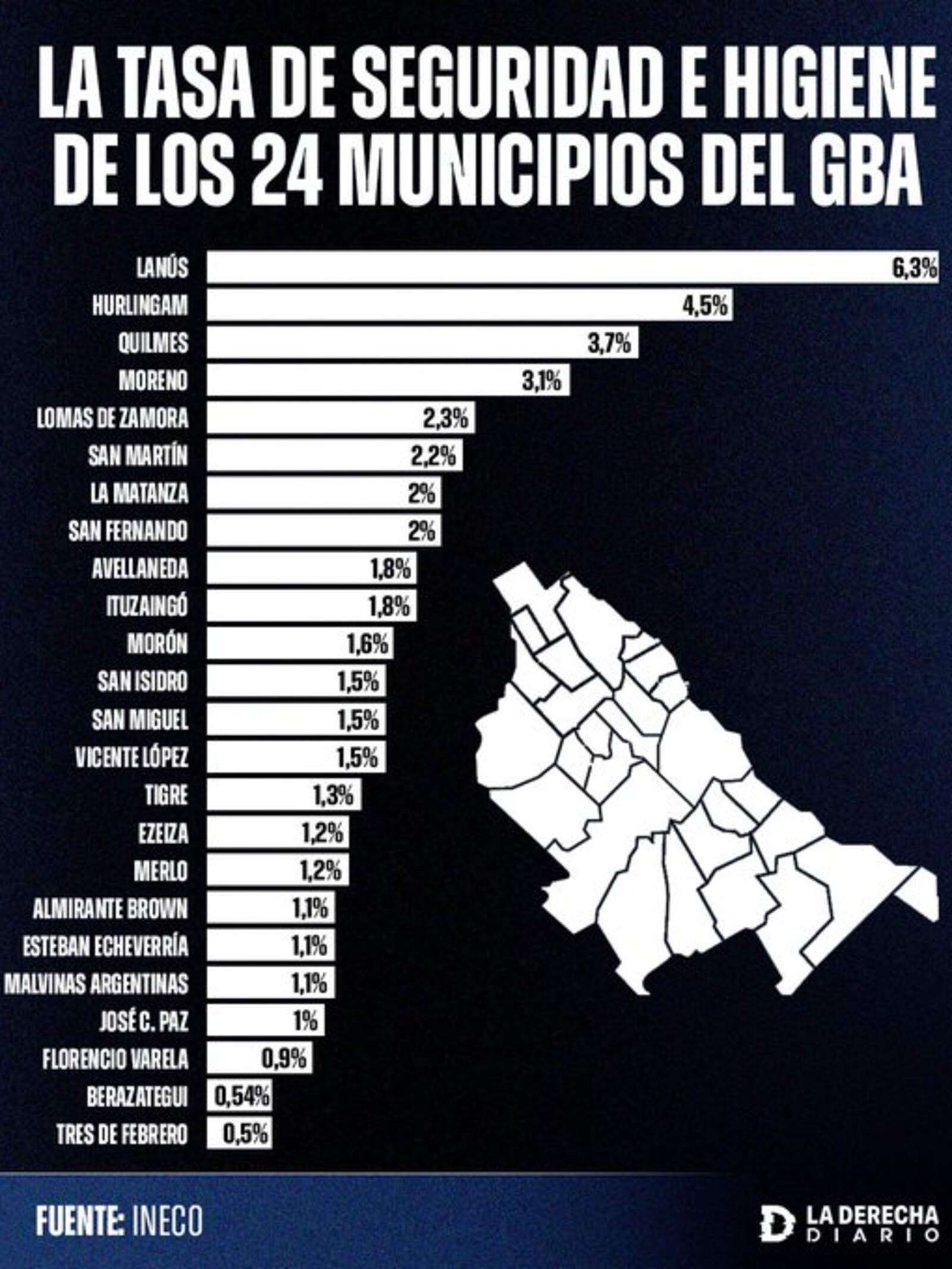
La lista de la tasa de TSH por municipio.
Among municipal taxes, the TSH is the main source of revenue. Of the 155 taxes, fees, and contributions identified nationwide, only 10 account for 94% of the revenue, and this local tax, equivalent to a kind of "municipal Gross Income," is the most relevant for the finances of the municipalities.
The top 10 municipalities with the highest TSH
The list shows that the districts with the highest rates of the Inspection, Safety, and Hygiene Tax are as follows: Lanús (6.3%), Hurlingham (4.5%), Quilmes (3.7%), Moreno (3.1%), Lomas de Zamora (2.3%), San Martín (2.2%), La Matanza (2%), San Fernando (2%), Avellaneda (1.8%), and Ituzaingó (1.8%).
The trend shows a clear pattern. The highest tax burden on businesses and companies in the Conurbano is concentrated in the municipalities governed by Kirchnerism.
The libertarian contrast: Tres de Febrero, the lowest rate in the GBA
While increases are becoming widespread in almost all of Greater Buenos Aires, the case of Tres de Febrero stands out as the opposite. With a rate of just 0.5%, it is the municipality with the lowest TSH and the only one that implemented tax reductions for 2025.
Javier Milei y Diego Valenzuela.
Governed by Diego Valenzuela, of La Libertad Avanza (LLA), the district promotes an active tax reduction policy to attract investment. The ordinance approved at the end of 2024 establishes that new companies will not pay TSH during their first year of activity, or two years in the case of the gastronomic sector.
For those who join the local Large Investment Incentive Regime (RIGI), the rate is reduced by 50% for the following nine years. In addition, all companies can adhere to a 30-year fiscal stability scheme, which prevents rate increases or the creation of new taxes related to economic activity.
In a scenario where most municipalities choose to increase the tax burden, the contrast between the Kirchnerist districts and the fiscal model of Tres de Febrero, governed by LLA, is becoming increasingly evident.