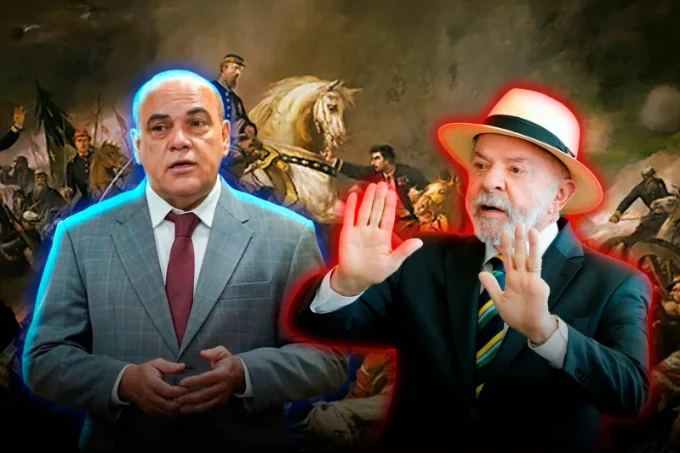
The Congress of Paraguay formally repudiated the communist dictator, Luiz Inácio Lula da Silva, for his statements about the War of the Triple Alliance, considering that the leftist leader presented a simplified version of the conflict, minimized the suffering endured by the Paraguayan people, and attributed to that country exclusive responsibility for the start of the war.
The controversy began after Lula stated during a visit to a factory of the defense company Avibras that Brazil should maintain its military capacity because, as he expressed, “one fine day, Paraguay decided to invade Brazil,” before also advancing on Argentina and Uruguay.
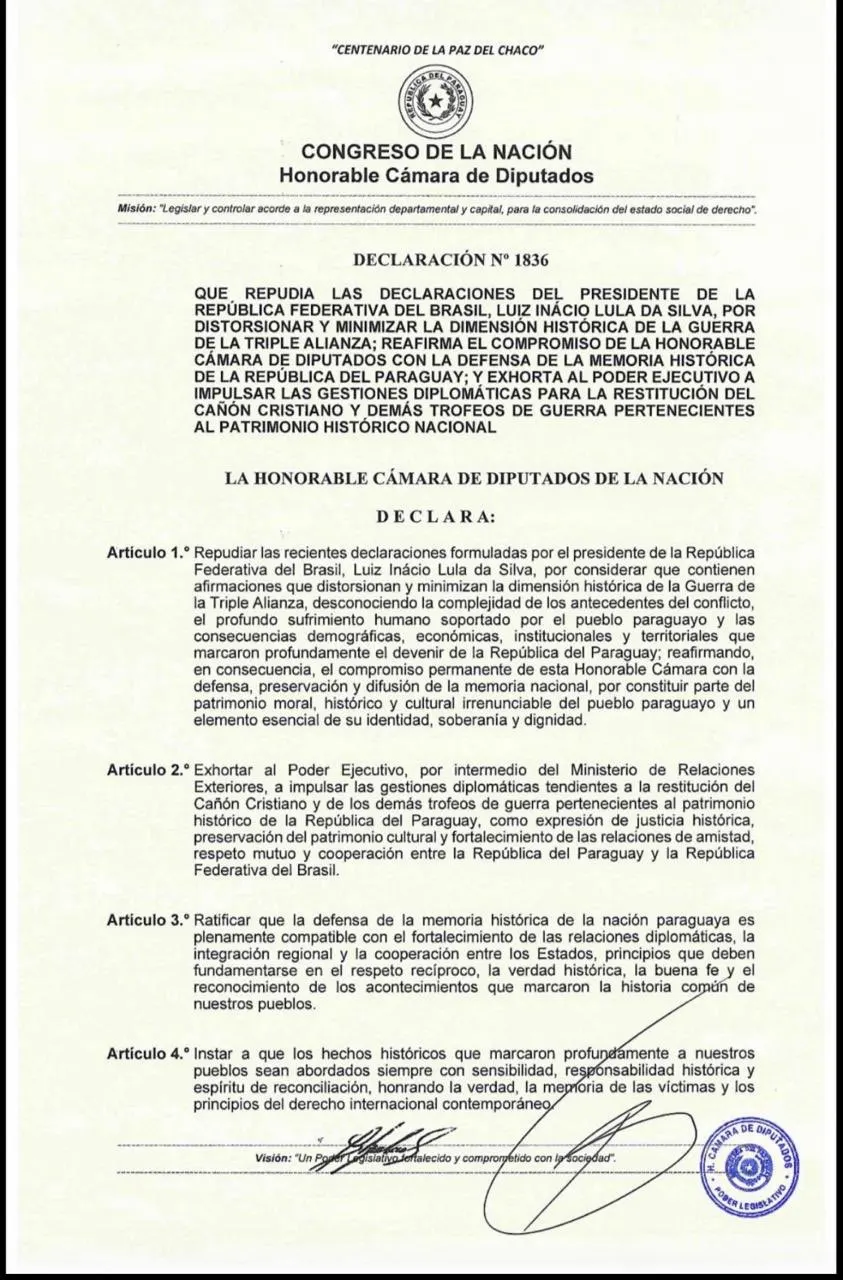
The repudiation issued by the National Congress of Paraguay
The phrase was used by the Brazilian president to justify an increase in defense spending, but it provoked a strong political reaction in Paraguay. Both the Chamber of Deputies and the Senate approved statements of repudiation and accused him of distorting the background of the bloodiest war in South American history.
Declaration No. 1836 of the Chamber of Deputies stated that Lula's expressions “distort and minimize the historical dimension of the War of the Triple Alliance,” disregard the complexity of its origins, and omit “the profound human suffering endured by the Paraguayan people.”
The legislators also highlighted the demographic, economic, institutional, and territorial consequences left by the conflict, during which Paraguay lost a substantial part of its population and was subjected to a prolonged military occupation.
The Senate also “strongly” repudiated the statements and questioned Lula's portrayal of Paraguay as the exclusive aggressor, without mentioning other regional events that preceded the confrontation, including the intervention of the Empire of Brazil in Uruguay.
“President Lula has the right to defend the security of his country, but he does not have the right to use the Paraguayan tragedy to justify weapons,” expressed opposition senator Ignacio Iramain during the debate. Other legislators criticized the initial silence of the Paraguayan Foreign Ministry in response to the Brazilian president's remarks.
The resolution of the Deputies also urged the government of Santiago Peña to initiate diplomatic efforts to recover the so-called Christian Cannon and other war trophies that remain in Brazilian territory.
The piece of artillery was built in 1866 with the bronze from bells donated by churches and Paraguayan citizens to contribute to the defense of the country. It is currently displayed at the National Historical Museum of Rio de Janeiro.
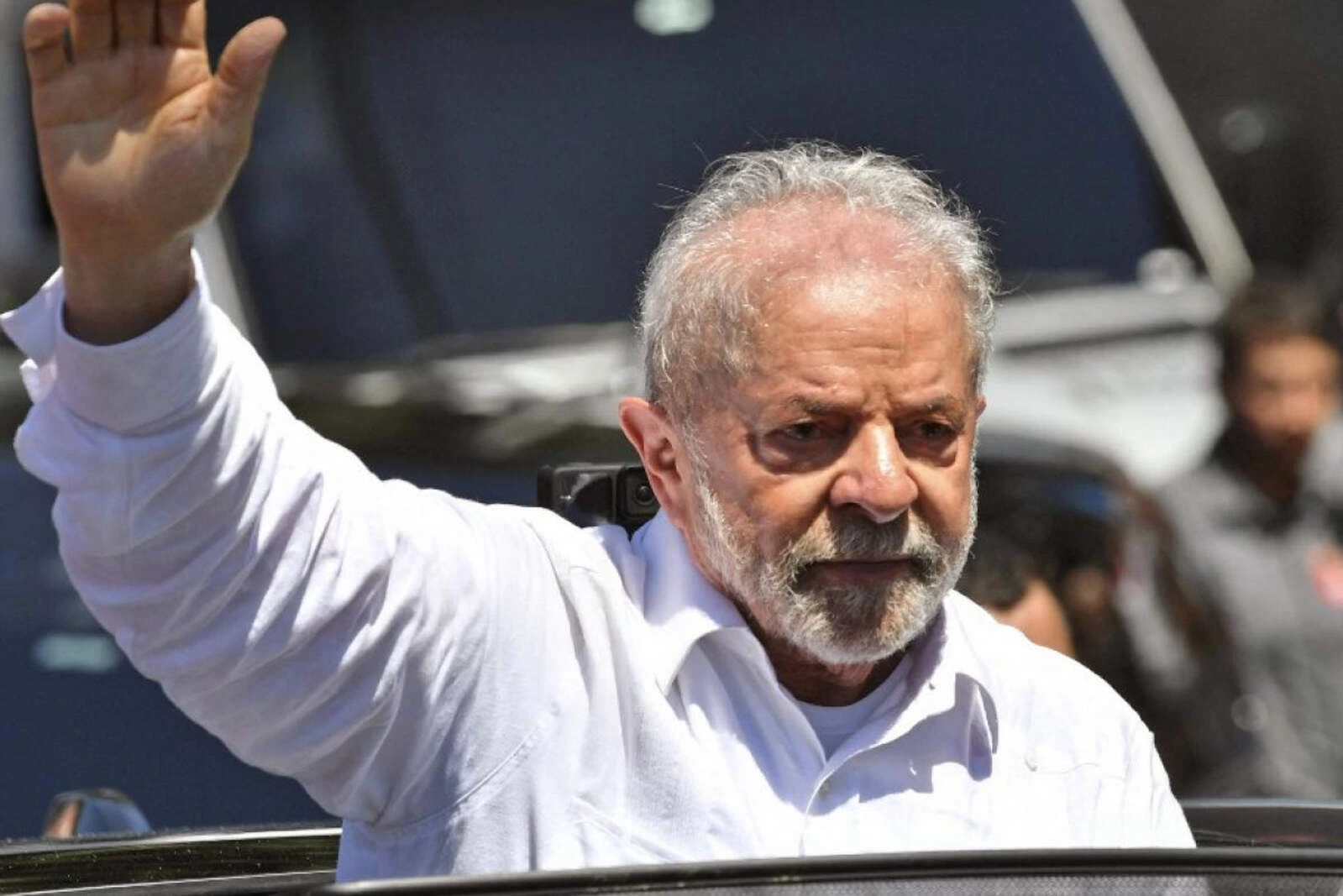
The dictator Lula da Silva
Congress stated that the restitution would constitute an act of historical justice and clarified that the defense of Paraguayan memory is compatible with maintaining diplomatic relations based on respect and cooperation.
Lula's statements thus opened a new regional front for the Brazilian government, which is already experiencing strong tensions with Argentina and the United States.