Scientists discover a unique genetic lineage in Argentina that has survived for 8,000 years
Scientists reveal an Argentine lineage that has remained intact for 8,000 years
porEditorial Team
Argentina
A study by CONICET and Harvard identified a genetic lineage from the center of the country that survived for more than 8,000 years
A team of researchersdiscovered an unknown genetic lineage that persisted for more than eight millennia in central Argentina. The finding, published in Nature, reveals that this local ancestry is still present in current inhabitants of the region.
The research opens a new window on the settlement of Argentine territory. It exposes a human continuity that challenges traditional theories about population replacements in South America.
Un equipo de investigadores descubrió un linaje genético desconocido
A lineage that endured since prehistoric times
The work was led by Rodrigo Nores (IDACOR, CONICET-UNC) together with Argentine researchers and specialists from Harvard University. They analyzed ancient DNA recovered from archaeological sites in the central and northern parts of the country.
The scientists detected an ancestry with an antiquity of 8,500 years, which was neither displaced nor replaced. It evolved continuously and mixed with neighboring populations.
How the research was conducted
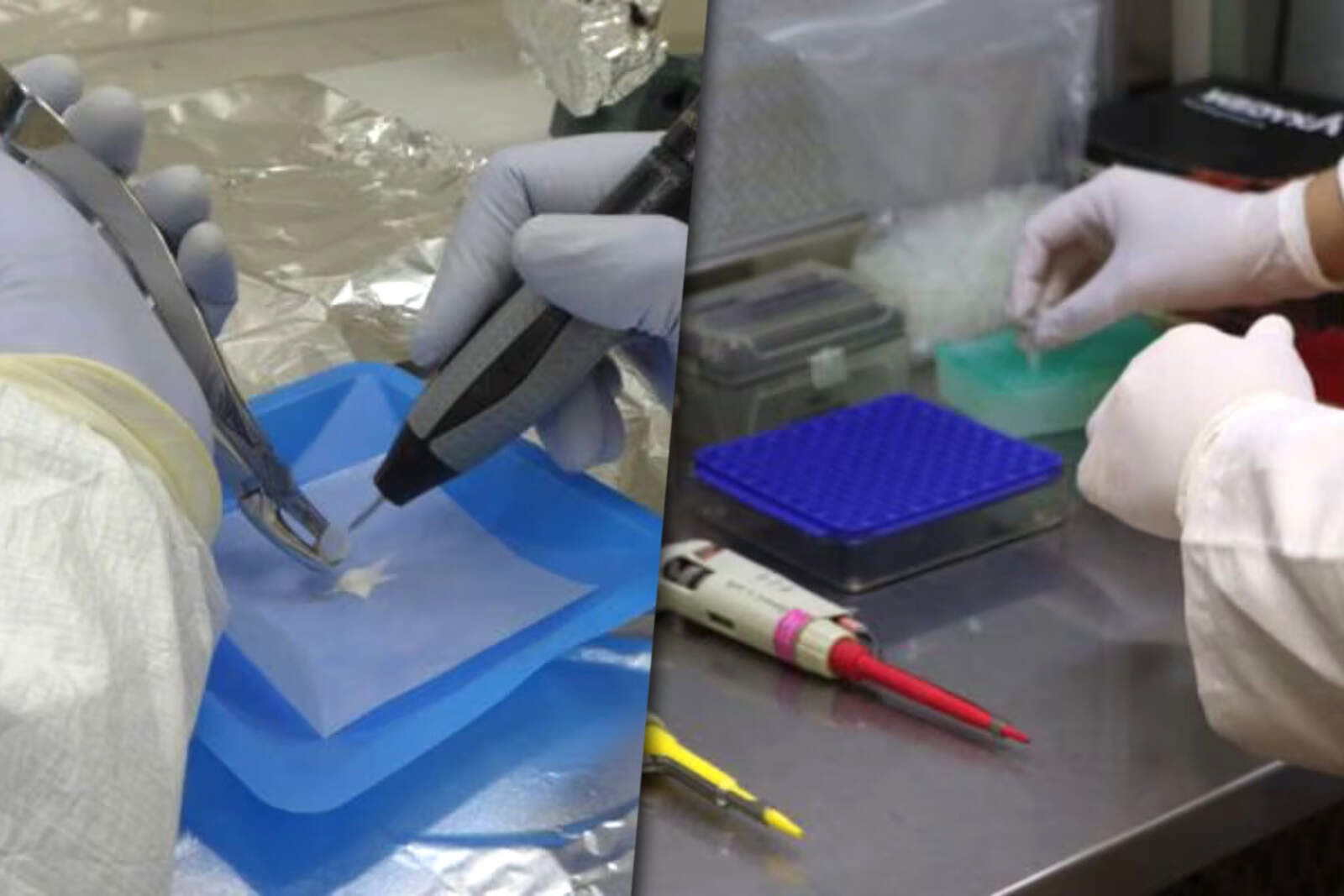
The project began in 2017 with the study of 29 teeth found in Córdoba. Over time, professionals from 20 national institutions joined, reaching 344 samples from 310 individuals distributed across 133 archaeological sites.
Un hallazgo revela cómo pudo surgir la primera forma de vida
The genetic analysis, led by Nores, Josefina Motti, Nicolás Pastor, and the Harvard team, was based on hundreds of thousands of genomic markers. That information made it possible to reconstruct the population history of the central part of the country with an unprecedented level of detail.
What this lineage reveals about South American settlement
The study shows that at least 10,000 years ago there was already a differentiation between populations of the Southern Cone and other regions of South America. Within that scenario, an individual who lived 8,500 years ago in Córdoba exhibited a previously unknown lineage.
That lineage participated in three major migratory movements.
Toward Northwest Argentina, where it mixed with the Andean component.
Toward the Pampean region, where it became predominant about 800 years ago.
Toward the Gran Chaco, where it integrated into the Amazonian ancestry.