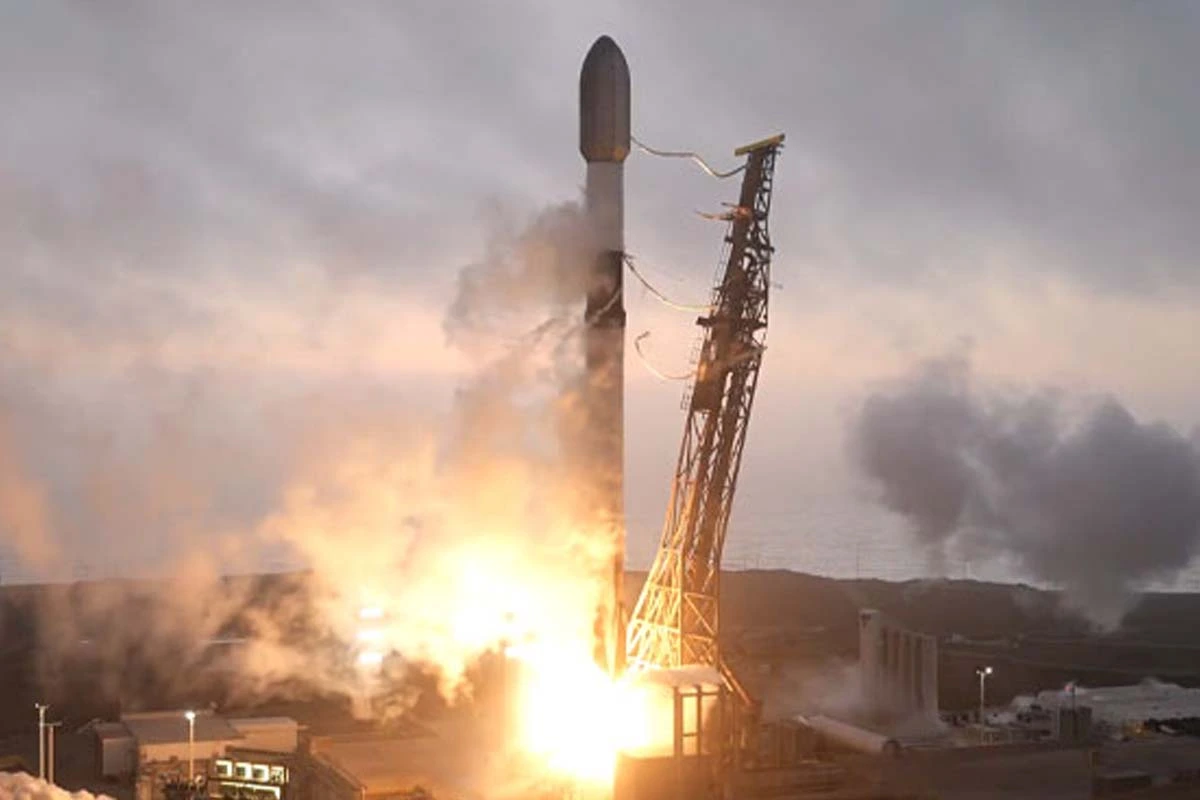











On August 5, a SpaceX rocket will crash into the Moon at high speed, in an impact that scientists around the world will closely monitor. This is the upper stage of a Falcon 9 that was left adrift after a lunar mission in January 2025.
This stage of the rocket is a remnant of the launch that sent the Blue Ghost-1 lunar module from Firefly to the Moon on January 15, 2025. Also on the same flight was Resilience, the robotic lunar module from the Japanese company ispace, part of the Hakuto-R Mission 2.
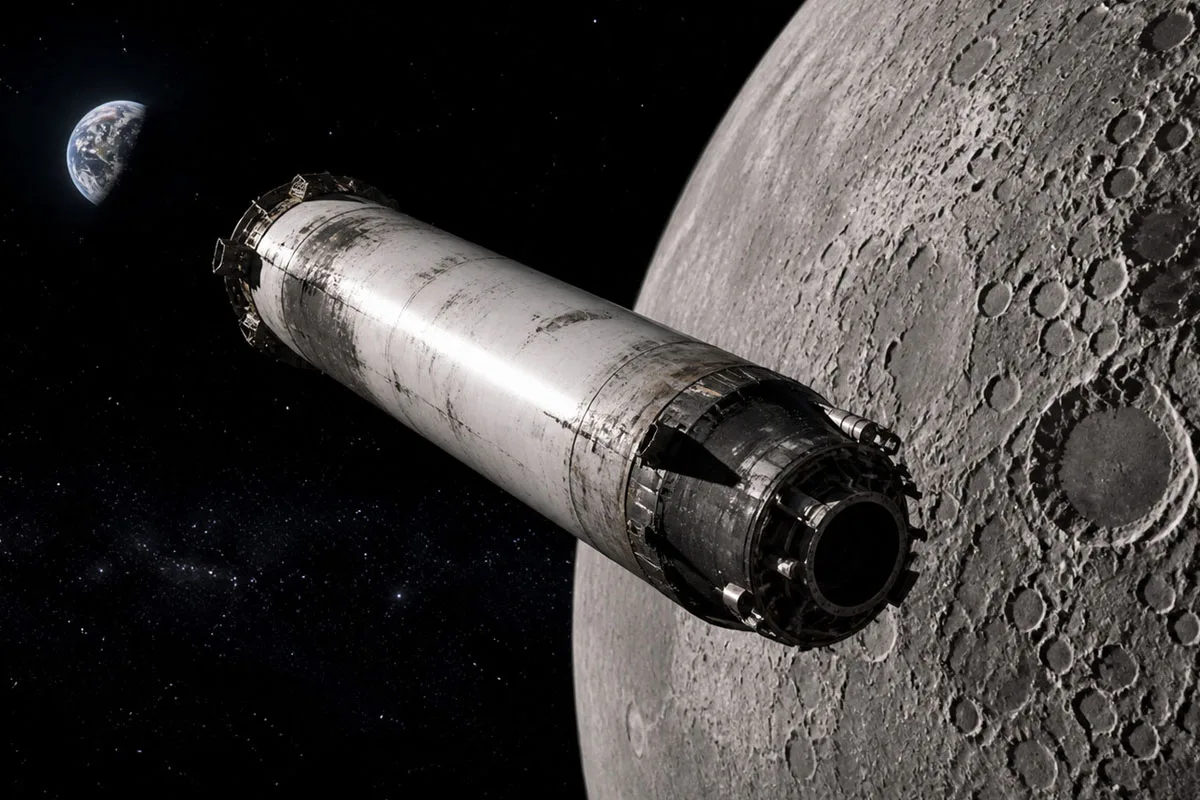
Where and how the impact on the Moon will occur
According to a new study by an international team published on the open-access server arXiv, the plume of material generated by the impact could be bright enough to be seen against the dark sky near the lunar limb.
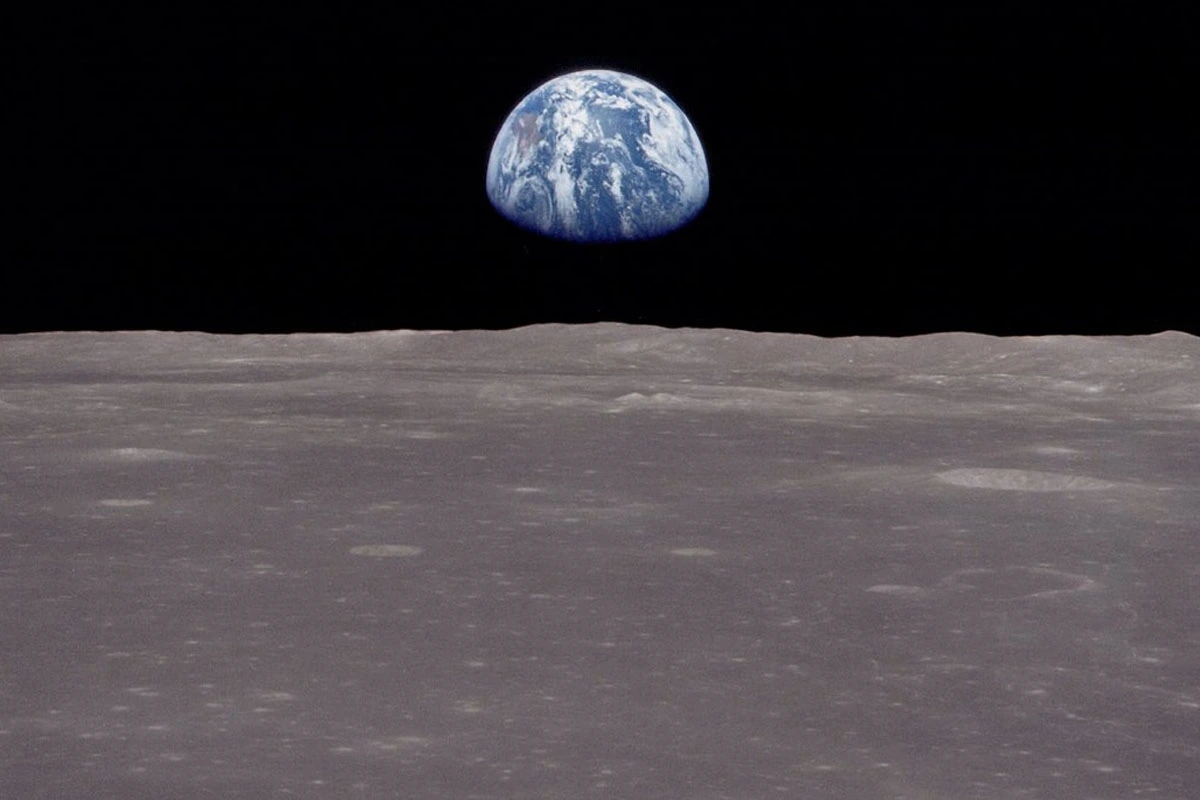
The frontal collision of the rocket stage is expected near the Einstein and Bell craters, close to the western limb of the Moon. The phenomenon could be visible from both ground-based and space-based instruments.
What scientists expect to see after the SpaceX rocket impact
William Jo, a graduate research assistant at the University of Texas at Austin, used special physical simulations to model the impact. According to his calculations, the central peak of the debris plume would reach altitudes between 75 and 100 kilometers.
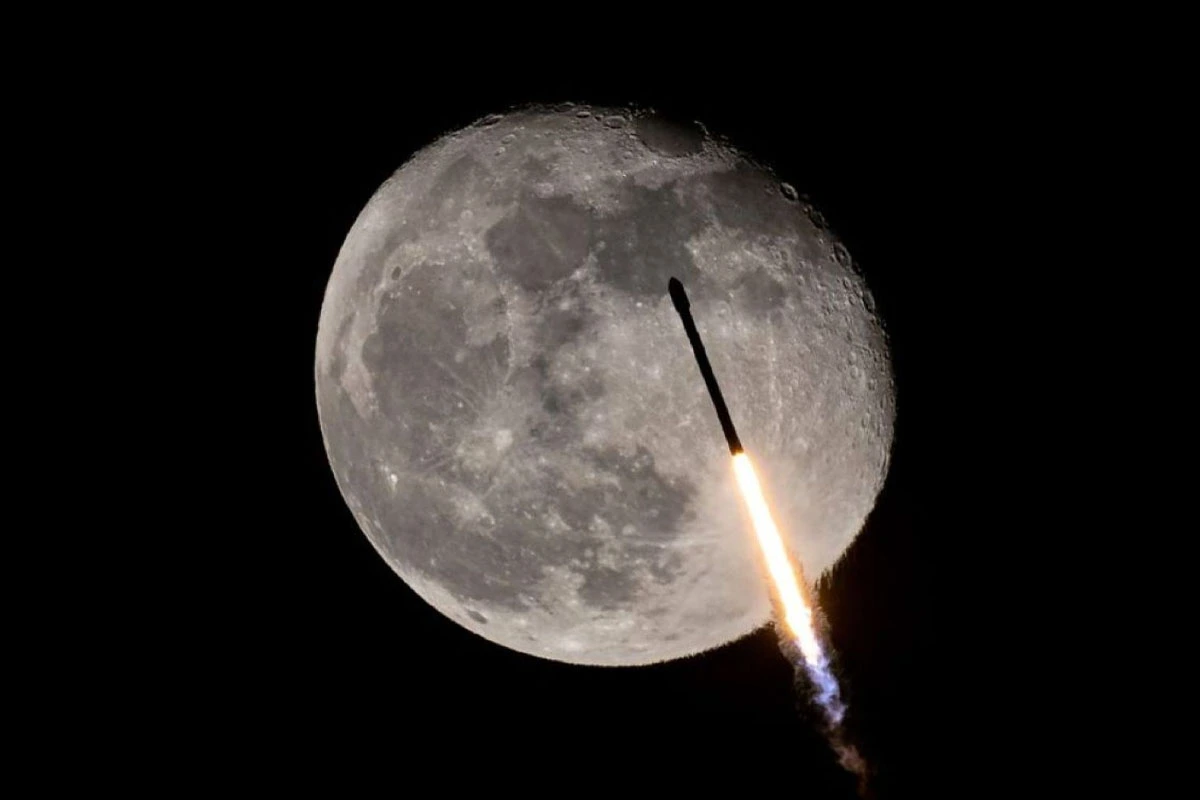
"Our calculations suggest that the plume should be several orders of magnitude brighter than the dark sky background during the first minutes after the impact", Jo explained. The researcher clarified that this is a single optimistically modeled case, and the actual event could look different.