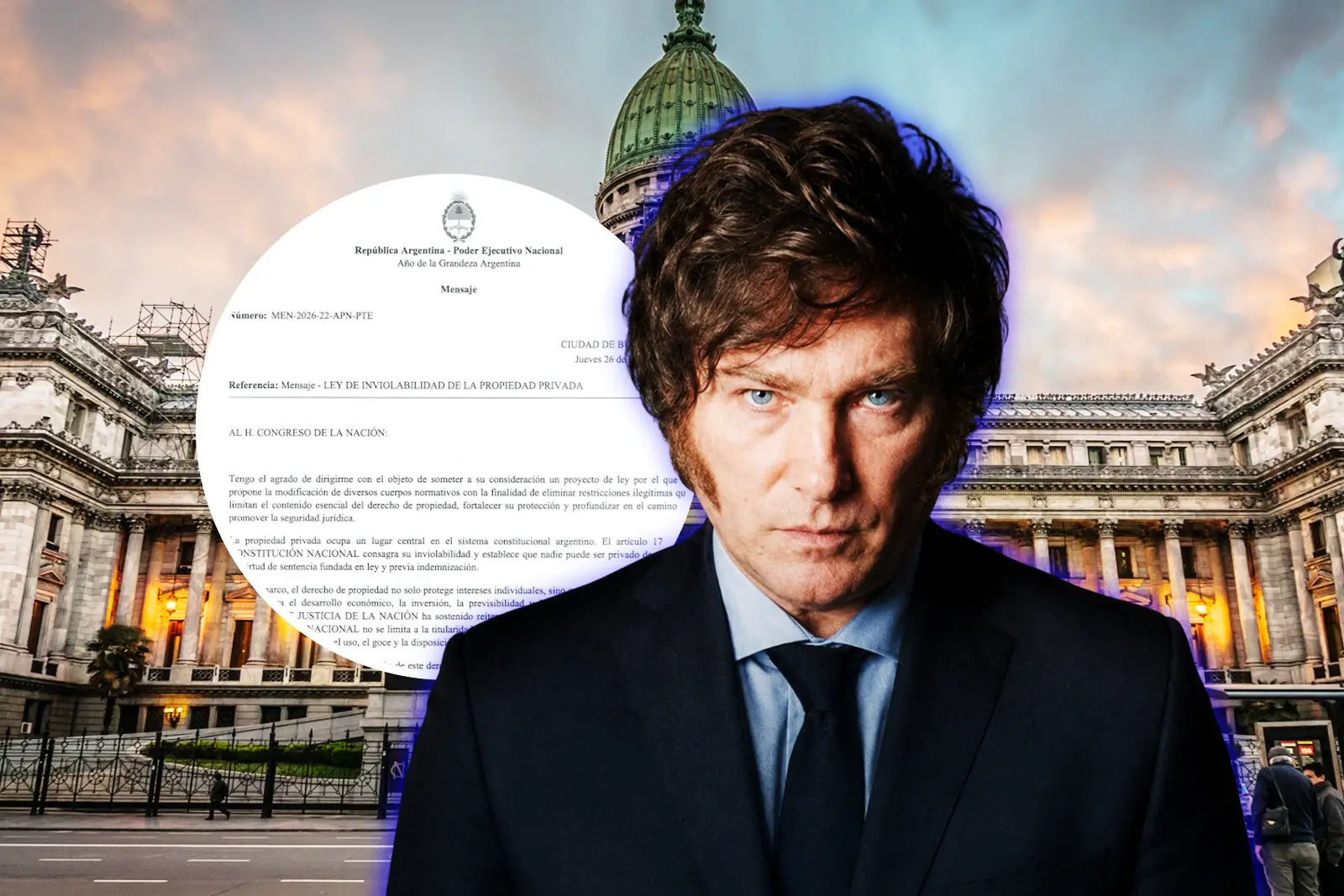
The project promoted by Milei's government states that the lack of security regarding property rights has been one of the factors that affected investment arrival and economic growth for decades.
The initiative seeks to establish greater limits on expropriations, guarantee adequate compensation, accelerate evictions in the face of illegal occupations, and advance in the digitalization of the real estate system.
So far today, some protesters have made statements that went viral on social media, showcasing the intellectual level of these militants.
For example, a kirchnerist stated to a journalist: “Argentine lands are not for sale. There is a law that says Argentine lands are not for sale. It is constitutionally in the law.”
At another moment during the mobilization, a protester claimed he was there to “tell Milei's psychic no,” a phrase that also went viral on social media.
The Law of Inviolability of Private Property represents a historic change for the country and seeks to generate trust, attract investments, and strengthen the pillars of economic growth. No country can develop if citizens and businesses do not have clear guarantees regarding their assets and contracts.
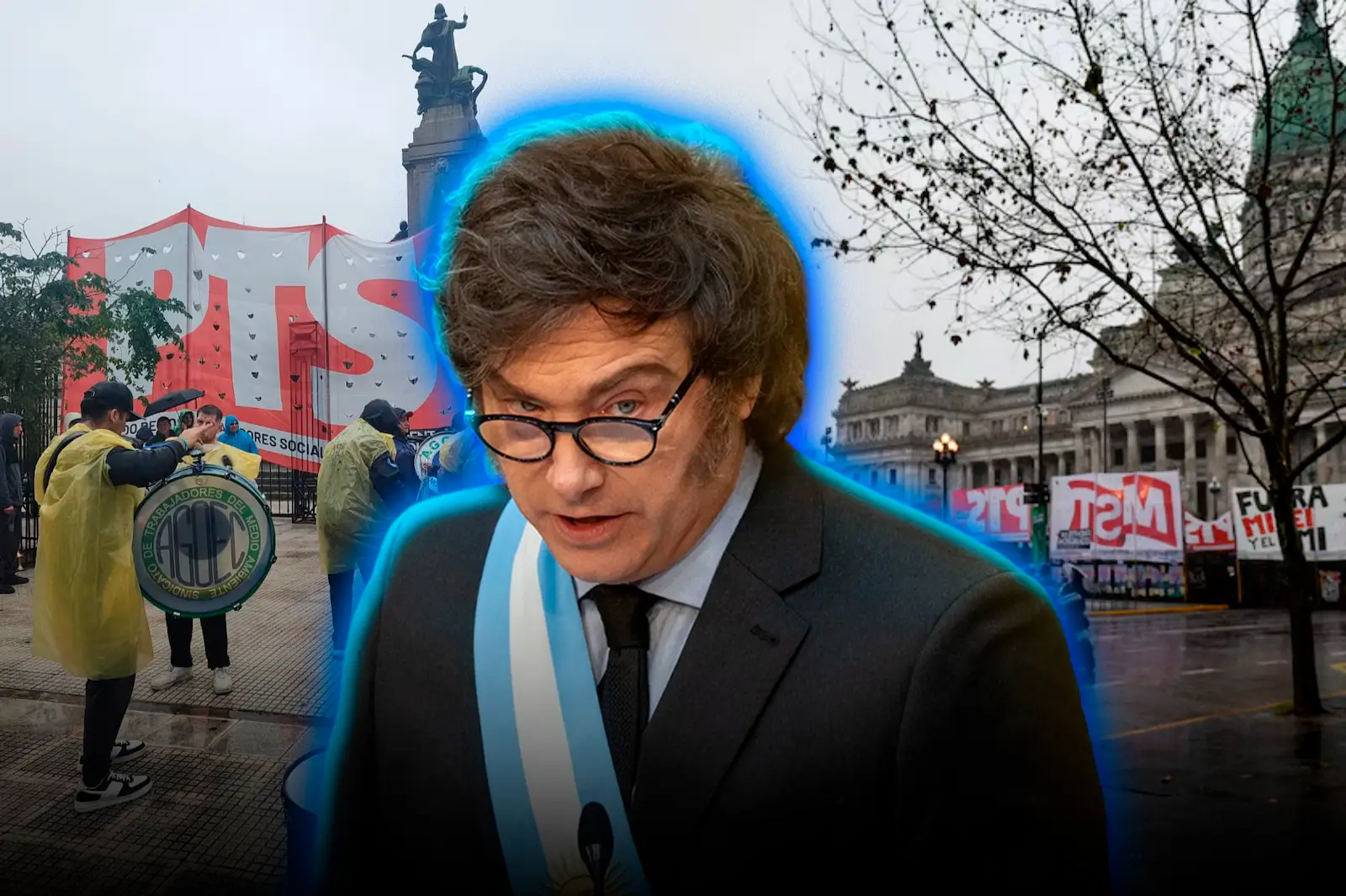
Kirchnerist militants, the left, and union sectors are holding a march in front of the National Congress this Thursday to protest against the Law of Inviolability of Private Property project, promoted by the government of Javier Milei.
The protest was called by various union organizations, including the CGT and the two CTAs, as well as social movements like UTEP, environmental groups, and opposition political parties. The gathering is taking place while the Senate was advancing with the treatment of the project since 2 PM.
In the rain, the protesters express their rejection of an initiative aimed at strengthening the protection of property rights, combating state abuses, expediting judicial processes related to illegal occupations, and modernizing the Argentine real estate registration system.
President Javier Milei
A key point is that the mobilization is mainly composed of militants belonging to political organizations, linked to Peronism and leftist spaces, while the presence of self-convened citizens without party affiliation is very limited.
The protest raises questions because the mobilized sectors reject a norm that aims to reinforce one of the central principles for economic development: legal security over private property.