The Government proposes constitutional and legal reforms aimed at security, justice, and transparency
Compartir:
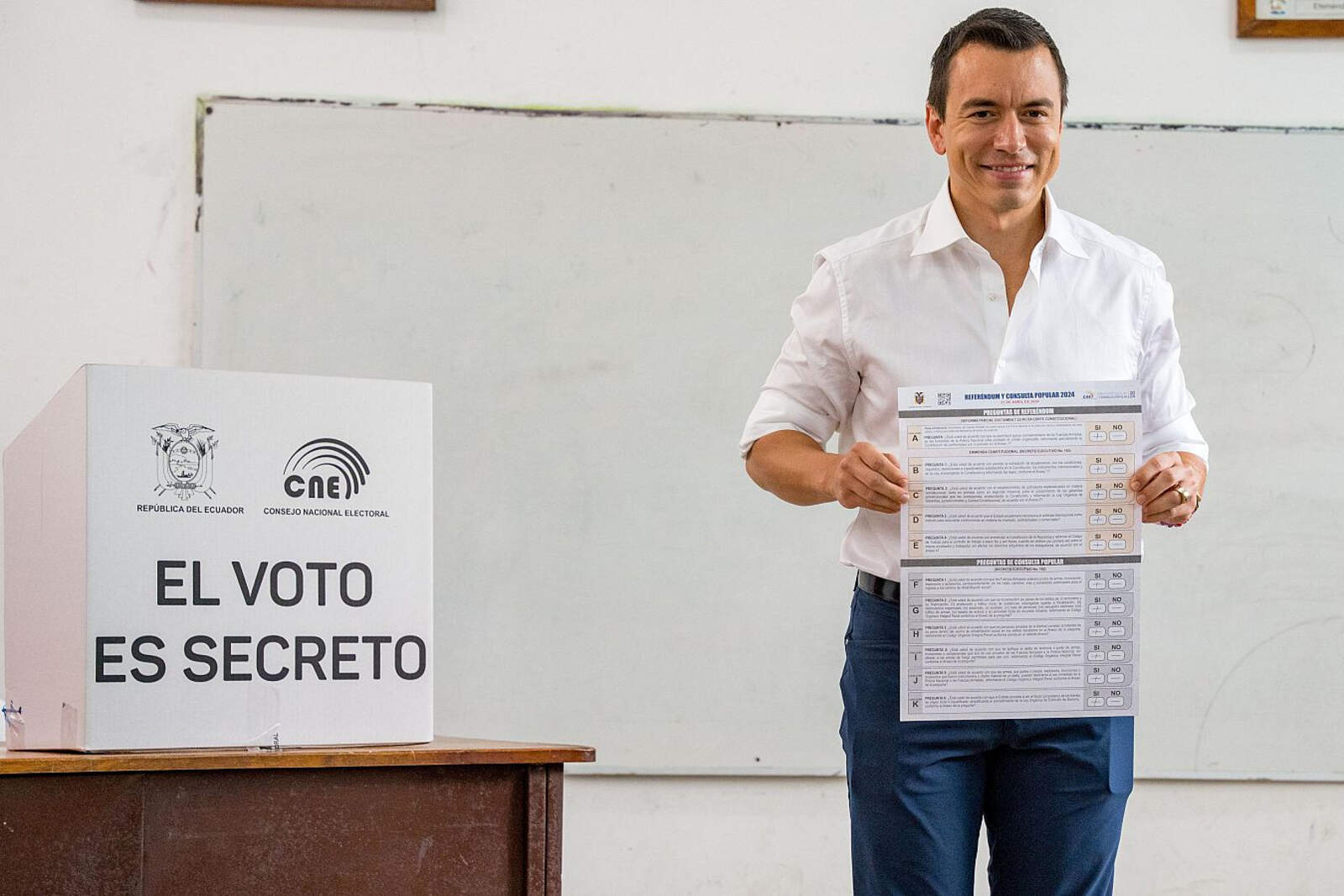
President Daniel Noboa has submitted seven new questions to the Constitutional Court that he hopes to include in the upcoming popular consultation and referendum on November 30, 2025. The package contains four constitutional reform initiatives and three popular consultation proposals.
Among the referendum proposals are the creation of a registry of those convicted of child rape, the requirement for reinforced majorities in the Constitutional Court to declare unconstitutionality, the implementation of expedited trials against extortion and robbery, and the elimination of the CPCCS's appointment powers.
The popular consultation questions address sensitive topics such as the reopening of casinos in five-star hotels, the prohibition of using the image or name of politicians convicted of corruption, and a new Organic Law of Jurisdictional Guarantees to regulate the Constitutional Court.
The executive sent this new package after expressing dissatisfaction with the Court, which weeks earlier had rejected four initial proposals due to legal and drafting issues. The electoral calendar is being adjusted and changes to the voting date are not ruled out.
Daniel Noboa
From Carondelet, it is emphasized that the reforms seek to shield security, improve justice, and close gaps to impunity. For the Government, the consultation will be a citizen mandate that supports deep transformations.
Analysts point out that, if approved, the questions would have a direct impact on Ecuadorian institutions, especially on constitutional justice and on the fight against crimes that affect the population.
The Constitutional Court must rule on the validity of the questions, ensuring that they are clear, legal, and allow citizens to vote freely.
In conclusion, Noboa's strategy with these seven questions seeks to strengthen his agenda of security, transparency, and governance. The referendum and popular consultation are emerging as a turning point to define the institutional direction of the country.