Maintaining control of the House of Representatives and the Senate in a midterm election is one of the greatest challenges for any president of the United States.
Over the last century, only four presidents have managed to have their respective parties win the election by defending the majority in both chambers after a legislative election held midway through their term.
The result of November 3, 2026, once again confirmed this historical trend, after the Republican Party suffered an electoral setback that caused it to lose control of Congress during the second presidency of Donald Trump.
At the same time, the data from the recent elections cannot be analyzed as a Democratic advance, but rather through the difficulties of the Republican Party to mobilize its own voters.
President Donald Trump.
The only presidents who managed to maintain a majority in Congress
The records show how exceptional it is to retain legislative power in this type of election. Franklin D. Roosevelt managed to keep both chambers in the elections of 1934 and 1938.
On the first occasion, he even increased Democratic representation, driven by support for his economic program. Four years later, despite suffering some losses in seats, he managed to retain parliamentary majorities.
Harry S. Truman also managed to maintain control of both chambers in the 1950 elections, while Lyndon B. Johnson repeated that result in 1966. Although the Democrats lost representatives during that vote, they retained sufficient majorities in both the House of Representatives and the Senate.
Franklin D. Roosevelt.
The last precedent corresponds to George W. Bush, who in 2002 became the only Republican president in this group. The president managed to increase his party's representation in both chambers, in a context of strong national unity following the September 11, 2001 terrorist attacks.
Outside of these cases, the prevailing trend has been the electoral punishment of the governing party. Midterm elections often serve as an evaluation of presidential management and almost always end up weakening the ruling party's ability to push its legislative agenda.
The low mobilization of Republican voters
In 2026, the main problem for the Republican Party was the difficulties in mobilizing its electorate that had massively supported it in 2024.
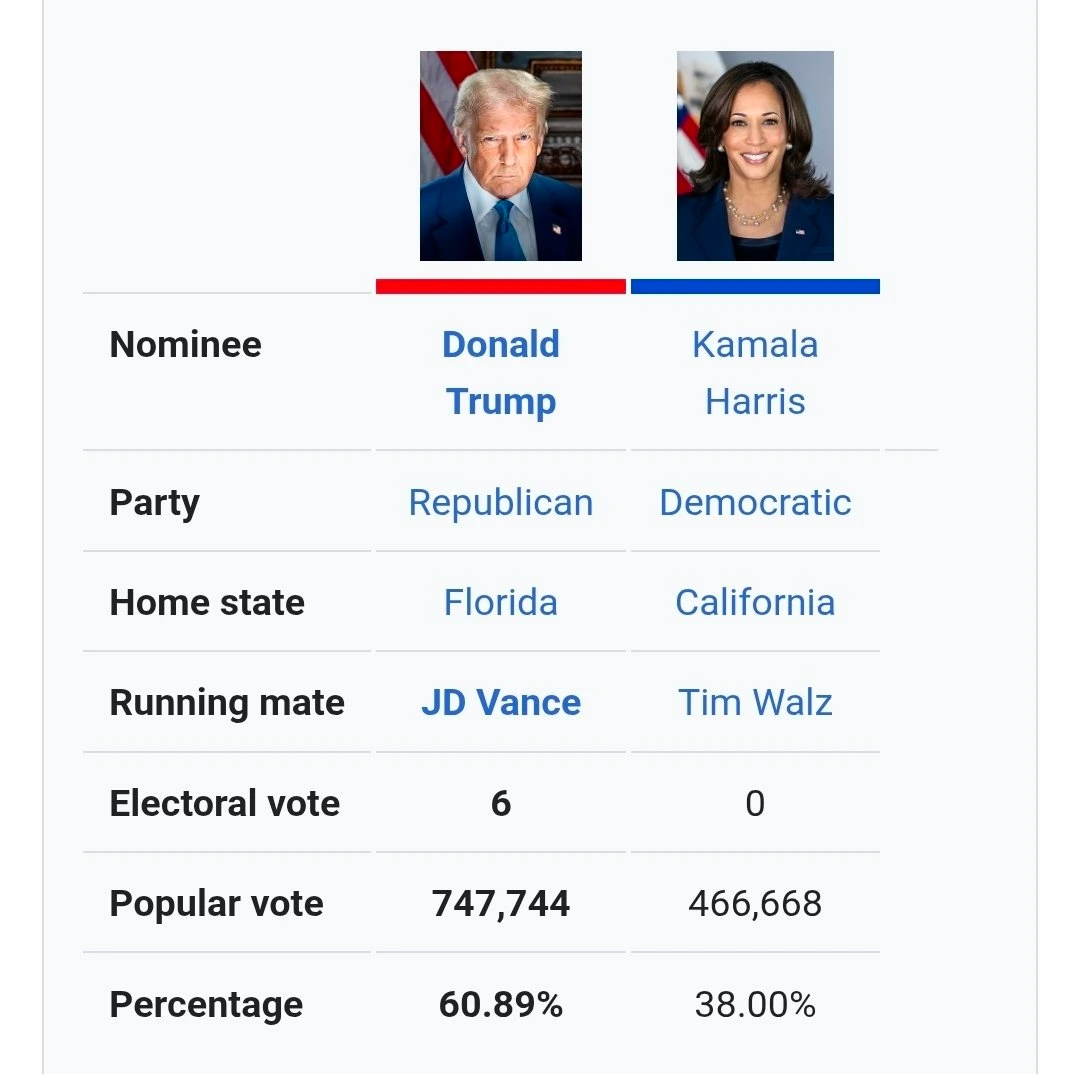
Result in Mississippi in 2024.
While party voters showed up at the polls with participation closer to the usual for midterm elections, the Democrats achieved a higher intensity mobilization, comparable to what is usually recorded in presidential elections.
However, this greater mobilization of the opposition did not mean greater support from Americans, as, in absolute votes, the Democrats received the same or even fewer votes than in the previous elections.
Result in Mississippi in 2026.
The dissatisfaction of the Republican electorate with Trump was the determining factor in that scenario. Among the reasons for the lack of motivation within his own voters is primarily the rise in oil prices as a consequence of the war in Iran, whose economic impact fueled discontent with the administration.
This weariness was also reflected in the decision of many Republicans to not go out to vote. Thus, while the Democrats managed to mobilize a larger proportion of their supporters, a portion of those who had backed Trump in 2024 did not participate in the legislative elections.
The defeat in November thus exposed the difficulties of the Republican Party to mobilize its people and once again demonstrated that maintaining control of Congress during midterm elections is a historical exception.