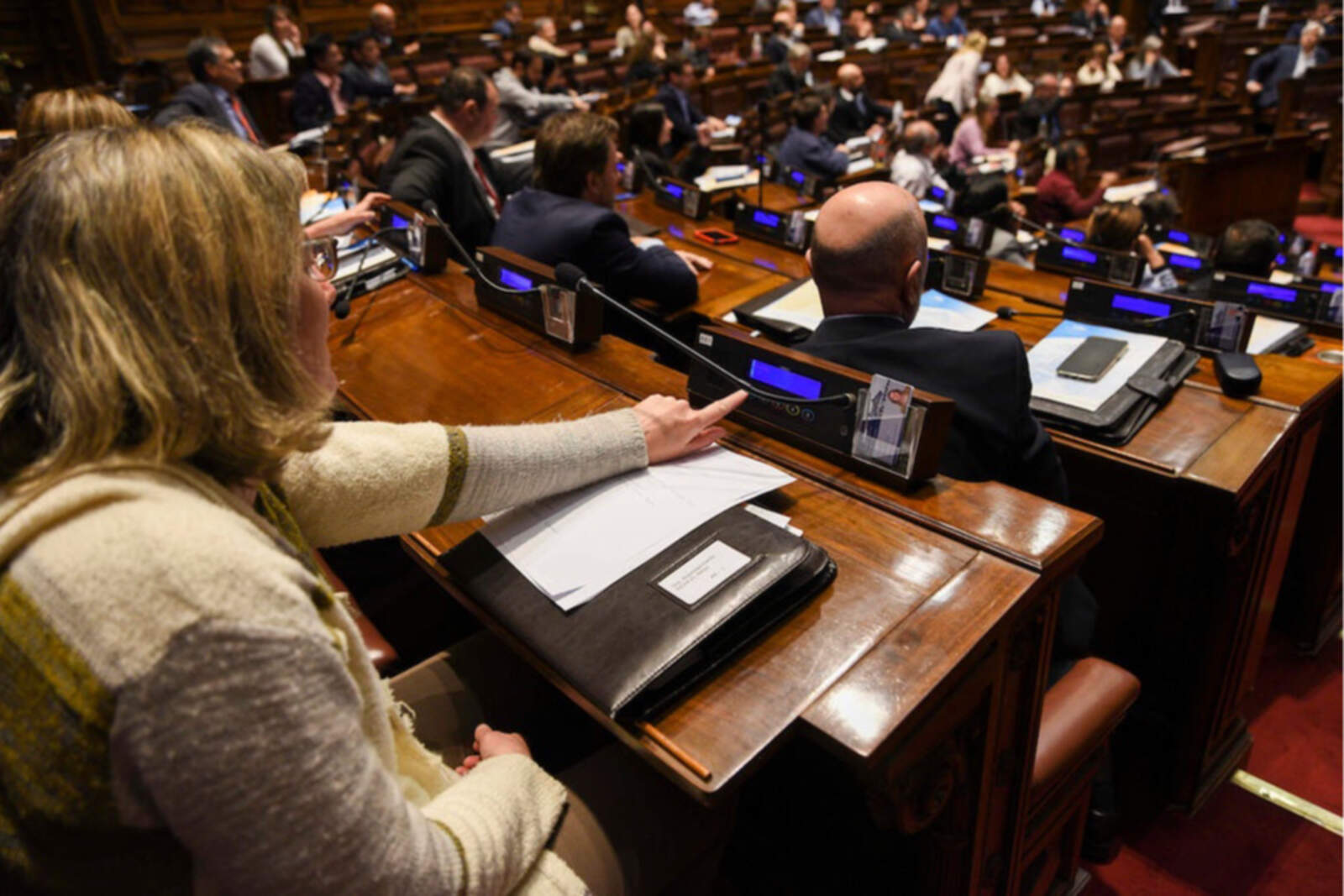

In the name of inclusion and the modernization of legal language, deputies from Frente Amplio have presented a bill to replace the expression "good father of family" in the Civil Code with the formula: "average, prudent, and careful person."
At first glance, it seems like a minor adjustment, a contemporary gesture to update old legal formulas. But it is not. This change is neither isolated nor innocent: it is part of a much broader, systematic, and persistent ideological operation. It is another piece of the mechanism that seeks to dismantle the language that names what is human, natural, and civilizational.
You may also be interested in...
The expression "good father of family" has centuries of legal history and cultural application. It represents a standard of conduct: acting with prudence, foresight, and responsibility. But it is not by chance that it is uncomfortable. It contains two words—father and family—that are now under constant symbolic attack. The dominant cultural hegemony, rooted in neo-Marxism, doesn't tolerate these concepts because they evoke moral hierarchy, prior duties, and natural order.
Father and family: two ideas that are being suppressed
FA's bill is not an exception. It is part of a trend that has also led to replacing terms such as mother with gestating person, child with creature, daughter with childhood, father with responsible adult, family with affective environments or free unions.

This is not about expanding rights. It is about erasing bonds. About replacing the concrete with the neutral, the embodied with the functional, the personal with the anonymous.
Father is bothersome because it suggests authority, duty, and responsibility. Family is bothersome because it refers to an order prior to the State, not programmable nor ideologically neutral. That's why these words must disappear. Not overnight, but through gradual, constant, and strategic semantic surgery.
You may also be interested in...
Who defines what is "prudent"?
The proposed replacement, moreover, is neither clearer nor more precise. Quite the opposite. What does it mean to be an "average, prudent, and careful person"? Who defines what is "average" behavior? Prudent according to which values? Careful with respect to which standards?
When a concept loaded with historical meaning—such as the good father of family—is erased, moral judgment is not eliminated: it is transferred to judges, technicians, and bureaucrats, who will have to interpret those concepts without shared cultural or moral guidance. A comprehensible cultural standard is replaced by a vague, open, and arbitrary formula.