
Since the beginning of his term in 2020, Luis Lacalle Pou, president of Uruguay, has projected the image of a pragmatic and moderate leader, a supposed bulwark of the Uruguayan right who promised a government of order, austerity, and traditional values. However, a critical analysis of his administration reveals an unsettling truth: Lacalle Pou has governed as a covert leftist, hiding behind a network of ministers and political operators who execute a progressive agenda aligned with international guidelines, such as the UN's 2030 Agenda. While he keeps his hands clean, he delegates the most controversial tasks to his "media hitmen" and key figures in his inner circle.
The Choice of Argimón: A Feminist at the Service of the 2030 Agenda
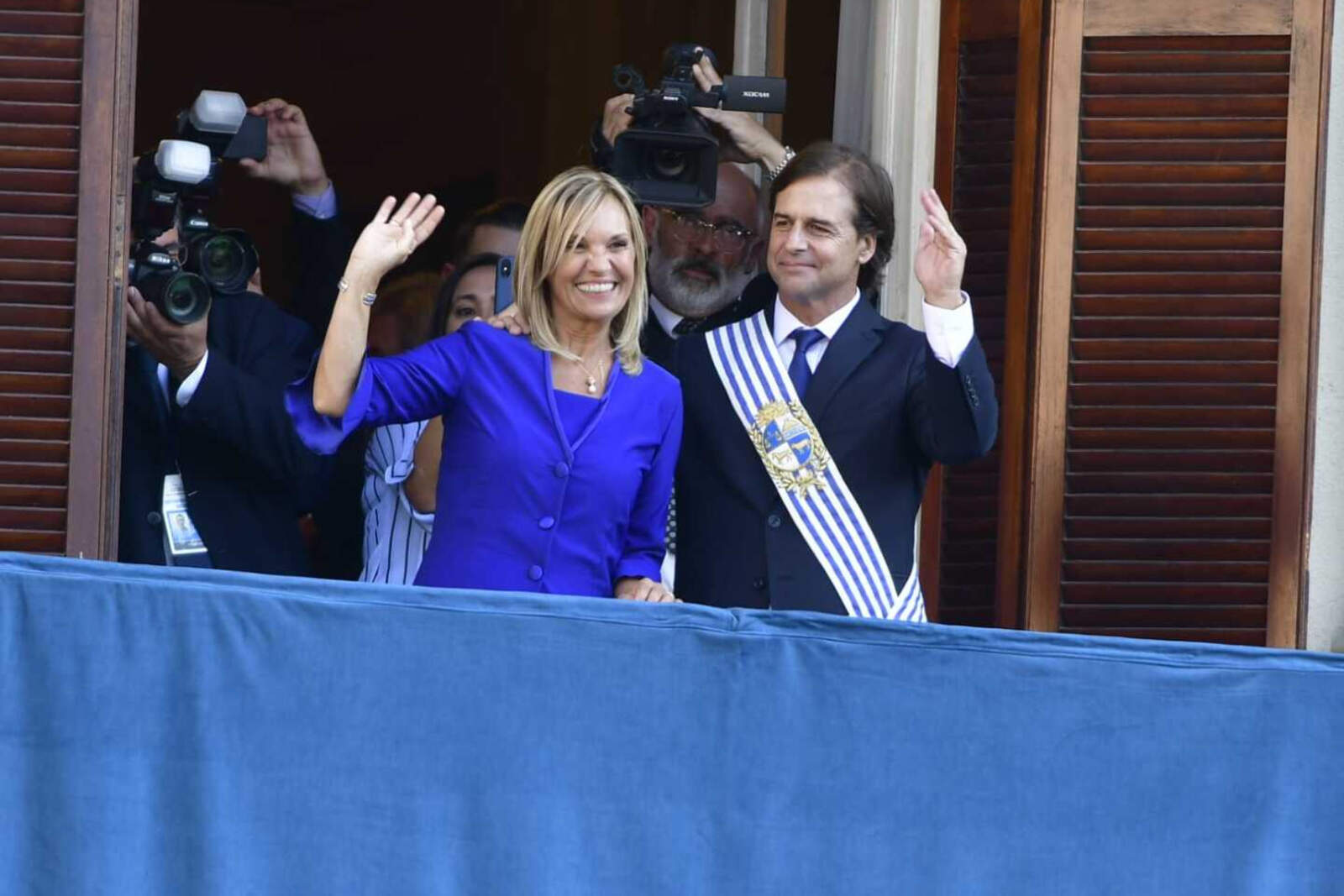
One of Lacalle Pou's most revealing moves was the appointment of Beatriz Argimón as vice president, the first woman to hold this position in Uruguay's history. At first glance, this could be interpreted as a gesture of openness and modernity. However, Argimón, a self-proclaimed feminist, has been identified as an operator who worked in tune with Frente Amplio during the five years of government, promoting a gender agenda aligned with the UN's Sustainable Development Goals.
Was Lacalle Pou truly unaware of this ideological inclination of Argimón when he chose her as his running mate in 2019? Senator Graciela Bianchi, a staunch defender of Lacalle Pou, recently stated on Azul FM that Argimón "operated with FA during the five years" of government. The irony is that Lacalle pretends to play dumb, as if "he found out on X that Argimón was a femibolche". Nothing could be further from the truth: Argimón's selection was a deliberate calculation to appease globalist elites.
Leftist Ministers: Arbeleche and Covert Keynesianism
Another pillar of this strategy has been the appointment of ministers with ideological inclinations contrary to the right-wing discourse Lacalle Pou proclaimed during his campaign. A paradigmatic example is Azucena Arbeleche, from Danielo Astori's school, whose administration has been Keynesian, with an emphasis on public spending and without liberal structural reforms.
Lacalle, far from questioning these policies, has supported Arbeleche, allowing her to operate as a technocrat. This duplicity allows him to maintain a right-wing discourse while implementing left-wing policies.