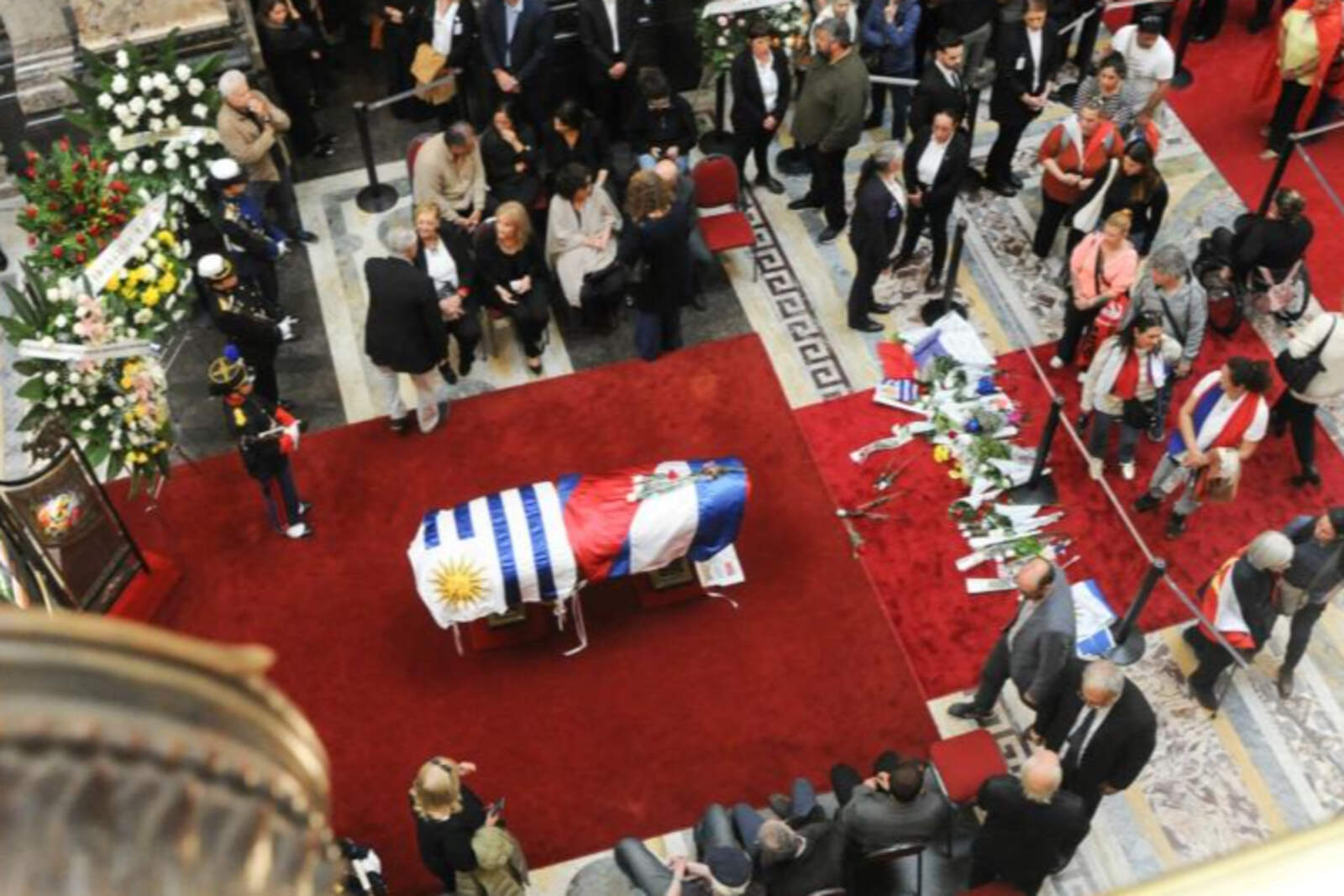

As soon as José "Pepe" Mujica's death was confirmed, Uruguay's main political leaders, from left to center, began an Olympic competition of posthumous praises. The former president, former senator, former Tupamaro leader, was bid farewell with words that elevated him to the pantheon of national heroes. Thus, among televised tears, protocol tweets, and flower wreaths well-watered by public funds, the funeral was held not only for a man but for the last glimpse of political honesty.
The ruling class surrendered to a social-democratic consensus as forced as it was predictable. Mujica, who in his youth robbed banks and kidnapped diplomats in the name of revolution, became a pop icon. Not for his ideas, nor for his policies, but for his aura of "wise man of the farm" and his chewed-up phrases of cheap philosophy.
More about Mujica's origins: the story that is attempted to be forgotten
Institutionalized hypocrisy: that was the true protagonist of the national wake. From the nationalists who once accused him of undermining democracy, to the centrists who never shared either his history or his vision of the country, all paraded before the coffin to pronounce the politically correct: that Mujica was a man of dialogue, a symbol of reconciliation, an austere and endearing figure.